

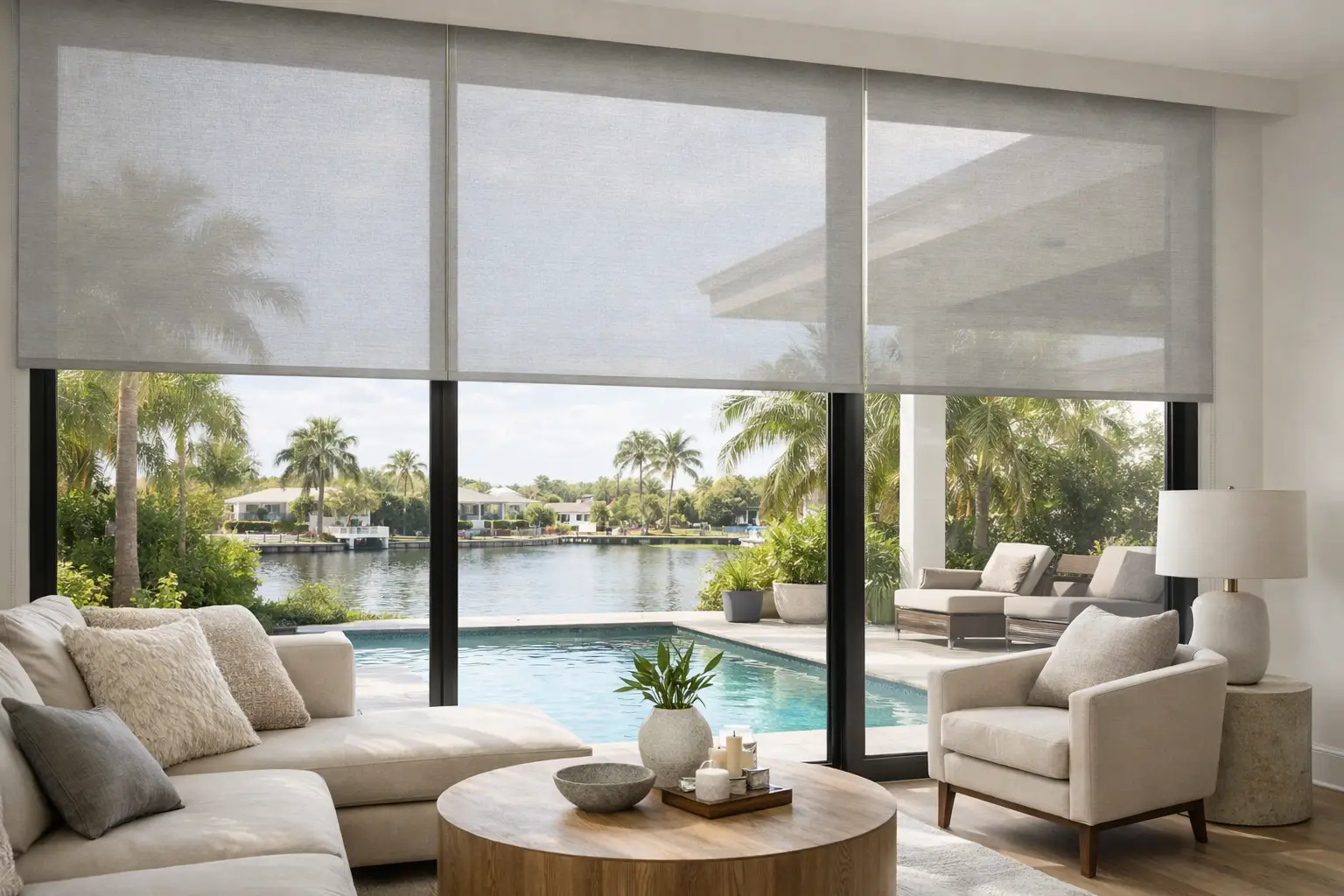
If you love your natural light but not the glare, heat, and faded floors that come with it, you have probably asked: what are solar shades, exactly? They are one of the smartest window treatment options for bright homes and offices because they soften sunlight without closing your room off from the outside world.
That balance is what makes them so appealing in South Florida. Large windows, sliding glass doors, water views, and sunny exposures are beautiful features, but they can also create daily frustration. Solar shades are designed to manage those conditions in a clean, modern way.
What are solar shades?
Solar shades are roller-style window shades made from a specially woven material that filters sunlight. Unlike blackout shades or heavy drapery, they do not fully block daylight. Instead, they reduce glare, cut UV exposure, and help control heat while still allowing you to see out during the day.
Think of them as a refined screen for your windows. When lowered, they take the edge off harsh sun and bright reflections on TVs, laptops, and glossy floors. At the same time, they maintain a more open feeling than many traditional window coverings.
Their streamlined look is another reason homeowners choose them. Solar shades work well in contemporary spaces, coastal interiors, transitional rooms, and offices where a crisp, uncluttered finish matters.
How solar shades work
The fabric is the key. Solar shade materials are woven with tiny openings that allow some light to pass through while blocking a portion of the sun’s heat and UV rays. That is why they can preserve your outdoor view while still improving comfort indoors.
You will often hear the term openness factor. This refers to how tightly or loosely the fabric is woven. A lower openness factor means a tighter weave, which gives you more glare control and privacy but a less visible view outside. A higher openness factor allows a clearer view out, but it also lets in more light.
That is where selection becomes important. There is no one-size-fits-all answer. A west-facing family room with intense afternoon sun may need a different solar shade fabric than a softly lit breakfast area. The right choice depends on your exposure, the room’s purpose, and how much view preservation matters to you.
Why homeowners choose solar shades
For many people, the biggest advantage is glare control. In homes with expansive windows or glass doors, bright sun can make everyday living less comfortable. Watching television, working from home, or even enjoying a meal can become irritating when the light is too direct.
Solar shades help calm that brightness without making the room feel dark. That is a major difference from heavier treatments that solve the glare problem by shutting out most of the daylight.
They also help protect interiors. Sunlight can be hard on wood floors, area rugs, artwork, upholstery, and cabinetry. Over time, UV exposure can cause fading and discoloration. Solar shades reduce that risk and can be a sensible long-term investment in the appearance of your home.
Energy performance is another reason they are worth considering. While they are not the same as insulated cellular shades, they can still help reduce solar heat gain, especially on windows that receive strong direct sun. In a warm climate, that added comfort can make a noticeable difference in heavily exposed rooms.
What solar shades look like in real life
One of the common misconceptions is that solar shades look commercial or plain. Some do have a distinctly modern feel, and that can be a good thing. But today’s options come in a wide range of textures, colors, and fabric densities, so they can feel soft and tailored rather than stark.
In a living room, they can disappear into the architecture and let the view remain the focal point. In a bedroom, they can be paired with drapery for a fuller design statement and better nighttime privacy. In an office, they deliver a polished, practical solution that keeps screens more visible during the day.
Because they operate like roller shades, they stack neatly when raised. That gives your windows a clean appearance and keeps the treatment from feeling bulky.
Are solar shades private?
This is where expectations matter. During the day, solar shades offer good outward visibility while making it harder for people outside to see in. At night, that changes. When your interior lights are on and it is dark outside, privacy is reduced.
For some rooms, that is perfectly fine. In a den, office, sunroom, or main living area, daytime performance may be the priority. In bedrooms and bathrooms, you may want a layered solution or a different product entirely.
This is one reason professional guidance is valuable. A window treatment that performs beautifully in one room may be the wrong fit in another. The goal is not simply to choose a shade. It is to choose the right shade for how you live.
What are solar shades best for?
Solar shades are especially well suited to rooms with strong daylight and a view worth keeping. They are often a strong choice for living rooms, family rooms, kitchens, home offices, and large glass openings.
They are also popular in homes with sliding doors and wide window walls because they provide coverage without adding visual weight. In office settings, they can help create a more comfortable workspace while maintaining a professional appearance.
In South Florida, they make particular sense in spaces that receive persistent sun exposure. Homes in Boca Raton and surrounding coastal communities often feature large openings designed to capture light. Solar shades let you enjoy that architecture more comfortably instead of constantly fighting it.
Choosing the right openness and color
This is the part that deserves more attention than most shoppers expect. People often focus first on color, but performance should lead the conversation.
A 1 percent openness fabric gives the strongest glare reduction and UV control, but your view out will be more filtered. A 3 percent or 5 percent openness fabric usually keeps the room feeling lighter and preserves more visibility outdoors. The best option depends on the window orientation and what bothers you most – glare, heat, lack of privacy, or view obstruction.
Color also affects performance. Darker fabrics tend to preserve the outward view better because they cut reflected light inside the room. Lighter fabrics can feel softer and may blend more easily into pale interiors, but they may not maintain the same clarity of view. Again, it depends on your goals.
That is why showroom samples and in-home consultation matter. A fabric that looks perfect under store lighting can behave very differently in a bright room at 3 p.m.
Manual or motorized?
Solar shades are available with manual operation or motorization. Manual shades remain a practical choice for many windows, especially in smaller rooms or secondary spaces. They are straightforward and clean in appearance.
Motorized solar shades add convenience and can be especially valuable on large, hard-to-reach, or frequently adjusted windows. They are also ideal when you want multiple shades to move together for a more uniform look. In homes with tall glass walls or wide openings, motorization can turn a good solution into a truly effortless one.
For many homeowners, this becomes less about luxury and more about daily use. If a shade is difficult to operate, it often stays in the wrong position. Easy control makes the product work the way it should.
When solar shades may not be the best fit
Solar shades are excellent, but they are not the answer for every room. If you need complete darkness for sleeping, a blackout shade will perform better. If nighttime privacy is your top concern, you may need a different material or a layered treatment.
If your design style leans heavily traditional, you might prefer to combine solar shades with drapery or choose a softer shade style altogether. And if insulation is your main priority, cellular shades may offer stronger thermal benefits.
That does not make solar shades a compromise. It simply means good window treatment design is about matching the product to the problem.
What to expect from a custom fit
A custom solar shade should do more than cover the glass. It should fit the window properly, operate smoothly, and complement the room. Details like bracket placement, fabric alignment, light gaps, hem bars, and mounting style all affect the final result.
That is where experience shows. Since 1976, Boca Blinds has helped homeowners choose window treatments that look right, function well, and suit the conditions of the space. With solar shades, those details matter because performance and appearance are closely tied.
If you are considering solar shades, the best next step is to see fabrics in person and compare how they handle real light in your home. The right shade should make your room more comfortable without taking away what you love about the window in the first place.