

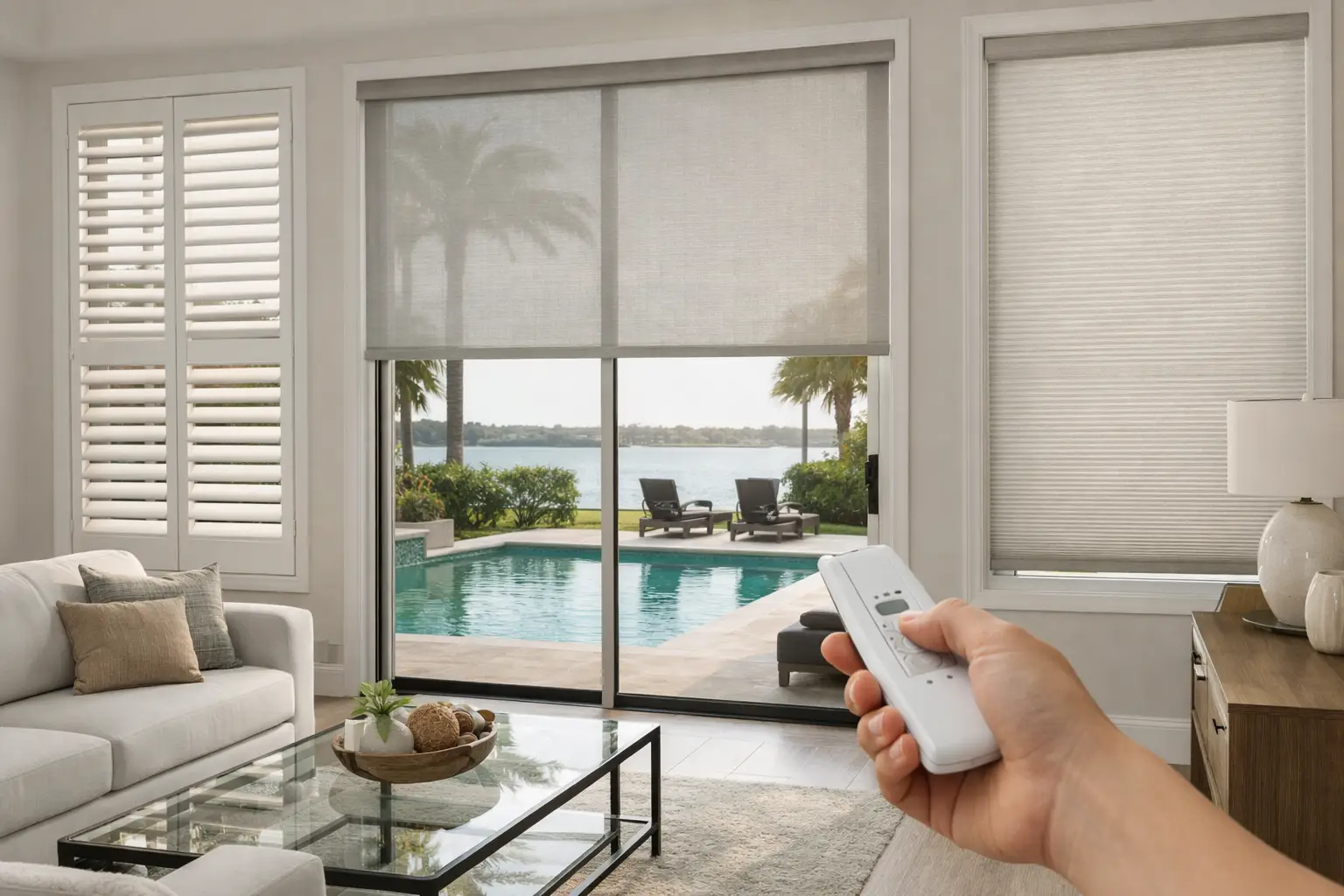
A sunny South Florida room can look spectacular at 9 a.m. and become difficult to use by noon. Glare on a television, heat near a wall of glass, fading furnishings, and the loss of privacy after sunset are everyday concerns. This motorized window coverings guide explains how automated shades, blinds, and drapery can address those needs while adding a polished finishing touch to your home.
Motorization is not simply about opening and closing a shade from the sofa. The right system gives you more consistent control over light, privacy, and comfort, especially on hard-to-reach windows, large sliding doors, and rooms with several treatments that need to move together. The best choice depends on your windows, your routine, your design preferences, and how you want the controls to work.
Why homeowners choose motorized window coverings
Convenience is often what first catches a homeowner’s attention. A remote, wall control, app, or scheduled setting can adjust a treatment without walking from window to window. That convenience becomes especially valuable for tall foyer windows, treatments behind furniture, bedrooms with multiple windows, and wide glass doors.
The practical benefits go further. Scheduled shade movement can reduce harsh afternoon sun before it reaches furniture and flooring. In a bedroom, blackout-capable shades can lower at bedtime and rise gradually in the morning. In living spaces, solar shades can soften glare while preserving a degree of outward view during daylight hours.
Motorization also helps create a more finished look. When every shade in a room moves to the same position, the windows appear orderly and intentional. For homeowners who prefer a clean, uncluttered design, many motorized shades can be specified without exposed lift cords.
The motorized window coverings guide: start with the room
The most successful project begins with how each room is used, not with a motor type. A treatment that works beautifully in a formal dining room may not provide enough privacy for a bathroom or sufficient light control for a media room.
Living rooms and open-concept spaces
For living rooms with expansive windows, solar roller shades are often a strong option for daytime glare and UV management. Their openness level affects the balance between view and privacy. A more open fabric can preserve more of the view, while a tighter weave provides greater screening. At night, however, solar shades alone may not provide the privacy some homeowners want.
Layering can solve that issue. A solar shade paired with decorative drapery, or a dual-shade arrangement that combines a light-filtering fabric with an opaque fabric, offers greater flexibility. The result can feel tailored rather than purely functional.
Bedrooms and nurseries
Privacy and darkness usually lead the decision in bedrooms. Room-darkening or blackout roller shades, cellular shades, and lined drapery are all worth considering. The word blackout deserves a practical caveat: light can still enter around the sides of many inside-mounted treatments. For the darkest possible result, the shade style, mounting method, side gaps, and any drapery panels should be planned together.
Motorization makes bedroom routines easier. A programmed schedule can close coverings before evening privacy becomes a concern and open them at a preferred morning time. It is a small daily improvement that clients tend to appreciate long after installation.
Kitchens, baths, and high-use spaces
In kitchens and bathrooms, materials should stand up to humidity, splashes, and regular use. Faux wood blinds, roller shades, and certain cellular or woven options may fit, depending on the window and desired look. Privacy is especially important in bathrooms, where light-filtering treatments can be attractive but may not be appropriate if the window is close to a neighboring property.
Sliding glass doors and tall windows
Large openings need thoughtful scale and operation. Vertical-oriented options, panel-style treatments, drapery, and selected shade systems can be designed to suit doors and allow practical access. Tall windows are particularly good candidates for motorization because manual operation can be inconvenient or unsafe without a ladder.
Choose the treatment before choosing the controls
Motorization can be added to many styles, but the treatment itself determines the visual effect and light performance. Roller and solar shades provide a streamlined contemporary profile. Cellular shades offer soft texture and can help moderate heat transfer at the window. Sheer shades gently diffuse sunlight while retaining an airy appearance. Motorized drapery adds dimension, softness, and a more formal decorative statement.
Plantation shutters and blinds may also be available with motorized features in certain configurations. These can be appealing when you want adjustable slats rather than a full fabric panel. They do have a different visual character from shades, and their fit depends on window depth, trim details, and the desired level of view-through.
Fabric selection matters as much as style. In South Florida, the direction a window faces can change the recommendation. A west-facing room may need more aggressive glare control than a shaded north-facing room. Color affects the look from inside and outside, while fabric opacity influences daytime brightness, privacy, and the visibility of the view.
Power options and smart controls
Motorized treatments typically use battery power, plug-in power, or hardwired power. Each option has a place in a custom project.
Battery-powered systems are a practical choice for many existing homes because they minimize the need for electrical work. Battery life varies by product size, use frequency, and settings, so accessibility for future battery replacement or recharging should be considered. A tall window may still be a good battery-powered candidate, but it deserves a plan for service access.
Plug-in systems provide continuous power where an outlet can be placed discreetly. They can work well when a nearby outlet is available without compromising the finished appearance. Hardwired systems are often considered during construction or a major renovation, when wiring can be planned before walls are closed. They create a clean result but require coordination early in the process.
Control can be as simple or as connected as you prefer. A handheld remote is straightforward and reliable. Wall-mounted controls offer a familiar experience for family members and guests. App-based control and compatible home automation systems can support schedules, scenes, and grouped rooms. Smart features are useful when they support a real routine, not when they add complexity no one will use.
For example, a “morning” scene might raise bedroom shades and lower a solar shade in a sun-exposed breakfast area. An “away” setting can close selected treatments for privacy. Your installer can help identify a control approach that feels intuitive for your household.
Details that determine whether the finished result feels custom
Accurate measuring is essential, but it is only one part of a well-planned installation. Window handles, cranks, molding depth, recessed openings, door clearance, and furniture placement can all affect the ideal product and mount. A shade that looks simple in a photograph may need a different bracket position or fabric roll direction to function properly in your specific opening.
Grouping is another important decision. Operating several shades from one control can simplify large rooms, but every window does not necessarily need to move together. In a family room, you may want one group for the windows facing the street and another for doors facing the pool. In a bedroom, separate control can allow one person to enjoy morning light while another area remains shaded.
Sound is worth discussing as well. Modern motors are designed for quiet operation, but no motor is completely silent. In bedrooms, offices, and quiet sitting rooms, product selection and placement should reflect that expectation.
Why professional design and installation matter
Custom motorized treatments combine décor decisions with technical ones. The fabric must suit the room, the dimensions must be exact, the power source must be practical, and the controls must be properly programmed. A professional consultation helps bring those decisions together before the order is placed.
For homeowners in Boca Raton, Delray Beach, Parkland, and nearby communities, a home visit also makes it easier to evaluate real sun exposure, window architecture, and existing furnishings. Boca Blinds has served South Florida since 1976, offering personalized design guidance and professional installation for custom window treatments. That hands-on process helps avoid common disappointments, such as choosing a fabric that is too sheer for nighttime privacy or selecting a power option that is difficult to access later.
A motorized treatment should make your rooms easier to enjoy, not give you another device to manage. Begin with the moments that frustrate you most – the bright afternoon glare, the inaccessible upper window, the bedroom that never feels private enough – and build a custom solution around them.