

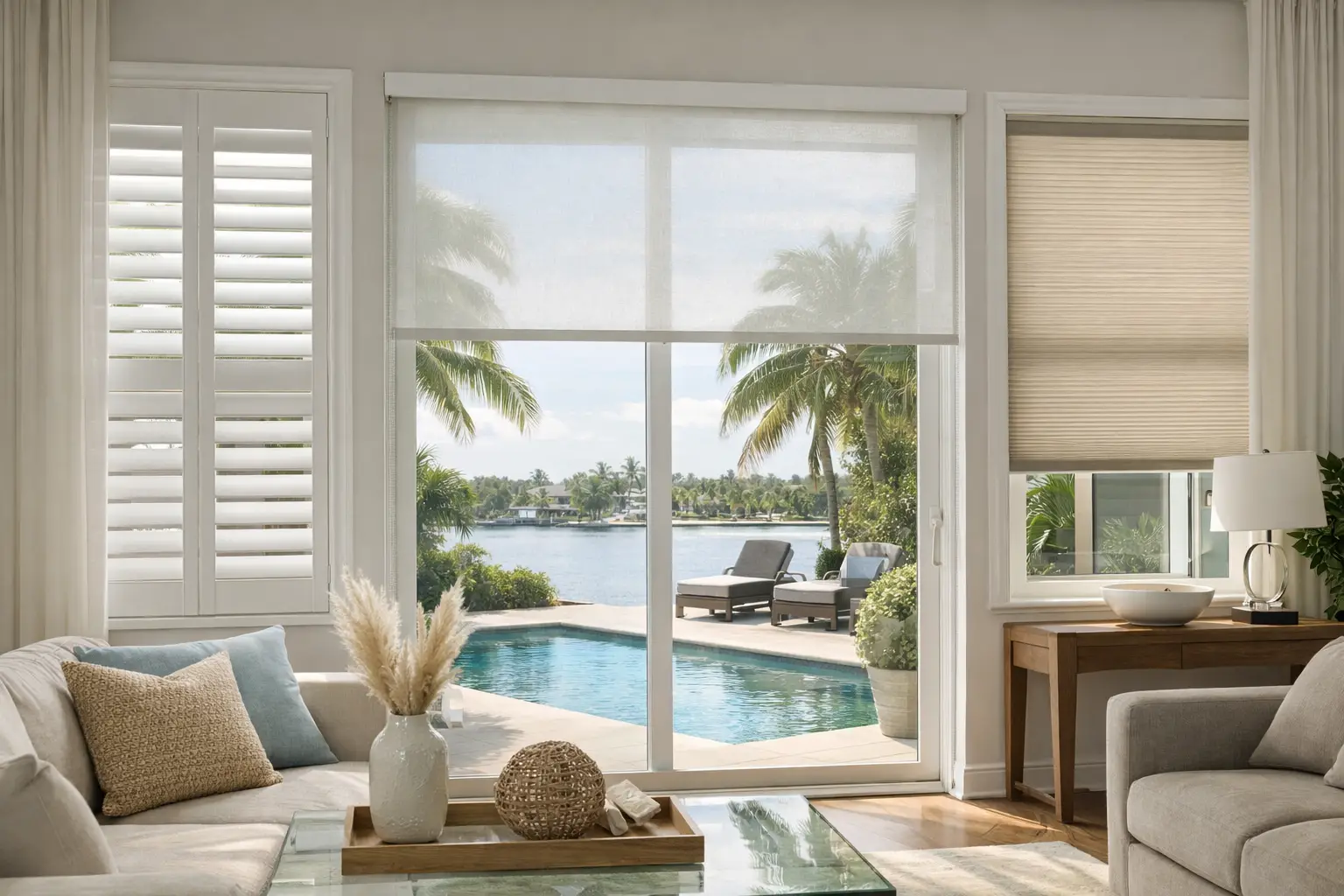
A beautiful South Florida room can become difficult to enjoy when afternoon glare washes out the view, heat builds near large windows, or privacy disappears after sunset. This Hunter Douglas collections review looks beyond appearance to help homeowners compare the options that make a meaningful difference in daily comfort, light control, and long-term design value.
Hunter Douglas offers a broad range of custom window treatments, but the right collection depends on the room, window shape, orientation, and how you want the space to function. A shade that is ideal for a sunny great room may not be the best answer for a bedroom, bathroom, or street-facing office. The advantage of custom selection is matching the product to the way you actually live.
What Sets Hunter Douglas Collections Apart
The strongest feature of Hunter Douglas collections is not one fabric, color, or operating system. It is the ability to tailor light management, privacy, and style with more precision than a basic ready-made covering. Many collections offer extensive material choices, custom sizing, and operating options designed for different window types and room needs.
For South Florida homes, this flexibility matters. Wide sliding glass doors, tall entry windows, waterfront views, arched openings, and rooms with intense western exposure all create different challenges. A professional consultation helps identify where you need filtered daylight, where you need room-darkening coverage, and where preserving the view should take priority.
The collections also coordinate well across an entire home. Rather than treating every window as a separate purchase, homeowners can create a consistent visual language while choosing different products for different functions. For example, a family may choose softly filtering shades in the main living areas, more private coverings in bedrooms, and durable, moisture-friendly options in a bath or kitchen.
Hunter Douglas Collections Review: Best Options by Need
Sheers and Shadings for Light With a Softer Look
Sheer shadings are especially appealing in rooms where daylight and views are central to the design. Their fabric vanes sit between sheer panels, allowing the light to be softened rather than simply blocked. When adjusted, they can provide privacy and manage glare while maintaining an open, elegant feeling.
This category works beautifully in formal living rooms, dining rooms, and primary bedrooms with generous windows. It is also a strong option for homeowners who find traditional horizontal blinds too structured or visually busy. The trade-off is that sheers are typically best when the goal is refined light diffusion, not complete darkness.
Pirouette and Silhouette styles are often considered by homeowners who want that balance of softness and control. The final choice comes down to the desired fabric appearance, the amount of privacy required, and whether the room receives direct sun at certain times of day.
Cellular Shades for Comfort and Versatility
Cellular shades, also called honeycomb shades, are among the most practical choices in the Hunter Douglas lineup. Their cellular construction creates air pockets that can help improve insulation at the window, while the clean pleated design suits both traditional and contemporary interiors.
Duette Honeycomb Shades are a particularly versatile option for bedrooms, home offices, family rooms, and spaces with challenging window shapes. They are available in a range of opacities, from light-filtering fabrics to more room-darkening selections. That makes them a good fit for homeowners who want a tailored look without giving up practical performance.
For bright Florida homes, top-down/bottom-up operation can be especially useful. It allows natural light to enter through the upper portion of the window while keeping the lower area covered for privacy. This is often a smart solution for bedrooms and street-facing rooms where privacy is needed but a closed-in feeling is not.
Roller and Solar Shades for Clean, Modern Sun Control
Roller shades have a streamlined profile that works well in coastal, transitional, and modern homes. When raised, they disappear neatly, and when lowered, they provide broad, consistent coverage. The design is simple, but fabric selection makes a major difference.
Solar shades are designed to reduce glare and filter sunlight while preserving an outward view during the day. They are popular for rooms with large expanses of glass, home offices, and media areas where sun glare can interfere with screens. Openness factors and fabric colors affect both visibility and shade performance, so samples should be reviewed in the actual room whenever possible.
Designer Roller Shades offer a wider decorative range, including fabrics that can create a more substantial design statement. They can be the better choice when a homeowner wants the simplicity of a roller shade but needs a color, texture, or opacity that supports the room’s furnishings.
The key limitation is nighttime privacy. A solar shade that provides excellent daytime visibility may not provide the same level of privacy after dark when interior lights are on. In those rooms, pairing the shade with drapery panels or choosing a more opaque material may be the better approach.
Woven Woods for Natural Texture
Woven wood shades bring warmth and texture that fabric shades cannot fully duplicate. Made with natural materials and artisan-inspired weaves, they can make a neutral room feel more layered and inviting. They are especially suited to homes with coastal, organic, relaxed transitional, or warm contemporary interiors.
Provenance Woven Wood Shades are a natural fit for living spaces, dining rooms, and bedrooms where texture is part of the overall design plan. Optional liners can improve privacy and light control, which is important because the natural weave itself may allow varying amounts of light through.
This is a collection where a designer’s eye is valuable. The texture may be beautiful on a sample, but the scale of the weave, window size, wall color, and nearby furnishings all affect the finished look. A professional can also advise whether a liner is appropriate for the room’s exposure and privacy needs.
Shutters for Architectural Presence
For homeowners who prefer a more permanent, architectural treatment, shutters remain a standout choice. Their adjustable louvers provide precise control over light and privacy, and their structured form complements many South Florida homes, from traditional residences to updated coastal interiors.
Palm Beach Polysatin Shutters are designed for areas where heat, humidity, and moisture can be concerns. They are a practical consideration for bathrooms, kitchens, laundry rooms, and sunny exposures. Wood shutters offer a different visual character and may be preferred in dry interior spaces where a rich painted or stained finish is part of the design vision.
Shutters do require a larger visual commitment than a soft shade. They become part of the window’s architecture, which many homeowners love. In rooms where you want window treatments to recede visually or stack away completely, a shade or sheer may provide a lighter effect.
Automation Is Most Valuable When It Solves a Real Problem
PowerView Automation can make daily use easier, especially for hard-to-reach windows, large groupings, and rooms that receive intense sun at predictable times. Shades can be adjusted with a remote, app, or programmed schedules, allowing homeowners to manage privacy and glare without walking from window to window.
Automation is particularly useful for tall windows over stairways, bedrooms with early morning sun, and living rooms where several coverings need to move together. It also gives homeowners a consistent routine when they are away from home. Still, motorization is not necessary for every window. A simple manual option can be the right choice for smaller, easily reached windows that are adjusted only occasionally.
Details That Matter Before You Choose
The fabric or finish is only one part of the decision. Consider how the treatment will look from outside, how much clearance is available around the window, whether furniture blocks access, and whether the covering needs to fit doors that open frequently. Room-darkening needs should also be discussed plainly, since room-darkening shades can significantly reduce light but may not create total blackout conditions around every window.
Professional measuring and installation protect the appearance and function of a custom treatment. Even a premium product can look uneven or operate poorly if the dimensions, mounting method, or control placement are not handled correctly. This is why Boca Blinds begins with personal design guidance and precise measurements rather than asking homeowners to make an important visual decision from a small online image.
For homeowners in Boca Raton and nearby communities, seeing materials in the home’s natural light can be the most useful part of the process. A free in-home estimate provides the chance to compare fabric samples against paint, flooring, upholstery, and the view outside the window before committing to a collection.
The best Hunter Douglas collection is the one that makes your rooms more comfortable without asking you to compromise on the look you want. Start with the problem you want to solve, then let the window, the light, and the character of your home guide the design.