

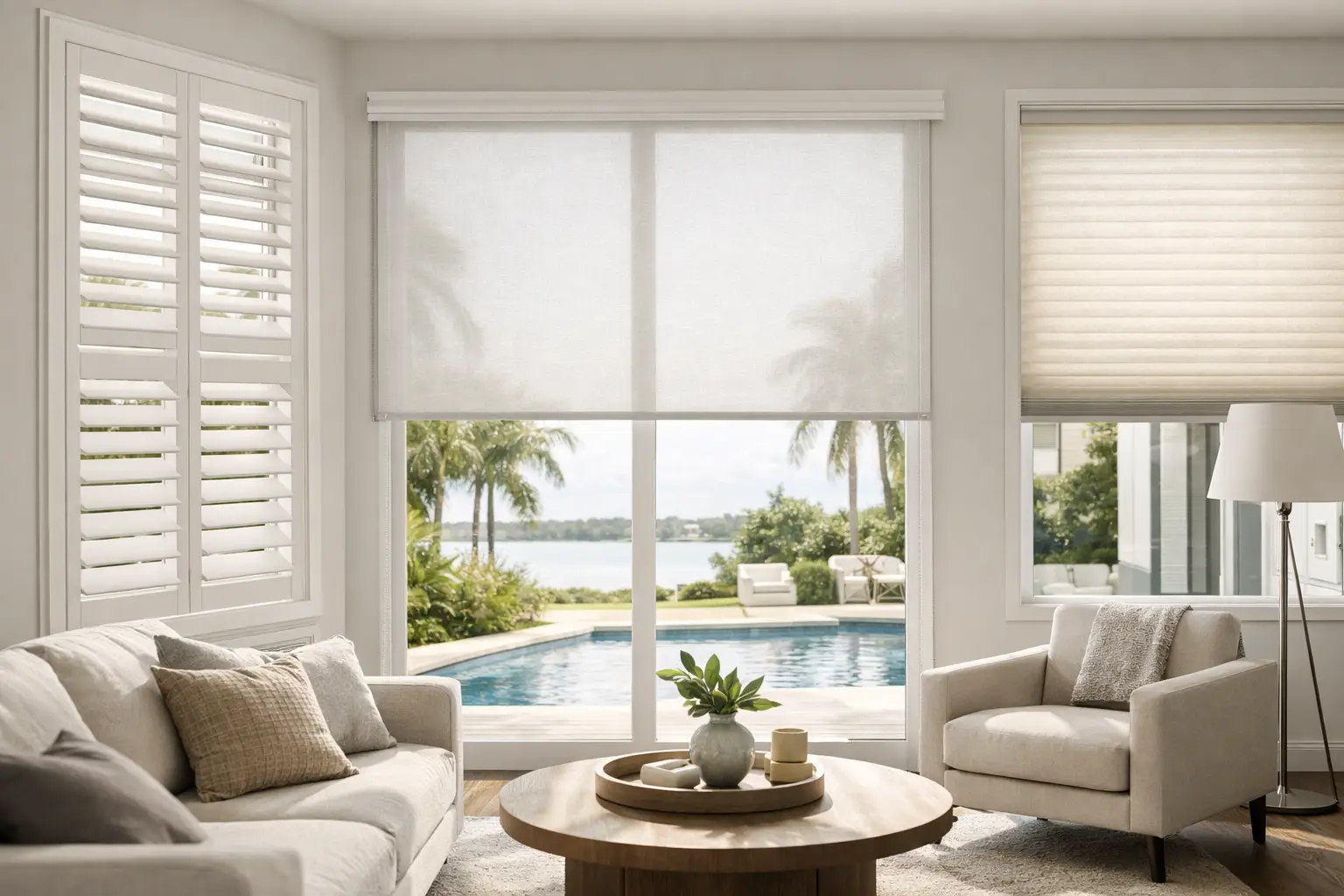
The afternoon sun can turn a beautiful Boca Raton living room into the one place nobody wants to sit. It flashes across the television, washes out a laptop screen, and creates harsh bright patches on flooring and furniture. Learning how to reduce window glare is not about closing off your home from natural light. The right window treatments soften direct sun while preserving the views, warmth, and polished look that make a room inviting.
In South Florida, glare is a daily design issue rather than an occasional inconvenience. Large windows, glass doors, waterfront views, and strong year-round sunshine call for a more thoughtful solution than simply pulling heavy curtains shut. The best choice depends on the direction of the window, how the room is used, the view you want to keep, and how much privacy and heat control you need.
Why Window Glare Is Harder Than It Looks
Glare happens when intense direct sunlight contrasts sharply with the darker surfaces inside a room. A west-facing window may be comfortable in the morning and almost unusable late in the day. East-facing bedrooms can have the opposite problem. Windows near pools, water, pale pavers, or neighboring glass buildings may also receive reflected light that feels especially sharp.
That distinction matters because reducing brightness is not always the same as reducing glare. A room can have plenty of pleasant daylight yet still be comfortable for reading, working, watching television, or relaxing. The goal is to diffuse, filter, or redirect the strongest rays without making the space feel dim.
Glare also affects more than comfort. Persistent sunlight can contribute to fading on wood floors, upholstery, artwork, and area rugs. It can make a home office difficult to use and force occupants to keep shades closed all day, even when they would rather enjoy the view.
How to Reduce Window Glare With the Right Covering
A custom-fitted window treatment gives you more control than a one-size-fits-all solution. Different styles handle light in different ways, so the best product is usually the one that matches both the exposure and the room’s daily routine.
Solar shades preserve the view while filtering light
Solar shades are often an excellent choice for rooms with expansive views, sliding glass doors, and sun-facing windows. Their specialized fabrics filter a portion of the sun’s rays and reduce screen glare while allowing a view to remain visible during the day.
The fabric openness matters. A more open weave offers a clearer outward view and lets in more light, while a tighter weave provides stronger glare control and greater daytime privacy. That is a genuine trade-off: a shade that offers the clearest view will not block as much sun as one with a tighter fabric. Color makes a difference as well. Darker solar fabrics often improve outward visibility, while lighter fabrics can create a softer visual effect inside the room.
For media rooms, offices, and living areas where the view is central to the design, solar roller shades provide a clean, tailored answer without adding visual bulk.
Roller shades offer a clean, flexible solution
Roller shades are a practical option when the priority is precise light management and a streamlined appearance. Available in light-filtering and room-darkening fabrics, they can be selected for a subtle glow or more complete sun control.
A light-filtering roller shade helps take the edge off direct sunlight while keeping the room bright. A room-darkening option is better for a bedroom, television room, or space with severe afternoon exposure. Many homeowners combine a solar or light-filtering shade for daytime use with drapery panels for added softness, privacy, and evening coverage.
Cellular shades help with glare and heat
Cellular, also called honeycomb, shades are especially well suited to windows that bring in both harsh light and noticeable heat. Their air-pocket construction adds insulation at the window, which can help improve comfort in sunny rooms.
For glare reduction, consider light-filtering cellular shades in spaces where you want daytime softness without complete darkness. Room-darkening cellular shades can be a better fit for bedrooms or areas where direct sun is difficult to manage. Top-down, bottom-up operation is particularly useful when the sun enters at eye level but you still want daylight from the upper portion of the window.
Plantation shutters give you adjustable light direction
Plantation shutters offer a more architectural way to control glare. Rather than covering the entire window, their louvers can be tilted to redirect sunlight toward the ceiling or floor and away from your eyes and screens. This makes them a strong option for offices, breakfast rooms, and living spaces that need changing levels of light throughout the day.
Shutters bring privacy and a finished, built-in look, but they do not disappear from view the way a roller shade can. They are ideal when their tailored style complements the room and when adjustable light control is more valuable than an unobstructed glass opening.
Sheer shades and drapery soften harsh light beautifully
For formal living rooms, bedrooms, and spaces where the window treatment is part of the décor, sheer shades and custom drapery can transform intense daylight into a soft, flattering glow. Sheer shades pair vanes with sheer fabric, allowing filtered light and view-through when open while providing more control as the vanes adjust.
Drapery can frame a large window or sliding door while adding visual warmth and sound softness. On its own, a sheer drapery fabric will diffuse sunlight but may not adequately handle a severe west-facing glare problem. Pairing it with a shade or lining it appropriately gives the design more function without sacrificing elegance.
Match the Solution to the Room
The same window treatment does not need to be used throughout the house. In fact, selecting each treatment based on how a room is used often creates a more comfortable and more intentional result.
A home office may benefit from solar shades that reduce computer-screen glare while maintaining daylight. A family room with a large television may need room-darkening roller shades or adjustable shutters. In a primary bedroom, cellular shades or lined drapery can support both restful darkness and daytime comfort. For a dining room, sheers, woven woods with a liner, or shutters may provide the right balance of atmosphere and control.
Window direction should guide the selection, too. East-facing rooms often need help early in the day, while western exposure can create a stronger late-afternoon challenge. South-facing windows may receive sustained bright sun, and north-facing windows generally need less glare protection. A professional consultation can identify where light is entering, how it moves through the room, and which treatment will perform best at the time you actually use the space.
Use Motorization for Changing Sun Conditions
The most effective glare solution is one that gets used consistently. Motorized window coverings make that easier, particularly for tall windows, wide sliding doors, and hard-to-reach openings. With the touch of a button, shades can lower when the afternoon sun reaches a television wall and raise again once the glare has passed.
Motorization also helps homeowners protect interiors while away. Scheduled operation can reduce exposure during the brightest hours without requiring anyone to be home. It is a practical upgrade for multi-room spaces where manually adjusting several shades every day is simply unrealistic.
For homes with varying exposures, motorization can be paired with different shade types in different areas. The result feels coordinated, but each room receives the level of control it needs.
Details That Make Glare Control Work Better
Coverage and installation matter as much as fabric choice. A treatment that is too narrow can allow bright slivers of light around the sides. A shade mounted inside the window frame may offer a clean look, while an outside mount can provide broader coverage where light gaps are a concern. For sliding doors and wide expanses of glass, the opening direction and stacking space should also be planned carefully.
Layering is another effective strategy. A solar shade can manage daytime glare, while drapery adds privacy and a more finished look at night. Shutters can provide daily adjustment, with drapery panels used primarily for decoration and softness. The best combination should feel intentional, not overdone.
Material selection deserves attention in South Florida as well. Products should suit the room’s humidity, sun exposure, and maintenance needs. Faux wood blinds, for example, can offer the look of painted wood with dependable performance in moisture-prone spaces. A design professional can help narrow the choices based on the window, the room, and the desired finish.
Get a Solution Designed Around Your Windows
Reducing glare should not mean losing the daylight and views that drew you to your home in the first place. With the right solar shades, shutters, cellular shades, sheers, drapery, or motorized controls, you can make bright rooms more comfortable at every hour of the day.
Boca Blinds has helped South Florida homeowners select custom window treatments since 1976, with experienced design guidance and professional installation tailored to each space. A free in-home consultation is an opportunity to see how different materials, opacities, and operating systems will work in your own light. The right treatment lets your home keep its sunshine, just without the squinting.