

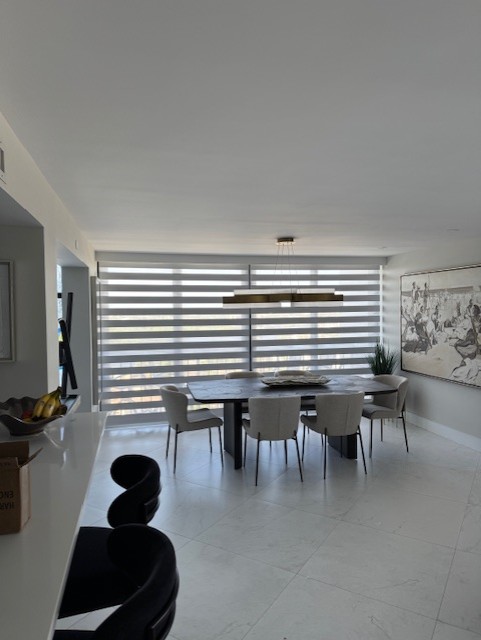
Sticker shock usually happens when someone compares a custom shade quote to a big-box blind on the shelf. They may look similar at a glance, but they are not built, measured, fitted, or installed the same way. If you are asking how much do custom window treatments cost, the honest answer is that pricing can range from a few hundred dollars for a single window to several thousand for a larger room or whole-home project.
That wide range is not sales talk. It reflects real differences in materials, window size, operating systems, fabrication, and installation. In South Florida, where sun exposure, privacy, heat control, and moisture resistance all matter, those choices can affect both the look of the room and the long-term value of the product.
How much do custom window treatments cost by product type?
Most homeowners start with the product category because it gives the clearest baseline. Custom blinds are often one of the more accessible options, while shutters and fully tailored drapery tend to sit at the higher end. Shades fall in the middle, but the exact style makes a big difference.
Custom faux wood or wood blinds often land in a moderate price range. They can be a smart fit for bedrooms, offices, and living spaces where adjustable light control matters. Faux wood is especially popular in Florida because it gives the warm look of wood with better resistance to humidity.
Roller shades and solar shades can be relatively straightforward or more premium depending on fabric, openness factor, and control system. A clean roller shade in a standard fabric may be one of the more budget-friendly custom solutions. A designer banded shade or premium solar fabric with motorization will cost more.
Cellular and honeycomb shades usually price above basic rollers because of their construction and insulating performance. Many homeowners choose them when they want a softer look and better energy efficiency, especially in rooms that get intense afternoon sun.
Woven woods, sheers, and layered shades tend to move upward in price because design is a bigger part of the purchase. These are often chosen as much for texture and style as for privacy and glare control. They can be beautiful, but they are not typically the lowest-cost option.
Plantation shutters are usually among the highest-priced custom window treatments. That is partly because they are built more like furniture than fabric. The material, frame construction, custom fitting, and professional installation all add cost, but shutters also deliver a finished architectural look that many homeowners see as a long-term investment.
Custom draperies can vary dramatically. Simple side panels may be one thing. Fully lined drapes with premium fabric, pleating, decorative hardware, and layered treatments are another. This is one of the categories where design choices can move the number quickly.
What homeowners typically pay per window
A practical way to think about cost is by looking at broad per-window ranges. Many custom blinds and shades start around a few hundred dollars per window and can climb into the mid-hundreds or higher depending on size and features. Shutters often start higher and can move well beyond that range for large or specialty windows. Drapery pricing may be quoted by panel, by width, or as a complete treatment package, so comparing apples to apples matters.
For a single standard-sized window, an entry-level custom roller shade may come in far below a premium motorized shade with designer fabric. Likewise, a simple blind for a guest room will not be priced like a shutter installation across a wall of sliding glass doors.
That is why online averages can be misleading. They are not wrong, but they rarely reflect the actual window sizes, installation conditions, or product specifications in your home.
The biggest factors that affect custom window treatment pricing
When people ask how much do custom window treatments cost, they are usually trying to understand what is driving the quote. In most cases, five factors explain the difference.
Window size and shape
Larger windows require more material and often more structural support. Tall windows, wide openings, sliders, arches, and specialty shapes all increase complexity. A treatment for a standard bedroom window is simply easier and less costly to produce than one for a two-story foyer or a wall of glass.
Material and construction
Vinyl, faux wood, hardwood, performance fabrics, natural woven materials, and composite shutter components all have different costs. Beyond the raw material, construction quality matters too. Heavier fabrics, better liners, reinforced headrails, and premium hardware usually improve performance, but they also raise the price.
Manual versus motorized operation
Motorization is one of the most common upgrades homeowners ask about, and for good reason. It adds convenience, improves child safety, and makes it easier to manage hard-to-reach windows. It also increases the project cost because you are adding motors, power solutions, programming, and sometimes smart-home integration.
For many clients, motorization is worth it in primary bedrooms, living rooms, and homes with expansive glass. But if budget is a concern, it may make sense to motorize only the most-used or hardest-to-access windows.
Brand and collection level
Not every custom product is built the same way. Well-known brands with stronger warranties, refined operating systems, and broader fabric libraries often cost more than opening-price collections. That does not mean the most expensive option is always the right one, but it does mean there can be real value behind the higher number.
Installation requirements
Professional measuring and installation are part of what makes custom worth considering in the first place. If windows are out of square, trim is uneven, or mounting conditions are tricky, the installation may require more time and expertise. That is especially true for shutters, motorized treatments, and layered designs.
Why custom costs more than off-the-shelf options
The simple answer is fit, finish, and service. Off-the-shelf treatments are made to approximate a window size. Custom treatments are made for your actual window, your room, and the way you want the treatment to function.
That difference shows up in several ways. The fit is cleaner. Light gaps are reduced. The operating system tends to feel better over time. The materials are usually stronger, and the finished look is more intentional. You are also paying for design guidance, precise measuring, and installation that helps the treatment perform the way it should.
For homeowners who care about aesthetics, privacy, and daily usability, that service layer is not an extra. It is part of the product.
Cost trade-offs that are worth thinking through
There is no single best window treatment for every room. A less expensive option may work perfectly in a guest room, while a premium solution makes more sense in a sun-exposed family room. The goal is not always to spend less or more. It is to spend wisely.
For example, shutters can carry a higher upfront cost, but many homeowners appreciate their durability and timeless appearance. Solar shades may look minimal, yet they can be a smart choice in homes with strong glare and UV exposure. Draperies add softness and style, but they may not be the first pick for every humid or high-traffic area.
This is also where a room-by-room approach helps. You do not need to choose the same treatment everywhere. Mixing shutters in key front-facing rooms, shades in bedrooms, and motorization only where it adds real convenience can create a balanced project budget without making the home feel pieced together.
What to expect during a custom quote
A good quote should account for more than the product alone. It should reflect measurements, material selections, mount type, controls, installation, and any special conditions. If you are comparing estimates, make sure each proposal includes the same scope.
This is where experienced guidance matters. Two treatments can appear similar in a photo and perform very differently in real life. A local specialist can help you weigh light control, privacy, exposure, maintenance, and style so you are not paying for features you do not need or missing ones you will wish you had later.
At Boca Blinds, that conversation often starts with how the room is used, what kind of sun it gets, and what level of finish the homeowner wants. Those details usually tell you more about the right investment than an online average ever will.
So, what is a realistic budget?
For a small project with a few standard windows, many homeowners can expect to invest in the low thousands for quality custom treatments. For larger homes, premium materials, shutters, motorization, or whole-home coordination, the number can rise significantly. That is normal. Custom pricing is tied to the scale and complexity of the project.
The better question is not just what custom window treatments cost. It is what you want them to do for your home. When the fit is right, the materials are well chosen, and the installation is done properly, window treatments do more than cover glass. They shape comfort, protect interiors, and make the room feel finished in a way that is hard to fake.
If you are planning a project, the most useful next step is to get a quote based on your actual windows, not a generic average. That is where the numbers start to make sense.