

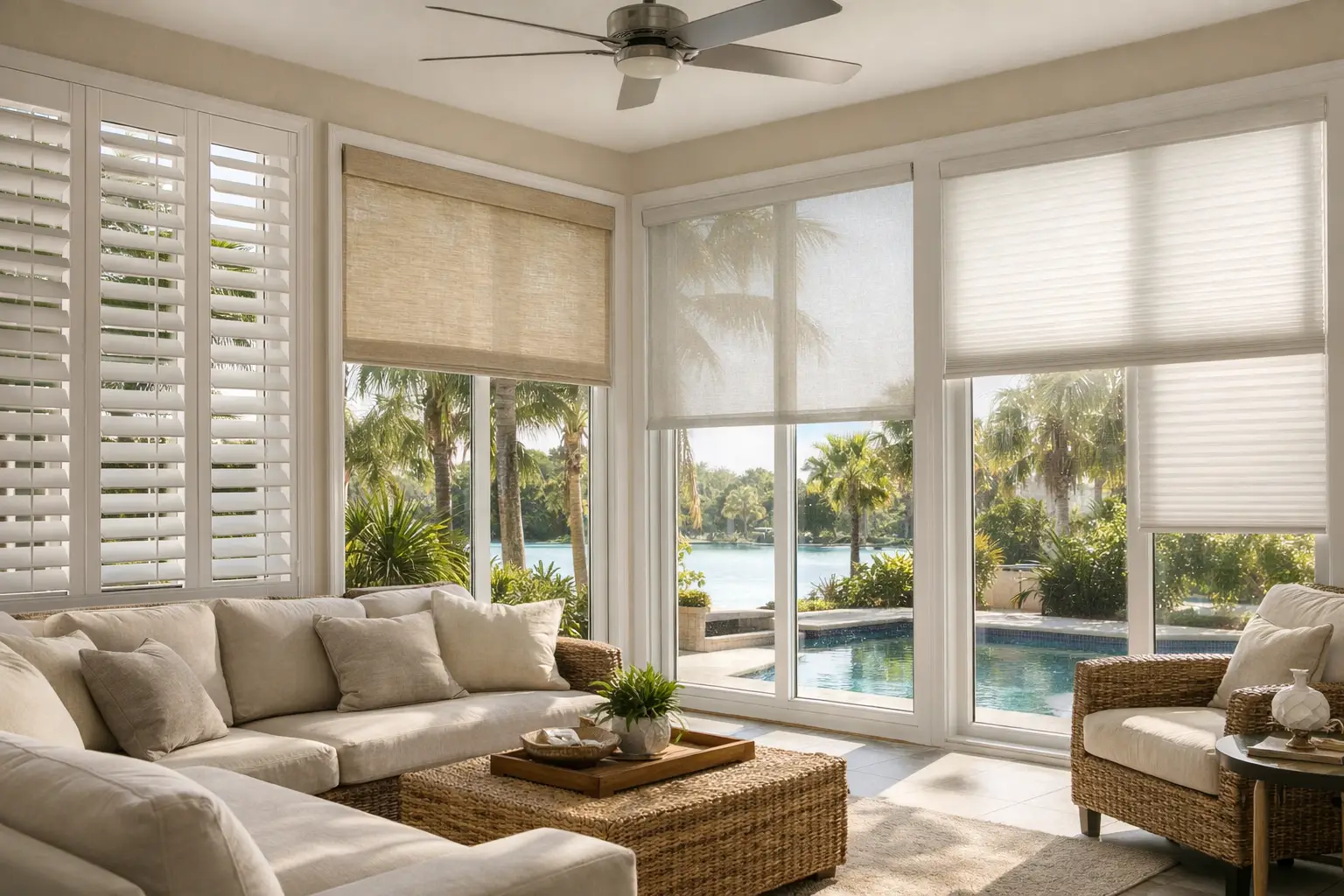
A sunroom should feel bright without becoming the room everyone avoids at 2 p.m. In South Florida, that balance can be difficult. Strong sun, reflective pool light, year-round heat, and large expanses of glass all affect comfort. The best shades for sunrooms control glare and solar heat while preserving the open, welcoming feeling that made you choose a sunroom in the first place.
The right answer depends on the direction of your windows, how you use the room, the amount of privacy you need, and the look of the rest of your home. A carefully selected custom shade can make a sunroom more comfortable for morning coffee, entertaining, reading, working from home, or simply enjoying the view.
What Sunroom Shades Need to Do
Sunroom window treatments work harder than shades in most other rooms. They need to filter harsh sunlight, protect furnishings from fading, and make the space more pleasant without turning it dark or closed off. For homes in Boca Raton, Delray Beach, and surrounding South Florida communities, managing solar exposure is usually the first priority.
Glare is often the immediate problem. It can wash out a television screen, make a laptop difficult to use, and create uncomfortable brightness even when the room does not feel especially hot. Heat gain is the longer-term concern. Direct sunlight through wide glass panels can raise the temperature in the room and place more demand on your air conditioning.
Privacy matters, too, particularly for sunrooms facing a neighboring property, street, or golf course. Yet many homeowners still want to see their landscaping, water view, or backyard. That is why sunroom shades should be chosen for their performance as well as their color and texture.
Best Shades for Sunrooms: The Leading Options
Solar roller shades for glare and view preservation
Solar shades are often an excellent fit for sunrooms with broad windows and attractive views. Their specialty fabric filters sunlight and reduces glare while maintaining an outward view during the day. They have a clean, tailored appearance that works especially well with contemporary interiors, coastal homes, and rooms where the windows are a major design feature.
The fabric openness you choose makes a meaningful difference. A more open weave provides a clearer view and lets in more natural light, while a tighter weave offers stronger glare control and daytime privacy. For a sunroom that receives intense afternoon sun, a tighter solar fabric may be the more comfortable choice. For a shaded room or one with a prized garden view, a more open fabric can feel just right.
Solar roller shades are not typically the best option when complete nighttime privacy is required. At night, interior light can make silhouettes visible from outside. In those situations, consider pairing the shades with drapery panels or selecting a different style of shade.
Cellular shades for added insulation
Cellular shades, also called honeycomb shades, are a practical choice when heat control is a primary goal. Their pleated cellular construction creates air pockets that help reduce heat transfer at the glass. This can make a noticeable difference in sunrooms with older windows, western exposure, or large areas of direct sun.
They also provide a softer, more traditional visual effect than a roller shade. Available in light-filtering and room-darkening fabrics, cellular shades offer flexibility for homeowners who want a bright room during the day but more privacy and coverage when needed.
The trade-off is the view. Unlike solar shades, cellular shades generally do not maintain a clear view through the fabric when lowered. They are best for sunrooms where comfort and energy efficiency matter more than looking through the window at all times. Top-down/bottom-up operation can be particularly useful, allowing daylight in from above while covering the lower portion of the window for privacy.
Sheer shades for soft, adjustable light
Sheer shades combine fabric vanes with sheer panels, creating a refined way to manage changing light throughout the day. With the vanes open, they diffuse sunlight and preserve a light, airy atmosphere. With the vanes tilted or closed, they provide greater glare control and privacy.
This makes sheer shades a strong choice for sunrooms used as living spaces or entertaining areas. They are especially appealing when the goal is to soften bright South Florida light rather than block it completely. Their elegant appearance pairs naturally with upholstered furniture, layered rugs, and more formal interior design.
Because large sunroom windows can vary in size and shape, custom measuring is essential with sheer shades. Properly proportioned treatments look intentional and allow the vanes to operate cleanly across the full window span.
Woven wood shades for warmth and texture
A sunroom can easily feel more like an extension of the outdoors when natural textures are part of the design. Woven wood shades bring depth and warmth through materials and patterns that complement tropical, coastal, transitional, and relaxed traditional homes.
These shades filter light beautifully, creating a softer glow than many synthetic fabrics. They are ideal when style and texture are central to the room’s design. Add a privacy liner when the sunroom is visible from outside or when you want more control over strong sun.
Woven wood shades are less precise than solar shades for managing glare, and natural weaves can have small variations in light filtering. That character is part of their appeal, but it is worth considering if the room doubles as an office or media space.
Room-darkening roller shades for demanding exposures
For a sunroom that faces west or receives severe late-day sun, room-darkening roller shades can provide a substantial level of light and heat control. They are useful for rooms where television viewing, afternoon relaxation, or privacy are priorities.
A room-darkening fabric does not always mean total darkness, particularly when windows are wide or irregularly shaped. Small light gaps can remain at the sides of the shade. Still, this option can dramatically reduce brightness and make a difficult sunroom more usable.
Consider Motorization for High or Wide Windows
Many sunrooms have windows that are tall, grouped together, or difficult to reach behind furniture. Motorized shades make daily light control far more convenient. With a remote, wall control, or programmed schedule, you can lower shades before the strongest afternoon sun arrives and raise them when you want to enjoy the view.
Motorization is also a polished option for multiple shades that should move together. Instead of adjusting one window at a time, you can create a uniform look across the room. For homeowners who travel seasonally, scheduled operation can also help protect interiors from prolonged direct sunlight while the home is unoccupied.
Choosing Fabric Color and Openness
Color is not just a decorative decision in a sunroom. Lighter fabrics can help the room feel open and reflect more visible light, while darker solar fabrics may provide a clearer outward view and stronger glare reduction. The best choice depends on the amount of direct sun and the colors already present in the room.
Bring fabric samples into the actual sunroom before making a final selection. A color that looks subtle in a showroom can appear much brighter in full afternoon light. It is also helpful to look at samples against the window at different times of day, particularly if your sunroom has eastern or western exposure.
For solar shades, openness should be selected with equal care. A fabric that is too open may not solve your glare problem. One that is too closed may reduce the very view and daylight you hoped to preserve. An experienced design consultation helps narrow those choices based on the orientation and use of your room.
Why Custom Fit Matters in a Sunroom
Sunrooms rarely have the simple, uniform window layout found in a bedroom. They may include corner windows, sliding doors, transoms, unusually wide panels, or windows installed at different heights. Ready-made treatments often leave awkward gaps, interfere with handles, or fail to cover the glass correctly.
Custom shades are measured for the individual window and selected for the way it operates. This matters for appearance, but it also affects performance. Better coverage improves privacy and light control, while correct mounting keeps shades operating smoothly for years.
Boca Blinds has helped South Florida homeowners select custom window treatments since 1976, with professional design guidance and installation that takes the guesswork out of a highly visible space. A free in-home estimate allows you to compare fabrics, operating options, and shade styles where they will actually be used.
A Comfortable Sunroom Starts With the Right Balance
The most successful sunroom is not the darkest one or the brightest one. It is the room where you can enjoy the daylight, protect your furnishings, and stay comfortable through the hottest part of the afternoon. Whether that points to solar roller shades, insulating cellular shades, elegant sheers, or textured woven woods, a tailored selection gives your sunroom a finished look and a more useful life every day.