

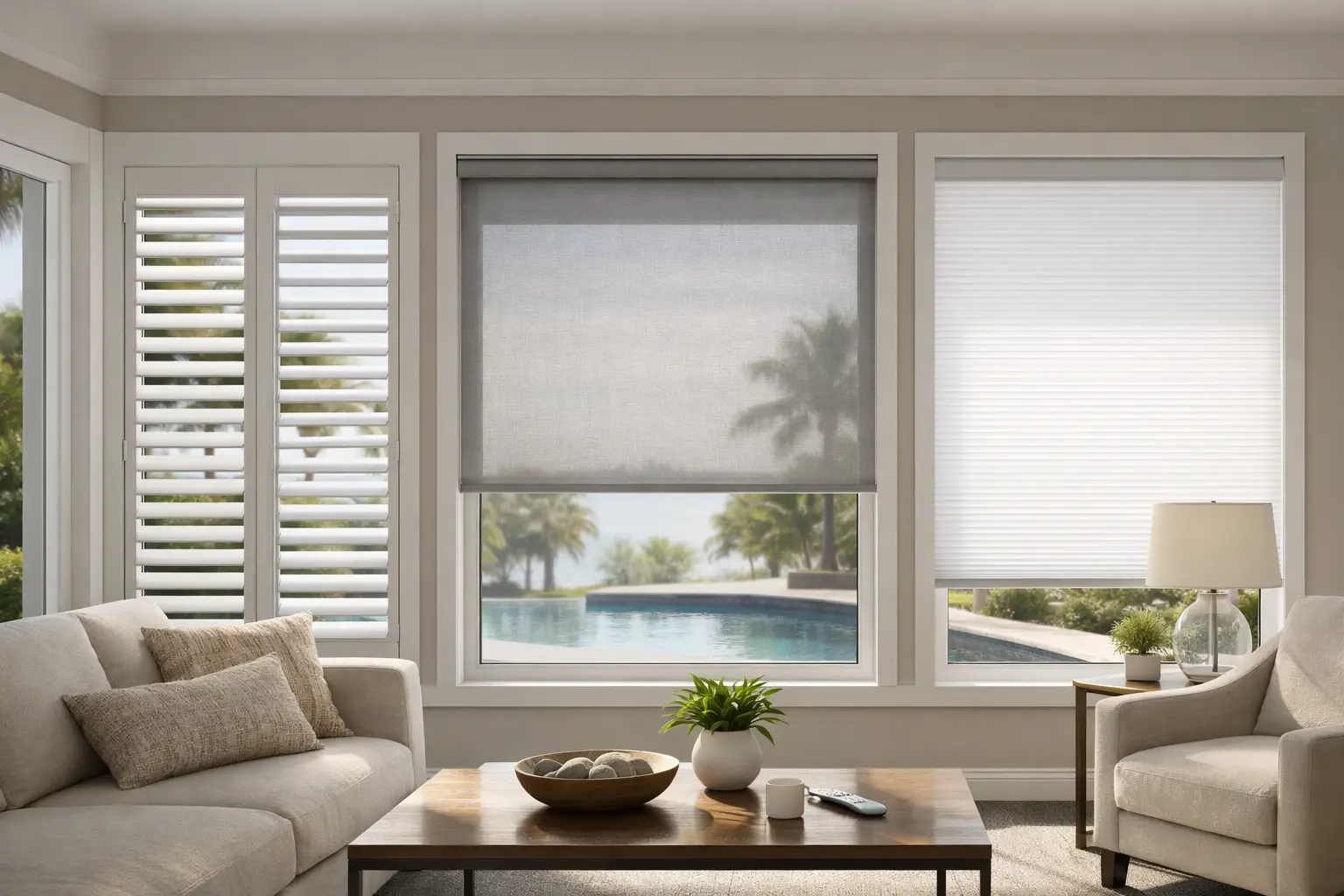
A bright South Florida room can feel beautiful at 9 a.m. and nearly unusable by lunchtime. Sun reflecting off a pool, pale pavers, neighboring windows, or the ocean can wash out a television, create glare across a computer screen, and make a favorite seating area uncomfortable. The best shades for glare reduction do more than darken a room. They manage direct light while preserving the view, privacy, and polished look that make a home feel thoughtfully finished.
The right choice depends on the window’s direction, how the room is used, and how much daylight you want to keep. A shade that is ideal for a west-facing office may be too opaque for a breakfast room with a garden view. That is why glare control works best when it is planned around the individual window rather than chosen as a one-size-fits-all solution.
Why glare is different from ordinary sunlight
Glare is not simply brightness. It is excessive contrast or reflected light that strains the eyes and interferes with what you are trying to see. It often appears when sunlight hits glossy floors, countertops, televisions, framed artwork, or device screens at a particular angle.
In Boca Raton and surrounding coastal communities, glare can be especially persistent. Large glass doors, expansive windows, bright outdoor surfaces, and strong afternoon sun create a combination that standard room-darkening solutions do not always address gracefully. The goal is usually controlled daylight, not a permanently dark room.
A well-selected shade softens harsh rays before they reach the interior. It can also help protect furnishings, flooring, and artwork from prolonged sun exposure while making daily activities more comfortable.
The best shades for glare reduction by room
Solar shades for view-preserving glare control
Solar shades are often the first choice for rooms where the view matters as much as comfort. They are made with a specialty screen-like fabric that filters sunlight and reduces glare while allowing you to see outward during the day. This makes them especially well suited to living rooms, condos with water or golf course views, home offices, and glass-door openings.
The key decision is openness factor, which describes how tightly the fabric is woven. A lower openness factor generally provides stronger glare reduction and more privacy, while a higher openness factor allows a clearer view and more natural light. There is a trade-off: the more clearly you can see out, the more light will remain in the room.
For a room with a television or computer near a bright window, a tighter solar fabric is often preferable. In a sitting room where preserving a wide exterior view is the priority, a more open fabric may provide the balance you want. Color also matters. Darker solar fabrics can offer better outward visibility in daylight, while lighter fabrics tend to create a softer, more luminous look from inside.
Roller shades for clean lines and flexible light control
Roller shades offer a streamlined appearance that works beautifully in contemporary homes, offices, and spaces with minimal architectural detailing. They are available in a wide range of fabrics, from light-filtering materials that soften glare to room-darkening options that provide stronger coverage.
For glare reduction, roller shades are a practical fit when you want a tailored, low-profile treatment with consistent coverage across a large window. Light-filtering fabrics reduce harsh brightness without making the room feel closed off. Room-darkening roller shades are better for media rooms, bedrooms, or west-facing rooms that receive intense direct sun late in the day.
A dual-shade arrangement can be particularly useful. A light-filtering or solar shade can stay in place for daytime glare control, while a room-darkening layer is available when greater privacy or darkness is needed. This approach gives a multipurpose room the flexibility it needs without sacrificing its daytime appeal.
Cellular shades for glare control and insulation
Cellular shades, also called honeycomb shades, are known for their crisp pleats and energy-efficient construction. Their cellular pockets trap air, which can help moderate heat transfer at the window. In a sunny South Florida home, that added insulation can be a meaningful benefit alongside glare reduction.
Light-filtering cellular shades diffuse incoming sunlight evenly, replacing sharp bands of light with a gentler glow. They are an excellent choice for bedrooms, studies, family rooms, and areas where privacy is important. When more darkness is required, room-darkening cellular fabrics provide more complete light blockage.
The trade-off is view. Unlike solar shades, cellular shades do not preserve a clear view through the fabric when lowered. They are best for homeowners who value soft, even light and energy efficiency more than continuous visibility to the outdoors.
Sheer shades for soft light with an elegant finish
Sheer shades combine soft fabric vanes with sheer panels, creating a refined way to filter sunlight. With the vanes open, they diffuse bright daylight and reduce glare while maintaining an airy feel. When the vanes are tilted or closed, they provide increased privacy and light control.
This makes sheer shades a strong option for formal living rooms, dining rooms, and bedrooms where the window treatment is part of the decorative statement. They create a softer effect than a traditional blind while giving you more adjustment than a fixed sheer panel.
Because sheer fabrics still admit light, they may not be enough on their own for a media room or a window with severe afternoon exposure. In those situations, pairing them with drapery panels can add both visual richness and more complete coverage when needed.
Woven wood shades for filtered, organic light
Woven wood shades bring natural texture to a room and can turn harsh sunlight into warm, patterned light. They are a beautiful choice for coastal, transitional, and casually elegant interiors. Their effectiveness against glare depends on the weave and whether a liner is added.
Without a liner, woven woods provide filtered light but may allow noticeable brightness through the material. With a privacy or room-darkening liner, they can offer much stronger glare control. This is a style-forward option for homeowners who want texture and character but still need practical sun management.
Features that make a shade work harder
Fabric selection matters, but the operating system and installation details matter too. A shade that is difficult to adjust may stay open when the sun changes position, leaving the room exposed at the exact time glare becomes a problem.
Motorized shades are particularly valuable for high windows, wide sliding doors, and rooms where sunlight shifts throughout the day. With scheduled operation, shades can lower before strong afternoon glare enters the room and raise later to restore the view. They are also convenient for homeowners who want dependable light control without manually adjusting multiple treatments every day.
Consider the fit at the edges as well. Inside-mounted shades offer a clean, architectural appearance, but small light gaps can remain along the sides. For rooms requiring stronger light control, an outside mount, side channels, or layered drapery may reduce those gaps. Professional measuring is essential, especially on oversized glass and doors where even a small alignment issue becomes noticeable.
Match glare control to window direction
East-facing windows create their greatest challenge in the morning, often affecting kitchens, breakfast rooms, and bedrooms. West-facing windows bring low, intense afternoon light that can be difficult to manage in offices and living areas. South-facing windows receive consistent light across much of the day, while north-facing windows usually need less aggressive glare control.
The location of the activity matters just as much as the direction. If a desk faces the window, a solar shade may be enough. If the screen faces across the window, reflected light may remain a problem and a denser fabric could be the better choice. A professional consultation can identify these details before the treatment is ordered.
A custom solution creates a better-looking room
The most effective glare solution should not make a room feel like it has been shut down. It should let you enjoy daylight on your terms, protect the interior, and complement the furniture, wall color, and architecture already in place.
Since 1976, Boca Blinds has helped homeowners and office clients select custom window treatments that balance comfort, beauty, and daily function. During a free in-home estimate, experienced guidance can help determine whether your room calls for solar shades, cellular shades, roller shades, or a layered treatment designed around the way you actually live.
A window with difficult glare is not a design flaw. With the right custom shade and a precise installation, it can become one of the most comfortable places in the home.