

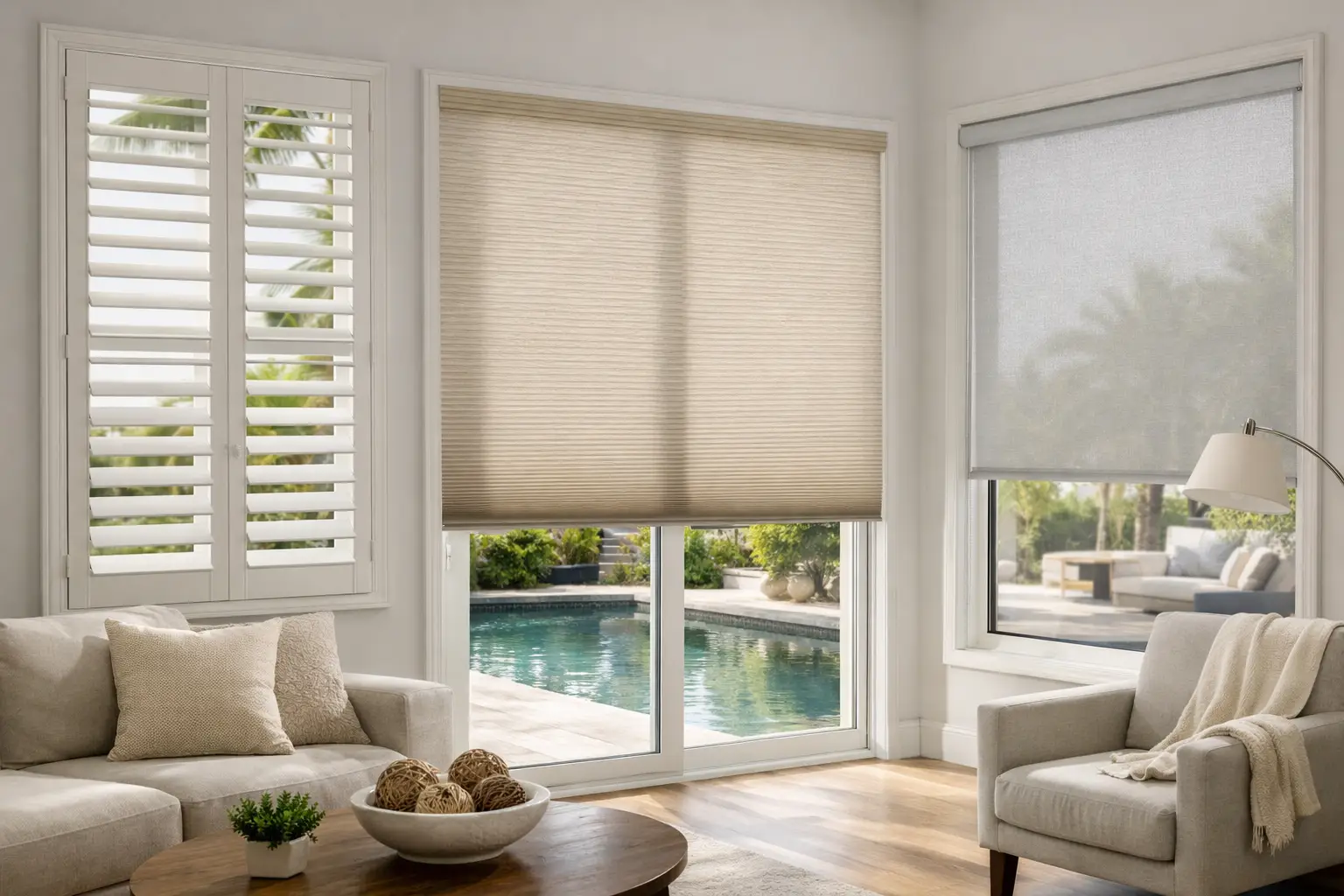
Sun-facing windows can make a beautiful South Florida home feel harder to cool than it should. The right energy efficient window coverings do more than soften light or finish a room – they help manage heat gain, reduce glare, protect interiors, and make everyday comfort easier to maintain.
For homeowners, that matters in very practical ways. Rooms stay more usable in the afternoon, furniture and flooring get more protection from fading, and your air conditioning does not have to work as hard to keep up with direct sun. For offices, the benefits are just as clear: fewer hot spots, less screen glare, and a more polished environment for staff and clients.
What energy efficient window coverings actually do
Windows are one of the most common sources of unwanted heat. Even well-designed rooms can become uncomfortable when glass allows strong sunlight to pour in for hours at a time. Energy efficient window coverings create an added barrier between the window and the room, helping control solar heat before it spreads through the space.
That can happen in a few different ways. Some coverings trap air and create insulation. Others reflect part of the sun’s heat and UV rays. Some filter glare while still allowing natural light into the room. The best choice depends on the window’s orientation, the amount of direct sun it gets, your privacy needs, and how much you want to preserve the view.
This is where many homeowners run into an oversimplified message. There is no single “best” treatment for every window. A west-facing family room with large glass doors has different demands than a shaded bedroom or a front office that needs daytime privacy without losing light.
Which energy efficient window coverings work best?
Several product types can improve comfort and reduce solar heat gain, but they do it in different ways. Understanding those differences helps you choose a treatment that performs well and still suits the style of your home.
Cellular shades
Cellular shades, often called honeycomb shades, are one of the most effective options for insulation. Their structured pockets trap air, which helps reduce heat transfer through the glass. That design makes them especially appealing for bedrooms, living areas, and other rooms where comfort is the top priority.
They also offer a clean, tailored look that works in both traditional and contemporary interiors. Depending on the fabric and opacity, they can provide anything from filtered light to strong room-darkening performance. The trade-off is that while they are excellent for energy performance, they do not preserve a sharp outdoor view in the way some solar fabrics do.
Solar shades
Solar shades are a strong choice when glare reduction and view preservation matter. These shades are designed to filter sunlight, cut glare, and reduce UV exposure while still allowing you to see out during the day. In homes with large windows, golf course views, or bright office settings, they often strike the right balance between performance and openness.
Their effectiveness depends heavily on fabric openness and color. A tighter weave may block more heat and glare, but it also reduces visibility and incoming light. A more open fabric keeps the view clearer, but gives up some performance. In South Florida, that balance is worth discussing room by room.
Plantation shutters
Plantation shutters offer durability, light control, and a more substantial barrier than many people expect. When custom-fitted well, they can help reduce heat and light intrusion while adding architectural character to the room. They are especially popular in homes where homeowners want a permanent, upscale look.
Shutters are not always the highest-performing option from a pure insulation standpoint, but they bring strong value through longevity, adjustability, and curb appeal. For many homeowners, that combination makes them a smart long-term investment.
Roller shades and layered solutions
Roller shades can also contribute to energy efficiency, especially when selected in performance fabrics designed for solar control. They tend to have a streamlined appearance, making them popular in modern homes and offices. Depending on the material, they can soften light, reduce glare, and improve privacy without adding visual bulk.
In some rooms, layered window treatments make the most sense. Pairing shades with draperies, for example, can improve insulation and create more flexibility throughout the day. A layered approach is often useful in bedrooms, formal spaces, or rooms with very large expanses of glass.
How to choose the right option for your home
The smartest selection starts with the room, not the product catalog. If a space overheats every afternoon, heat control should lead the decision. If preserving the view is non-negotiable, then you may accept a bit less insulation in exchange for a more open look.
Start by considering sun exposure. East-facing windows bring morning light and warmth, while west-facing windows usually create the harshest late-day heat. South-facing exposures often need sustained solar management throughout the day. North-facing windows may need less aggressive treatment, depending on nearby reflection and landscape conditions.
Then think about how you use the room. Bedrooms often benefit from stronger light control and insulation. Kitchens may need a practical material that handles humidity and daily use well. Living rooms may need a treatment that manages glare without making the room feel closed off. In offices, screen visibility and clean lines may matter just as much as thermal performance.
Aesthetics matter too. The best-performing shade is not the best choice if you do not like how it looks in the room. Window treatments should support the architecture, coordinate with finishes, and feel appropriate to the scale of the windows. Good design and good performance should work together.
Why custom fit makes a difference
Energy performance is not only about product type. Fit matters. Gaps at the sides of a shade or poorly measured shutters can allow more light and heat to pass through, reducing the benefit of the treatment.
Custom window coverings are designed for the actual dimensions and conditions of your windows. That is especially important in homes with oversized openings, specialty shapes, sliding glass doors, or rooms where a polished finished look matters. Professional measuring and installation also help the treatment operate properly over time, which protects the value of the investment.
This is one reason many homeowners prefer a guided process rather than trying to compare materials and measurements on their own. With expert input, it becomes easier to match the right product to the right room and avoid paying for a solution that looks good on paper but does not suit the space.
Energy savings are real, but comfort is usually the first thing you notice
People often ask whether window coverings truly reduce energy bills. In many homes, yes, they can help by reducing solar heat gain and easing the load on the cooling system. The exact savings depend on your windows, insulation, sun exposure, thermostat settings, and the type of product installed.
Still, monthly utility savings are only part of the value. Most homeowners notice comfort first. The room feels less harsh. The floor near the window is not as hot. Afternoon TV watching gets easier. Artwork, fabrics, and wood finishes get more protection from intense UV exposure. Those day-to-day improvements are often what make the purchase feel worthwhile.
For South Florida properties, this kind of performance is not a luxury detail. It is part of making the home function better year-round. When window treatments are chosen carefully, they can support comfort, privacy, style, and long-term interior protection all at once.
If you are considering new window treatments, it helps to look beyond color swatches and fabric samples alone. The right solution should suit the way you live, respond to the sun your home gets, and feel like it truly belongs in the space. That is where experienced design guidance makes all the difference, and it is why so many homeowners still prefer a professional consultation before making a final decision.