

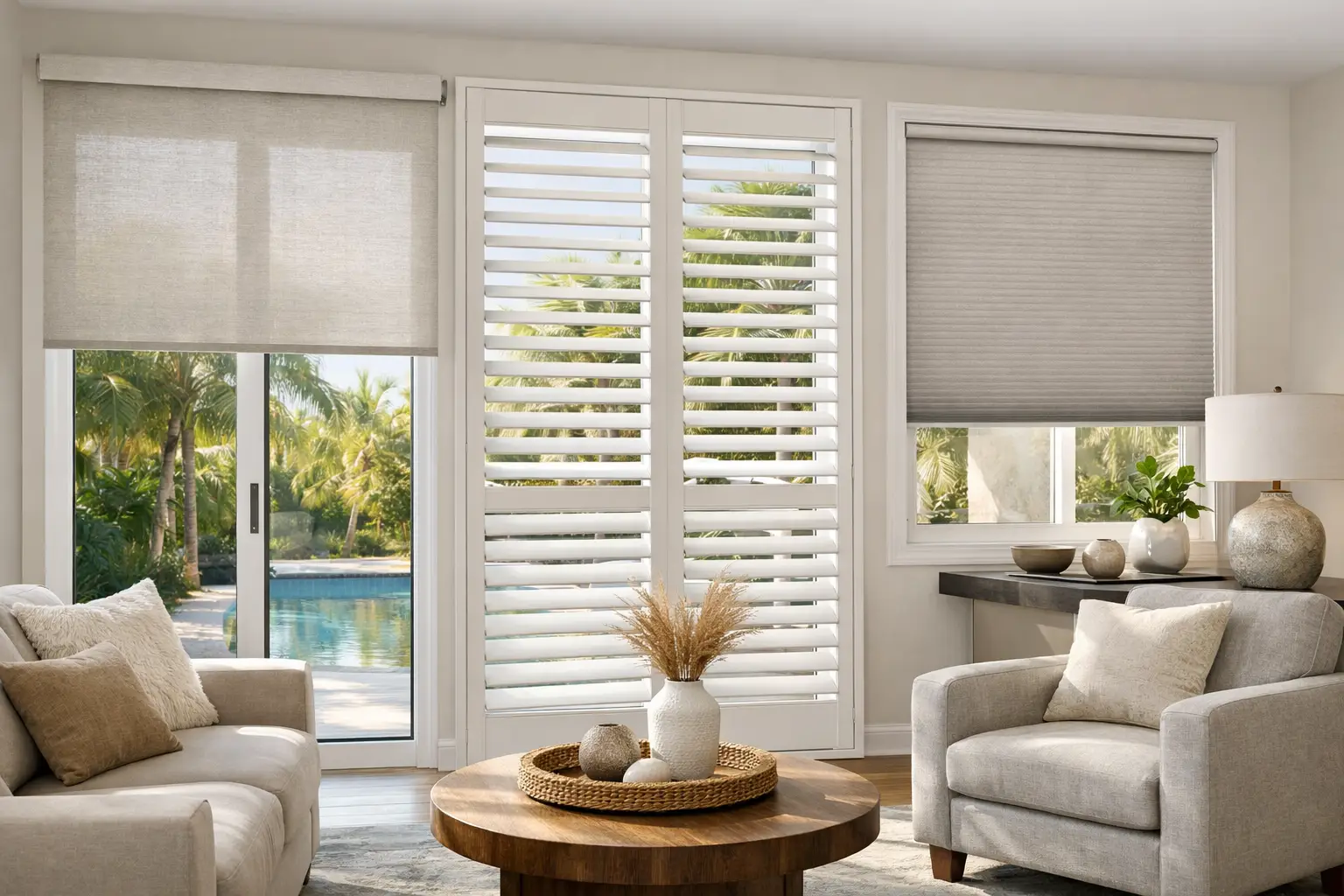
A wall of bare glass can make even a beautifully furnished room feel unfinished. Too much sun fades floors and upholstery, too little privacy leaves a home exposed, and the wrong covering can throw off the entire look. That is why choosing the best custom window treatments is less about picking a product off a shelf and more about finding the right solution for how you live.
Custom matters because windows are never all asking for the same thing. A west-facing family room in South Florida has very different demands than a formal dining room, a primary bedroom, or a home office with afternoon glare. The best results come from matching function, scale, materials, and style to each space instead of trying to force one treatment throughout the house.
What makes the best custom window treatments?
The best custom window treatments do three jobs at once. They control light, provide privacy, and support the design of the room. A treatment can look beautiful in a showroom and still be the wrong fit if it does not handle heat, moisture, or daily use the way your home requires.
Fit is the first advantage of going custom. Precise measuring creates a cleaner appearance, smoother operation, and better coverage. That matters on large windows, sliding glass doors, arched openings, and any room where uneven gaps or off-the-shelf sizing would be noticeable.
The second advantage is selection. With custom treatments, you are not limited to a few colors or standard materials. You can coordinate with flooring, wall color, trim detail, furniture, and the amount of natural light you want to preserve. You also gain access to upgraded features such as cordless operation, motorization, room-darkening liners, and fabrics designed to filter UV while keeping the room bright.
Best custom window treatments by room and need
There is no single winner for every home. The better question is which treatment performs best in each room.
For living rooms and main gathering spaces
Shades are often an excellent choice when homeowners want a tailored look without visual heaviness. Roller shades offer clean lines and work especially well in contemporary interiors. Solar shades are ideal when glare control is the main issue, because they reduce harsh sunlight while preserving the view. If your living room faces the pool, patio, or backyard, that balance can be more useful than complete blackout.
Roman shades bring more softness and decorative presence. They suit traditional, transitional, and coastal interiors, especially when the room needs texture and a more finished designer look. The trade-off is that some Roman styles show fuller folds when raised, so they may not be the best fit if you want the most minimal profile.
Draperies also deserve consideration here, particularly for larger windows and layered designs. They add height, softness, and a sense of completion that hard treatments alone sometimes cannot deliver. In rooms with strong sun exposure, pairing drapery with functional shades often gives the best mix of beauty and performance.
For bedrooms
Bedrooms usually need stronger privacy and better light blocking. Cellular shades are a smart option because they provide insulation, soften incoming light, and can be selected in room-darkening fabrics. They are especially appealing when comfort is part of the goal, not just appearance.
If total darkness is important, layered treatments tend to outperform a single product. A shade with side coverage can help, but combining it with drapery often gives a more complete result. This matters for light-sensitive sleepers, nurseries, and guest rooms that need flexibility throughout the day.
Plantation shutters also work beautifully in bedrooms, especially when homeowners want a timeless architectural look. They offer strong privacy control and lasting visual value, though they do not create a blackout environment the way fabric-based treatments can.
For kitchens and bathrooms
Moisture resistance and easy maintenance matter most in these spaces. Faux wood blinds remain a popular choice because they give the warmth of wood while standing up better to humidity. They are practical, attractive, and well suited to everyday use.
Shutters are another strong contender, particularly in bathrooms where privacy and durability are both priorities. Their clean structure complements a wide range of home styles, from coastal to traditional. If the room has limited wall space, however, the window depth and opening style should be evaluated before making a decision.
For sliding glass doors and wide openings
Large expanses of glass need scale-appropriate treatments. Vertical solutions can still work well, but many homeowners now prefer panel track systems, wide roller shades, or drapery panels for a more updated appearance. The right answer depends on traffic flow, how often the doors are used, and whether you want the treatment to disappear visually or make more of a design statement.
Motorized shades can be particularly valuable here. They make broad or hard-to-reach openings easier to manage and allow for smoother day-to-day use.
Shades, blinds, shutters, or drapery?
Each category solves a different problem, and each comes with trade-offs.
Blinds offer adjustable light control and a familiar, versatile look. They work well in many rooms and are available in materials that suit both casual and polished interiors. Their lines are more defined and functional, which some homeowners prefer and others find less warm than fabric.
Shades create a cleaner silhouette. They are often chosen for a softer, more contemporary finish and can range from highly minimal to richly textured. Depending on the style, they may give up some of the precise tilt control that blinds provide.
Shutters bring durability, strong curb appeal, and an architectural quality that can enhance home value. They are a long-term investment and often one of the most polished choices in a home. At the same time, they require the right window conditions and budget, since they are more permanent than many other treatments.
Drapery adds softness, dimension, and a custom-furnished look. It can frame a window beautifully and help a room feel complete. Fabric treatments do require thoughtful selection, especially in sunny climates where lining, fabric performance, and installation details make a real difference over time.
How South Florida homes change the decision
In this region, sun management is not a small detail. It affects comfort, furniture protection, glare, and energy use. Homes with large windows, water views, or strong afternoon exposure often benefit from treatments designed to filter UV and control heat while still preserving natural light.
That is one reason custom guidance matters so much. A treatment that looks perfect in a catalog may not perform well against intense sun or high humidity. Materials, fabric opacity, operating system, and even color choice all play a role in how well a treatment holds up and how comfortable the room feels.
Motorization also makes more sense here than many homeowners first assume. In rooms with tall windows, multiple openings, or daily sun exposure shifts, scheduled operation can improve comfort and protect interiors without requiring constant adjustment.
Why professional measuring and installation matter
Window treatments are one of those home upgrades that look simple until details go wrong. Small measuring errors can lead to light gaps, dragging hems, uneven mounts, and products that never operate quite right. On specialty windows or larger installations, those mistakes become expensive quickly.
Professional installation protects the investment. It helps ensure the treatment is mounted securely, aligned properly, and operating as intended from day one. It also removes the uncertainty around inside mount versus outside mount, stack height, clearance, and hardware placement.
For homeowners who want a polished finished result, this is often where custom service separates itself from a do-it-yourself purchase. The process is easier, and the final appearance is stronger.
How to choose the best custom window treatments for your style
Start with the room, not the product. Ask what the space needs most – privacy, glare control, softness, insulation, convenience, or a stronger decorative finish. Then consider your design style. A sleek interior may lean toward roller or solar shades, while a more traditional or transitional home may call for shutters, Roman shades, or drapery.
It also helps to think in layers. Some of the most successful rooms combine treatments rather than relying on one product to do everything. A woven wood shade can add texture while drapery introduces softness. A solar shade can manage glare while side panels finish the room visually. The best design choices often come from balancing performance and appearance rather than prioritizing one over the other.
If you are furnishing a full home, consistency matters, but so does flexibility. Treatments do not have to match exactly from room to room. They should relate to one another in color, quality, and style while still responding to each space individually.
A long-established local company like Boca Blinds can guide that process in a way that saves time and prevents costly missteps, especially when the goal is to make every room feel considered, comfortable, and complete.
The right window treatment should do more than cover glass. It should improve the way the room looks in the morning, feels in the afternoon, and functions every day after that.