

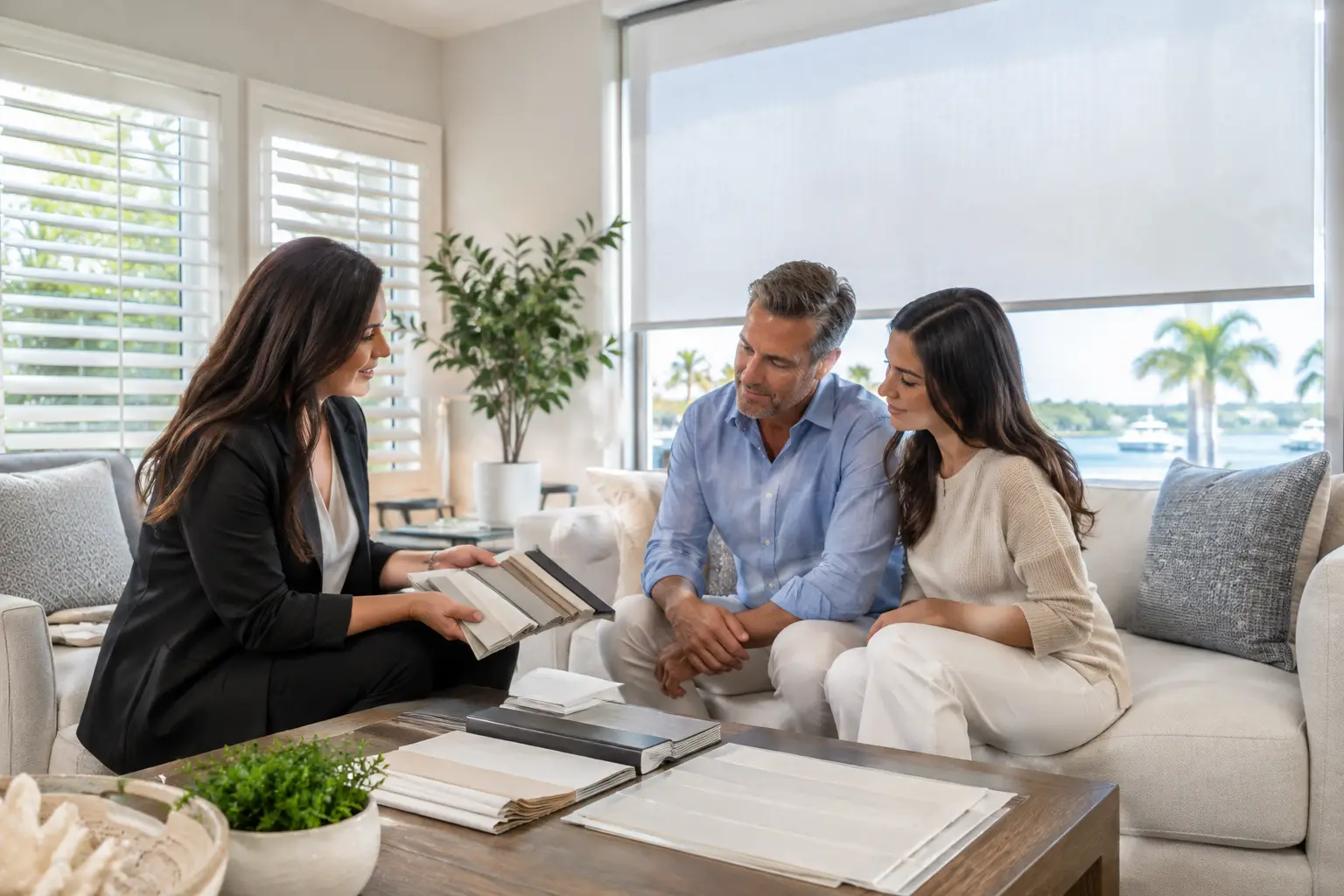
A beautiful room can still feel unfinished when the afternoon sun turns the television into a mirror, a bedroom lacks privacy, or bare windows leave an otherwise polished space feeling flat. The window treatment consultation process is designed to solve those details before a homeowner commits to a style, fabric, or operating system. It brings together the visual side of the decision with the practical realities of each window.
For South Florida homes, that balance matters. Bright light, heat, humidity, wide glass doors, waterfront views, and closely spaced neighboring properties all shape what will work well. A thoughtful consultation replaces guesswork with recommendations tailored to the home, the people using it, and the way each room needs to perform.
What Happens During a Window Treatment Consultation?
A consultation is not simply a sales appointment or a quick measurement visit. It is a working design conversation that considers your windows, furnishings, light exposure, privacy needs, and preferences for daily use. The goal is to narrow a broad range of blinds, shades, shutters, sheers, woven woods, and draperies into options that look right and function reliably.
A skilled window treatment professional begins by listening. You may be updating one room after a renovation, furnishing a newly purchased home, replacing aging coverings, or improving an office environment. Those starting points lead to different recommendations. A family room with expansive sliders has different needs than a guest bedroom, a home office, or a formal dining room.
The most productive consultations are candid. If glare bothers you in the afternoon, say so. If you love natural light but want more privacy after dark, that is useful information. If you prefer a clean, minimal look or want the softness of layered drapery, the design direction becomes clearer much faster.
The Initial Conversation: Style Meets Daily Life
Your consultant will ask questions that go beyond color and material. Which rooms are used most often? Are there children or pets in the home? Is furniture fading near a bright window? Do you want the coverings to disappear into the architecture or become a decorative focal point?
This conversation also addresses how you want treatments to operate. A manually operated shade can be an excellent choice for an easy-to-reach window. For high windows, large banks of glass, or rooms where light changes throughout the day, motorized window coverings may offer more comfort and convenience. Motorization is especially useful when several shades should move together or when a room has hard-to-access windows.
There is rarely one perfect product for an entire home. Plantation shutters may give a breakfast area lasting architectural presence, while cellular shades may be better suited to a bedroom where insulation and light control are priorities. A solar shade can preserve an attractive view while reducing glare, whereas a room that needs complete darkness may call for a different fabric, opacity, or layered treatment.
Evaluating the Windows and Light Conditions
Next, the consultant studies each window in context. Measurements matter, but they are only part of the evaluation. Window depth, trim, handles, cranks, doors, ceiling height, and nearby furniture can all influence the best mounting approach and product type.
South-facing and west-facing windows often require special attention in South Florida. Strong sun can create uncomfortable heat and glare while exposing floors, art, and upholstery to fading. Solar shades and certain cellular shade options can help manage sunlight without making a room feel closed off. The right choice depends on how much view you want to retain and how much privacy the space requires.
For a street-facing room or a home near neighboring properties, daytime visibility is not the whole story. Many homeowners are surprised to learn that a fabric offering daytime privacy may not provide the same privacy at night when interior lights are on. This is the kind of detail that a consultation should clarify early, before a final selection is made.
Sliding glass doors, French doors, and oversized windows also deserve a closer look. Treatments must open cleanly, clear door hardware, and allow comfortable access to outdoor spaces. A design that looks beautiful in a sample display may be inconvenient if it interferes with the way your household moves through the room.
Seeing Materials in Your Own Home
Samples tell a more accurate story when they are viewed where they will live. Wall colors, flooring, cabinetry, natural light, and evening lighting can all change how a fabric or finish appears. A white that looks crisp in a showroom may look warmer against cream-colored walls. A woven texture that seems subtle in a catalog may become a defining feature in a sunlit room.
This is also when the decorative choices begin to take shape. Faux wood blinds can offer a classic, tailored look with practical durability. Woven woods introduce natural texture and warmth. Sheers soften strong sunlight and create an airy finish. Draperies can add fullness, color, pattern, and a more finished architectural scale, particularly in rooms with tall ceilings or wide expanses of glass.
The consultant should explain the trade-offs honestly. A darker fabric may improve glare control but change the brightness of the room. A highly textured material may bring character but fit less naturally with a very streamlined interior. Shutters offer longevity and clean lines, but their visual weight may not suit every window or design preference. Good guidance makes room for taste while keeping performance in view.
Measurements, Custom Details, and a Clear Proposal
Once the likely products are identified, precise measurements are taken for a custom fit. Professional measurement accounts for variations that are easy to miss, including windows that are slightly out of square, uneven trim, deep sills, or obstructions within the opening. These details affect whether a treatment should be mounted inside or outside the frame and how it will look when raised, lowered, tilted, or stacked.
The consultation also confirms the custom details: color, finish, fabric, opacity, lift style, valances or decorative hardware where appropriate, and motorization preferences. For motorized coverings, the discussion may include the best placement for controls and how the system fits into the household’s daily routine.
After the visit, you should receive a clear proposal that identifies the selected treatments and the work involved. This is the moment to review the recommendation carefully. Ask how the treatment will look when open as well as closed, how much light it will filter, and what care it requires. It is far easier to adjust a design before the order is placed than after a custom product is complete.
From Final Selection to Professional Installation
Custom window treatments are made to the confirmed specifications, then professionally installed once they arrive. Installation is where careful planning becomes visible. Proper alignment, secure mounting, smooth operation, and clean finishing details all influence the final result.
An experienced installer checks that blinds tilt correctly, shades raise evenly, shutters align with the window, and drapery hangs at the intended height. For motorized products, the team tests operation and explains how to use the controls. This final walkthrough is valuable because even the most intuitive treatment has a few practical details worth understanding, from cleaning recommendations to the best way to operate it over time.
Boca Blinds has served local homeowners and offices since 1976, and that experience is reflected in a process built around personal design guidance, exacting measurements, and professional installation. The point is not to make every room look the same. It is to make every window feel considered.
How to Prepare for Your Appointment
You do not need a finished design plan before scheduling a consultation. Still, a little preparation can make the conversation more efficient. Gather inspiration photos if you have them, note the times of day when glare or privacy is most frustrating, and consider which existing furnishings must remain in the room.
Think about priorities rather than trying to choose a product in advance. Perhaps the priority is preserving a water view, darkening a nursery, softening a formal living room, or making tall windows easier to control. Your consultant can translate that priority into suitable options and explain where flexibility is possible.
If you are treating multiple rooms, decide whether you want a coordinated look throughout the home or a related mix of materials. Cohesion does not require identical treatments everywhere. Repeating a color family, finish, or level of formality can create a polished connection while allowing each space to meet its own needs.
A well-planned consultation gives you something more useful than a collection of samples: confidence in how your finished windows will live with you. When you are ready to improve the light, privacy, and character of your home, a free in-home estimate is a practical first step toward a result that feels custom in every sense.