

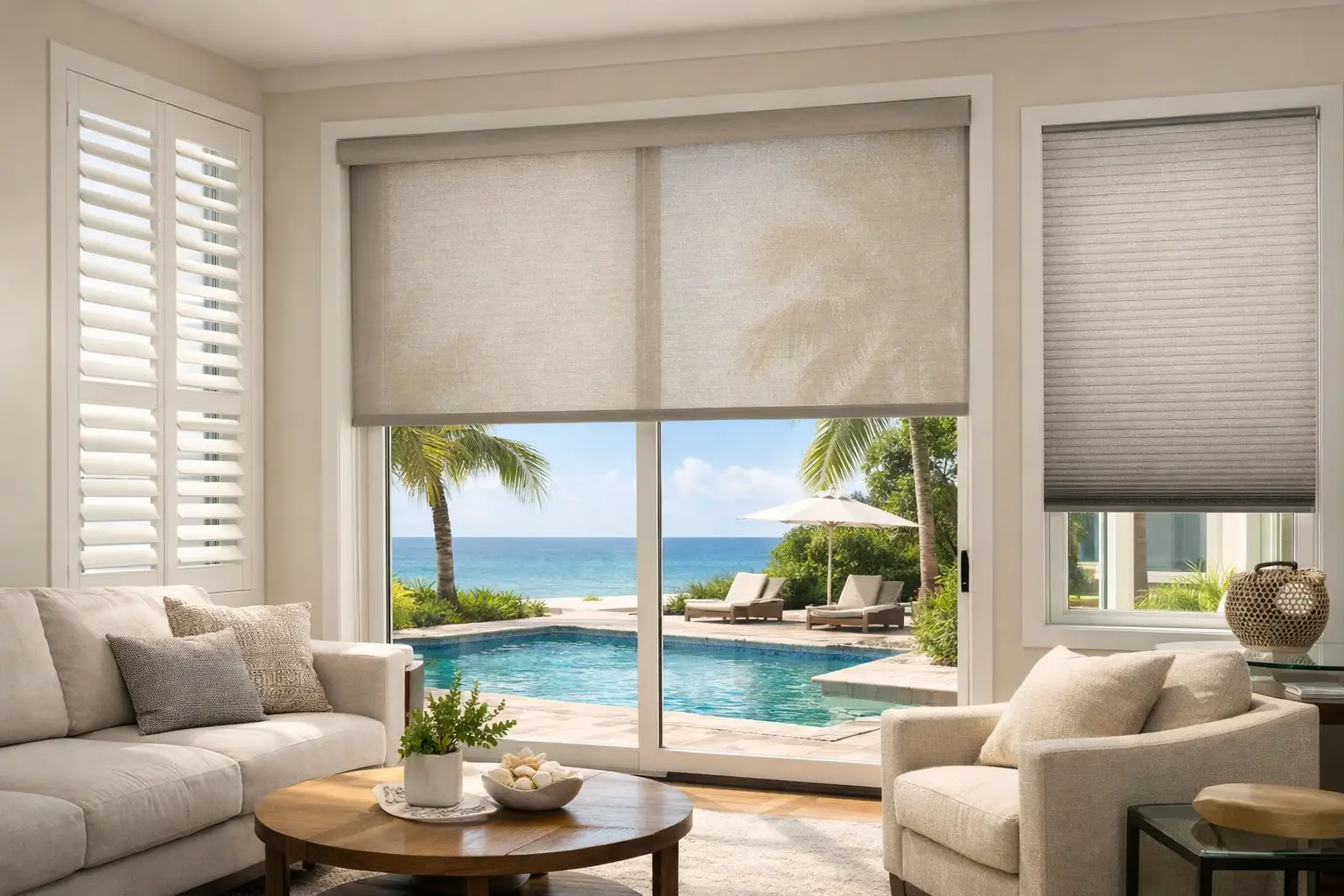
The afternoon sun that makes a Boca Raton living room feel bright and inviting can also turn a favorite chair into a hot seat, wash out a television screen, and gradually fade flooring, artwork, and upholstery. The right sun blocking window treatments let you keep the light you love while gaining control over heat, glare, privacy, and the long-term appearance of your home.
For South Florida homeowners, this is rarely a one-product decision. A wall of east-facing glass calls for a different approach than a bedroom that receives intense western exposure or an office where computer screens need to stay visible throughout the day. The most successful solution balances the direction of the sun, the room’s use, the view, and the style of the space.
What Sun Blocking Window Treatments Should Do
Sun control is about more than making a room darker. Effective window treatments can filter harsh daylight, reduce glare, protect interior finishes from UV exposure, and help rooms feel more comfortable during peak sun hours. Depending on the product selected, they can also add daytime privacy, nighttime privacy, insulation, and a finished decorative look.
There is a meaningful difference between blocking light and managing it. Some homeowners want near-total darkness for a bedroom or media room. Others want to preserve a water view, garden view, or open feel while softening the intensity of direct sun. A custom consultation helps identify where each room falls on that spectrum.
The Best Options for Heat, Glare, and UV Protection
Solar shades for view-preserving glare control
Solar shades are a natural choice for rooms with large windows, sliding glass doors, and beautiful outdoor views. Their technical fabrics are designed to filter sunlight before it enters the room, helping reduce glare and UV exposure without making the space feel closed in.
The key consideration is openness factor, which affects how much light and view remain visible through the fabric. A more open weave generally preserves a clearer view but allows more light through. A tighter weave offers stronger sun control and more privacy, though it can reduce visibility to the outdoors. For a bright great room or home office, the right balance can make a dramatic daily difference.
Roller shades for clean, versatile coverage
Roller shades offer a streamlined profile that suits both contemporary and traditional interiors, depending on the fabric and hardware selected. They are available in light-filtering, solar-screen, room-darkening, and blackout materials, making them one of the most flexible sun-management options.
A room-darkening roller shade can be especially useful in a bedroom, nursery, or media space. For the strongest light control, it should be custom measured and professionally installed with attention to side gaps, mounting position, and the amount of light that may enter around the edges. Blackout fabric is highly effective, but no standard shade installation makes every window completely light-tight. That distinction matters when expectations are high.
Cellular shades for comfort and light control
Cellular, also called honeycomb, shades bring an added energy-conscious benefit to sun control. Their cellular construction creates pockets of air that can help insulate the window, an advantage for rooms that become noticeably warm in the afternoon.
They are available in a range of opacities, from softly light-filtering to room-darkening. Top-down/bottom-up operating options can be particularly helpful in homes where privacy and daylight are both priorities. You can admit light from the top while keeping the lower portion of the window covered, an elegant solution for bedrooms, bathrooms, and street-facing spaces.
Plantation shutters for architectural sun control
Plantation shutters provide a substantial, built-in look while giving homeowners precise control over light direction. By tilting the louvers, you can redirect daylight upward, reduce direct glare, or close the panels more fully when the sun is strongest.
For South Florida homes, durable faux wood shutters are often a practical consideration in humid areas or rooms exposed to strong sunlight. Shutters do not create blackout conditions in the same way as a dedicated blackout shade, since light can enter around louvers and panel edges. Their strength is adjustable light control, privacy, durability, and timeless architectural presence.
Draperies and sheers for layered beauty
Drapery panels can add softness, color, and visual scale to a room while contributing to light control. When lined or paired with a room-darkening lining, draperies can significantly reduce incoming light and help protect furnishings. They are especially effective on large expanses of glass, formal living areas, bedrooms, and spaces that benefit from a more finished designer look.
Sheers take a gentler approach. They diffuse sharp sunlight and soften a room’s atmosphere, but they are not intended to block intense heat or provide full nighttime privacy on their own. Layering sheers with draperies, shades, or shutters creates a more adaptable result: filtered light during the day and greater coverage when needed.
Why Layered Window Treatments Often Work Best
A single window treatment can solve many problems, but layered treatments are often the best answer for South Florida’s changing light conditions. For example, solar shades can protect a daytime view while decorative draperies provide additional privacy and room-darkening in the evening. Cellular shades may manage heat and glare, while side panels add warmth and style.
Layering also makes sense when windows vary within the same room. A large sliding door may need solar shades for daily operation, while nearby smaller windows can be dressed with matching treatments that maintain a cohesive look. The goal is not to add coverage for its own sake. It is to create a room that functions comfortably from morning through night.
Choosing Treatments Room by Room
The intended use of the room should guide the decision as much as the window itself. Bedrooms typically benefit from room-darkening or blackout-capable shades, often paired with drapery panels for added edge coverage and visual softness. In a home office, solar shades can reduce monitor glare while keeping the room connected to the outdoors.
In kitchens and breakfast areas, easy-to-clean roller shades, solar shades, or faux wood blinds can offer practical daily light control. Living rooms often invite more decorative flexibility, where woven woods, sheers, draperies, shutters, or layered shades can work with the furnishings and architectural style. For offices, sun management should support screen visibility, occupant comfort, and a polished professional setting.
Window direction is equally important. East-facing windows need help with early morning glare, while west-facing windows may require more substantial afternoon coverage. Southern exposure can produce strong, sustained daylight, and north-facing windows may need less sun blocking but still benefit from privacy and a finished appearance.
Motorization Makes Sun Control Easier to Use
Even the most effective treatment cannot help if it stays raised when the sun is strongest. Motorized shades and blinds make it simple to adjust hard-to-reach windows, wide glass doors, and multiple treatments across an open floor plan. With the touch of a button, homeowners can lower shades during the hottest part of the day and raise them again when the light becomes more comfortable.
Motorization is particularly useful for tall foyer windows, rooms with vaulted ceilings, and homes where convenience is a major priority. It can also create a more consistent look across a wall of windows, since each shade moves together. The ideal system depends on the product, window layout, and how you want to operate it, whether by remote, wall control, or integrated home controls.
Custom Fit Matters More Than Most Homeowners Expect
Sun blocking performance depends heavily on measurement and installation. A treatment that is too narrow, mounted in the wrong position, or poorly aligned may leave unwanted light gaps and undermine the clean appearance of the room. Custom sizing also allows the fabric, opacity, lift system, color, and mounting style to be selected around the actual needs of each window.
This is where experienced guidance is valuable. During an in-home consultation, a window treatment professional can evaluate sun exposure, privacy concerns, window depth, trim, door operation, and furnishings that may be vulnerable to fading. Samples can be viewed in the home’s natural light, which is far more revealing than choosing from a small image online or under showroom lighting alone.
Boca Blinds has helped South Florida homeowners select and install custom window coverings since 1976. With a carefully chosen selection of blinds, shades, shutters, sheers, woven woods, draperies, and motorized options, the focus is on finding a solution that looks right and performs well for the way you live.
A brighter home should not mean squinting through the afternoon or watching your interiors lose their color over time. Thoughtfully selected sun blocking window treatments can preserve the best parts of South Florida light while making every room more comfortable, private, and enjoyable to use.