

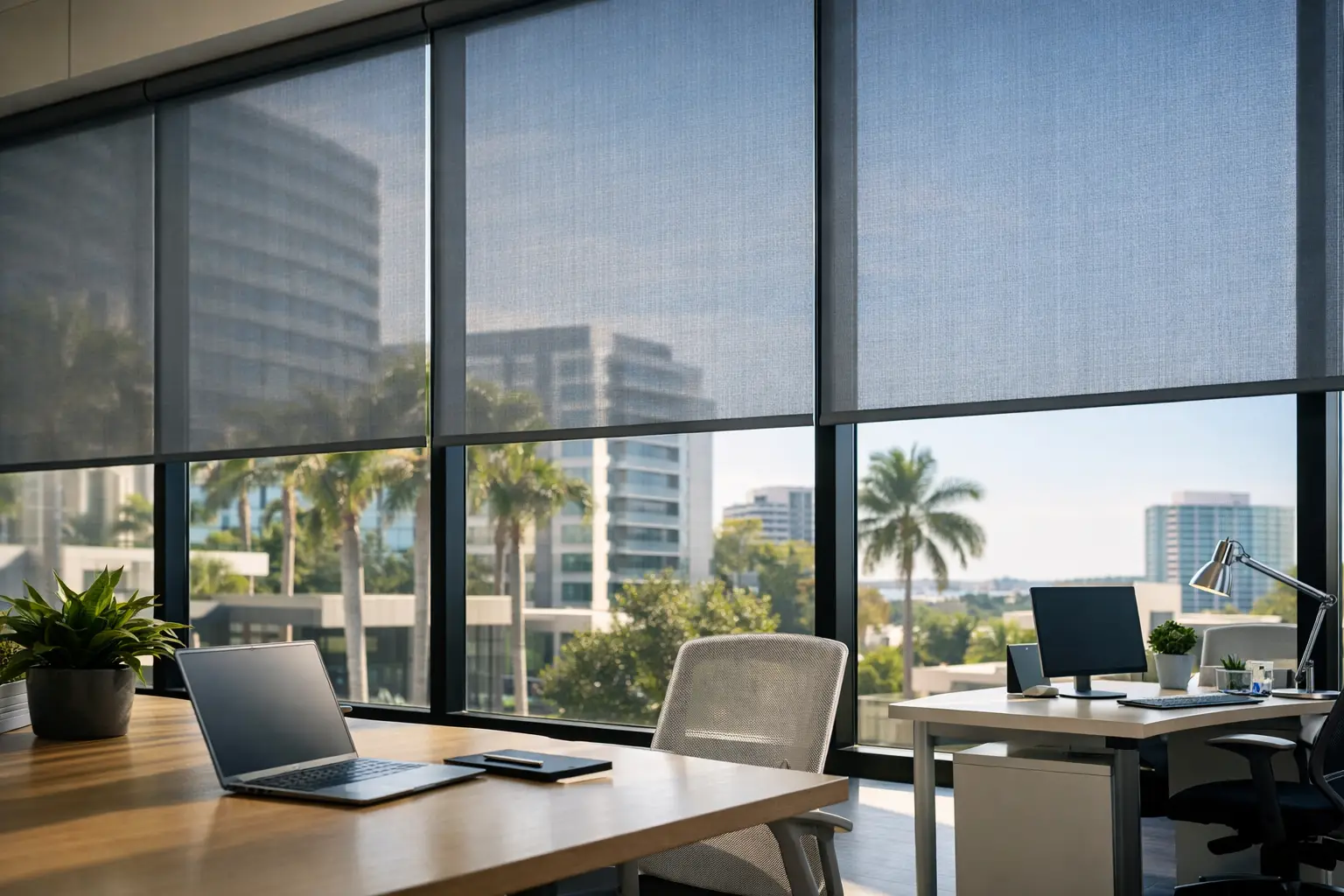
A conference room with a beautiful view can become unusable at 2 p.m. when sunlight washes out the presentation screen. A reception area can feel warm and exposed even with the air conditioning running. Solar shades for offices address these everyday frustrations without turning a bright, inviting workplace into a dark one.
For South Florida businesses, the goal is rarely to block every bit of daylight. It is to control the harsh parts of it: screen glare, heat gain, fading, and uncomfortable hot spots near glass. The right custom shade allows a workspace to stay professional, comfortable, and connected to its surroundings.
What Solar Shades for Offices Solve
Solar shades are roller shades made with specialized woven fabrics. Their construction filters sunlight before it reaches the room, reducing glare and UV exposure while preserving a degree of outward visibility. Unlike opaque window coverings, they can maintain the light, open feeling many offices want.
That balance matters in offices with expansive windows, glass-walled conference rooms, west-facing exposures, or workstations positioned close to the glass. Employees should not need to relocate their monitor, close the blinds completely, or tolerate direct sun simply to get through the workday.
Solar shades can help reduce several common concerns at once. They soften direct sunlight, make computer screens easier to see, protect furnishings from sun damage, and create a more consistent appearance across a suite of windows. They also provide daytime privacy by limiting views into the office from outside, although they do not offer complete privacy after dark when interior lights are on.
Choosing the Right Openness Factor
The most important decision is often the fabric’s openness factor. This percentage describes how tightly the fabric is woven and, in practical terms, how much light and view pass through it.
A lower openness factor has a tighter weave. It provides stronger glare control and more daytime privacy, making it a sensible choice for presentation rooms, offices with intense sun exposure, or spaces where employees work directly in front of screens. The trade-off is a more filtered view and a slightly more enclosed appearance.
A higher openness factor lets in more natural light and provides a clearer exterior view. It can be an excellent fit for a lobby, executive office, or common area where preserving the visual connection to the outdoors is a priority. However, higher openness may not adequately control glare on a large monitor or projection screen.
There is no single best percentage for every office. Window orientation, surrounding buildings, landscape reflections, the use of each room, and the placement of desks all affect the right choice. A fabric that feels perfect in a north-facing reception area may be too open for a west-facing conference room.
Color Affects Performance and Appearance
Fabric color is not merely a design decision. Darker solar shade fabrics often provide a sharper view outward because they reduce reflected light on the interior side of the shade. Lighter fabrics can make a room feel softer and brighter, while coordinating easily with pale walls, contemporary furnishings, and coastal-inspired interiors.
The right choice depends on the desired atmosphere and the amount of solar control needed. In some offices, a darker neutral fabric creates a refined, tailored look. In others, warm whites, soft grays, or sandy tones support a lighter visual palette. Looking at full-size material samples against the actual windows is far more reliable than choosing from a small swatch or an online image.
Where Solar Shades Work Best in an Office
Solar shades are a natural fit for spaces that need daylight but cannot accommodate glare. Conference rooms are a frequent example. A shade can be lowered before a meeting to improve screen visibility, then raised when the presentation ends.
Open-plan work areas also benefit when sunlight moves across desks throughout the day. Instead of treating every window identically, it may make sense to choose a more protective fabric for the most exposed walls and a more open fabric elsewhere. This creates a practical solution without losing the benefits of natural light.
Reception areas, professional offices, waiting rooms, and glass-partitioned spaces are also strong candidates. Clean roller shade lines complement both modern and traditional commercial interiors, and the shades can be made to fit wide windows with a consistent, intentional appearance.
Solar shades have limits worth considering. If complete nighttime privacy is essential, they may need to be paired with another window treatment or replaced with a more opaque shade in that particular space. If a room requires near-total darkness for audiovisual presentations, a blackout roller shade may be a better choice. The best window treatment plan accounts for how each room is actually used rather than forcing one product across the entire office.
Manual or Motorized Solar Shades for Offices
For a few accessible windows, manual shades can be straightforward and effective. For tall windows, wide banks of glass, or rooms with many shades, motorization offers a meaningful improvement in convenience and consistency.
Motorized solar shades allow a team to adjust multiple coverings at once, which is especially useful before meetings or as afternoon sun intensifies. They can also be helpful in offices where windows are located behind furniture, above stair landings, or otherwise difficult to reach. A coordinated adjustment gives the space a polished look and avoids the uneven appearance that results when each shade is operated separately.
Automation can be considered when sunlight follows a predictable pattern. Timed settings can support more comfortable working conditions during the brightest parts of the day, while still allowing daylight into the space at other times. The proper control option depends on the office layout, daily schedule, and how much flexibility the staff needs.
Details That Make a Custom Installation Feel Finished
A solar shade only performs as well as its measurements, mounting method, and fabric selection allow. An inside mount, installed within the window frame, offers a clean built-in appearance when the opening has enough depth and is reasonably square. An outside mount can provide broader coverage and may be preferable when reducing side light gaps is a priority.
Commercial spaces often include details that are easy to overlook: window cranks, mullions, uneven frames, sprinkler clearances, door swings, and furniture placement. These conditions should be reviewed before the shades are ordered. Professional measurement helps ensure the finished shades operate properly and align cleanly from one window to the next.
Hardware and hem bar choices also influence the final look. A quiet, understated design may call for coordinated neutral components, while a more architectural office can support a defined metal finish. The aim is not to make the shade the focal point. It is to make the entire window wall feel considered.
A Better Way to Plan Office Window Treatments
Start by observing the office during the times when sunlight is most disruptive. Note which windows create glare, which rooms need privacy, and where employees or visitors are affected by heat. This makes the conversation about fabric, openness, and controls much more productive.
At Boca Blinds, the selection process includes personalized design guidance and professional installation, so office clients can evaluate solar shade samples in the space where they will be used. With more than four decades of local experience, the team helps match the treatment to the window, the workplace, and the demands of South Florida sun.
A well-chosen solar shade should fade into the background of the workday. The view remains available, the screens stay visible, and the room feels comfortable enough for people to focus on what they came there to do.