

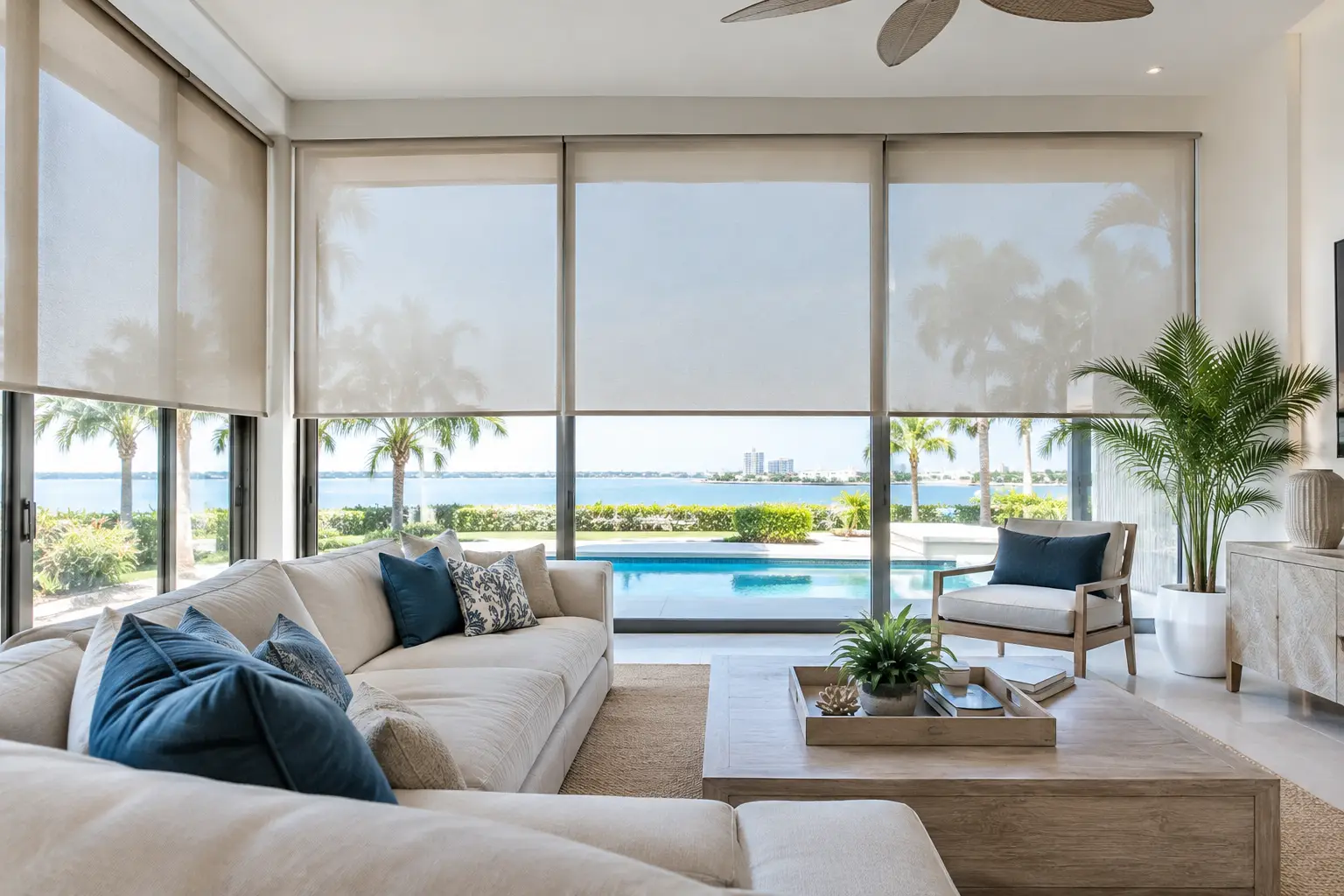
A bright South Florida room can be one of a home’s greatest features until afternoon glare washes out the television, heats up a favorite seating area, or fades the finish on hardwood floors and furnishings. Solar shade fabrics are designed for that exact balance: they soften intense sunlight while maintaining a connection to the view outside.
For homes with large glass doors, waterfront exposures, and sun-filled living spaces, the fabric selection matters as much as the shade style. The right solar shade can make a room more comfortable and polished without turning it into a darkened space. The wrong one may leave too much glare, sacrifice privacy, or make a carefully designed interior feel flat.
What Solar Shade Fabrics Actually Do
Solar shades use specially engineered woven fabrics rather than solid, opaque material. Their open weave filters sunlight before it enters the room, reducing glare and helping protect interior surfaces from damaging ultraviolet rays. At the same time, the weave allows a degree of outward visibility during daylight hours.
This makes solar shades especially appealing in rooms where the view is part of the design. A Boca Raton condominium overlooking the water, a family room facing a landscaped backyard, or an office with broad exterior windows can all benefit from light control that does not completely close off the outdoors.
The result is not total darkness. Solar shades are intended to manage the sun, not create a blackout environment. That distinction is essential when deciding whether they belong in a given room. They are often an excellent primary shade for living rooms, kitchens, offices, and enclosed patios, while bedrooms or media rooms may need a more room-darkening solution or a secondary treatment.
Openness Factor Is the Key Decision
When comparing solar shade fabrics, the openness factor is usually the most important specification. It refers to the percentage of open space in the weave. A lower percentage has a tighter weave, while a higher percentage has more open space between the threads.
A 1% or 3% openness fabric provides stronger glare control, greater daytime privacy, and more protection for interior furnishings. It also limits the clarity of the view somewhat. These tighter fabrics are often a smart choice for west-facing rooms, home offices, and spaces with delicate flooring, artwork, or upholstery.
A 5% openness fabric is a popular middle ground. It softens bright light effectively while providing a more usable view outside. For many South Florida living areas, this is where comfort and visibility meet comfortably.
A 10% openness fabric offers the clearest view and a lighter visual presence, but it also allows more sunlight into the room. It may work well in a shaded exposure or a space where preserving an expansive view is the top priority. On a sun-drenched western wall of glass, however, it may not deliver enough glare reduction during the hottest part of the day.
There is no universally best openness factor. The right choice depends on window direction, landscaping, glass type, how the room is used, and how much the view matters to you. Seeing fabric samples directly against the window is often more useful than judging them under showroom lighting alone.
Fabric Color Changes Performance and Appearance
Color is not simply a decorative decision with solar shades. It affects both the view through the fabric and the way the room feels when shades are lowered.
Darker solar shade fabrics generally offer a clearer, more defined view to the outside. They tend to reduce glare well and can frame a bright exterior beautifully, particularly against water, greenery, or open sky. Charcoal, bronze, and deeper gray tones often suit contemporary interiors and rooms with strong sun exposure.
Lighter fabrics create a softer, airier effect inside the home. Whites, creams, and pale neutrals can complement coastal, transitional, and traditional interiors while keeping the shade visually understated. Their outward view may appear less crisp than it would through a dark fabric, especially in direct sunlight, but they can be the better aesthetic choice for a light, layered design.
The fabric’s interior-facing color deserves careful consideration as well. A shade that looks elegant from the exterior may feel too cool, too stark, or too heavy against your wall color and furnishings. Custom window treatments should support the room’s overall palette, not look like an afterthought once installed.
Daytime Privacy Is Not Nighttime Privacy
Solar shades provide useful daytime privacy because people outside are looking toward a brighter exterior while those indoors can see outward through the woven fabric. But after dark, that relationship reverses. With lights on inside, silhouettes and activity may be visible from outdoors.
This is a common surprise for homeowners who love solar shades during the day but need more privacy in the evening. In bedrooms, bathrooms, street-facing rooms, and closely situated homes, consider layering solar roller shades with draperies, side panels, or another privacy-focused window treatment. The layered look can add softness and dimension while giving you more control throughout the day.
For a room that needs both a filtered daytime view and dependable nighttime coverage, a dual-shade system may also be appropriate. One shade can handle daytime sun management, while a second fabric provides privacy or room darkening when needed.
Where Solar Shades Work Best
Solar shades are particularly well suited to broad expanses of glass and rooms used throughout the day. They are a natural fit for great rooms, kitchens, breakfast areas, offices, sunrooms, and sliding glass doors. Their clean profile also works beautifully in modern homes where visual clutter needs to stay to a minimum.
In offices, solar fabrics can improve screen visibility and help employees work more comfortably without making the space feel closed in. In a residential setting, they can reduce harsh reflections on televisions, countertops, and computer monitors while preserving the open feeling that makes a room inviting.
They may be less suitable as a standalone answer in rooms that need complete light blocking. A nursery, primary bedroom, theater room, or guest room with strong early morning sun may be better served by blackout roller shades, cellular shades, or a layered treatment. The best choice is based on the room’s function, not just the look of the window.
Motorization Makes Sun Control Easier
Large or hard-to-reach windows are where motorized solar shades become especially practical. Rather than leaving shades in one position all day, you can adjust them when the sun moves, raise them for a clear view, or lower them before glare becomes uncomfortable.
Motorization also brings a refined, cord-free appearance to a room. It is useful for tall windows, walls of glass, and doors that are used frequently. Scheduled adjustments can help keep sun-sensitive areas protected during predictable afternoon exposure, even when no one is home.
The fabric still needs to be selected correctly. Automation improves convenience, but it cannot compensate for a weave that is too open for the amount of sun the room receives or too dark for the design you want to achieve.
Details That Affect the Finished Look
Solar shades have a streamlined appearance, but several design details influence the final result. Roller style, cassette or exposed hardware, fascia color, hem bar design, and mounting location all contribute to how intentional the treatment looks.
An inside mount creates a tailored appearance within the window frame when there is enough depth and the opening is reasonably square. An outside mount can provide stronger light coverage around the edges and may be the better solution for shallow windows, doors, or openings with uneven dimensions.
Professional measuring is particularly valuable for wide windows and sliding glass doors. A small measuring error can produce visible gaps, uneven alignment, or an awkward fit around handles and trim. A custom shade should look proportioned to the architecture, operate smoothly, and provide the coverage it was selected to deliver.
Choosing Solar Shade Fabrics With Confidence
The strongest solar shade selection begins with a conversation about how you live in the room. Consider when sunlight enters, whether glare affects screens, how much privacy you need after dark, and whether the view should be a focal point or softened. Bring in wall colors, flooring samples, and fabric swatches when possible so the shade becomes part of the design rather than a separate decision.
For homeowners in Boca Raton and surrounding South Florida communities, a professional in-home consultation provides the clearest way to compare openness levels and colors in the actual light of your home. Boca Blinds can help you evaluate custom solar shade fabrics, coordinating the design, measurements, and professional installation so the finished treatment feels as good as it looks.
A well-chosen solar shade should let your home enjoy the Florida light on your terms: bright enough to feel open, filtered enough to feel comfortable, and finished with the care your windows deserve.