

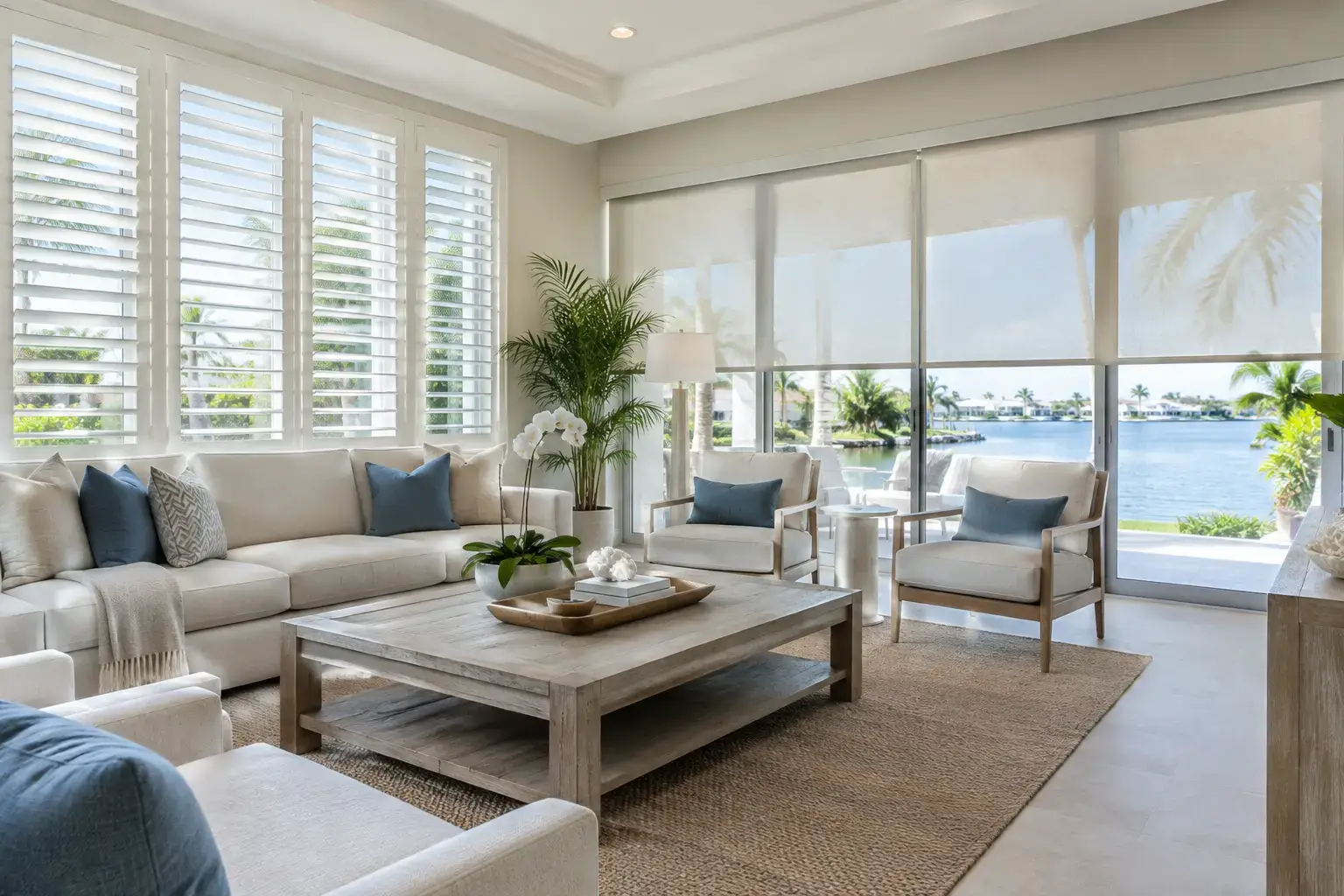
A shutter can make a bright room feel composed rather than exposed. In South Florida, where intense afternoon sun, privacy concerns, and indoor-outdoor living all shape daily routines, choosing between shutter styles is about more than decorating a window. The right design helps manage glare, frames the view, supports your home’s architecture, and gives each room a finished look that lasts.
For many homeowners, plantation shutters are the natural starting point. But the details matter: louver size, panel configuration, mounting style, material, and color can change how a shutter looks and performs. A thoughtful selection process prevents the common mistake of choosing a style that looks beautiful in a showroom but feels too heavy, too formal, or too limiting once installed at home.
Shutter Styles Start With How You Live
Before selecting a shutter style, consider what the window needs to do throughout the day. A bedroom may need reliable privacy and light control. A living room may need to preserve a water view or let in generous daylight without harsh glare. In a kitchen or family room, easy cleaning and everyday durability may carry more weight than formality.
Your home’s architectural character should also guide the decision. Coastal contemporary spaces often suit clean, wide-louver shutters with a bright white or soft neutral finish. Traditional homes may call for a more tailored panel arrangement or a painted finish that echoes existing millwork. In transitional interiors, shutters can bridge classic and modern elements exceptionally well because their lines are simple, structured, and timeless.
The best choice is rarely based on one feature alone. It is the combination of the room’s function, the window’s shape and size, the surrounding furnishings, and the amount of natural light that makes a shutter feel custom rather than added on.
Plantation Shutters and Louver Size
Plantation shutters remain one of the most versatile options for South Florida homes. Their adjustable louvers allow homeowners to direct sunlight upward, reduce glare, and maintain airflow while preserving privacy. When the louvers are fully opened, they create a crisp, open view that traditional blinds cannot always match.
Wider louvers create a more open view
Louver size is one of the first decisions to make. Wider louvers create a more contemporary appearance and provide a clearer view when open. They are especially appealing for larger windows, sliders, and rooms where daylight and outdoor views are central to the design.
Smaller louvers have a more detailed, traditional look and can feel proportionate on compact windows. They may be a better fit in homes with classic trim or spaces where a more layered, architectural feel is desired. Neither option is automatically better. The right scale depends on the window and the visual weight of the room.
Panel layout affects daily use
The way shutter panels are divided has a practical impact. A wide opening may use several panels that fold back for a clear passage, while a standard window may use two panels that open from the center. For sliding glass doors or large expanses of glass, a tracked shutter system can provide coverage without sacrificing access.
Panel divisions should align with the window’s structure whenever possible. A well-planned layout looks intentional from both inside and outside the home. During a professional consultation, measuring and reviewing how doors, handles, furniture, and walkways function can help avoid awkward clearances later.
Popular Shutter Styles for Different Rooms
Full-height shutters cover the entire window and offer the most consistent look from room to room. They work well in bedrooms, living areas, offices, and spaces where privacy is a priority. Their clean vertical lines can make standard windows feel more substantial, particularly when matched to existing trim.
Tier-on-tier shutters split the upper and lower portions into independently operating sections. This design is useful when you want privacy below while still welcoming daylight from above. A front-facing sitting room or a room with close neighboring homes can benefit from this flexibility. The trade-off is a busier visual profile, so it tends to work best in homes with enough window height to carry the extra division gracefully.
Cafe-style shutters cover the lower portion of the window, leaving the upper glass exposed. They are a charming option for breakfast areas, bathrooms, and street-facing rooms where privacy is needed at eye level but open daylight is still welcome. In a sun-filled South Florida room, however, uncovered upper glass may allow more heat and glare than some homeowners expect. Cafe shutters are most successful when the room does not need full sun control.
Solid panel shutters use flat or raised panels instead of adjustable louvers. They bring a more traditional, decorative look and can provide complete coverage when closed. While they make a strong design statement, they do not offer the light-filtering versatility of louvered plantation shutters. For that reason, they are often best suited to a specific architectural style or a room where they will be opened and closed less frequently.
Choosing the Right Shutter Material
Material matters in a climate defined by warmth, humidity, and abundant sunshine. Many homeowners prefer durable, low-maintenance shutter materials for high-humidity areas such as bathrooms, laundry rooms, kitchens, and rooms near patios or pools. These options can offer a clean painted appearance and stand up well to everyday use.
Wood shutters have a natural warmth and can be an excellent choice where a rich finish, a particular paint color, or a more refined furniture-like appearance is part of the design vision. They are often favored in formal living spaces, studies, and homes with detailed architectural elements. Their suitability depends on the location, exposure, and desired finish, which is why material selection should be considered alongside room conditions rather than as an afterthought.
Color deserves just as much attention. Bright white shutters remain popular because they complement South Florida’s light-filled interiors and coordinate easily with white trim. Softer whites, warm neutrals, and custom-toned finishes can create a more integrated look in homes with ivory walls, wood floors, or warmer cabinetry. Matching the shutter precisely to trim can look polished, but contrast can also work beautifully when it is intentional.
Light Control, Privacy, and Energy Comfort
Shutters give homeowners a level of control that is especially valuable in rooms with changing light throughout the day. Tilting louvers allows sunlight to be redirected instead of simply blocked. Angling them upward can brighten a room while reducing direct glare on televisions, artwork, and work surfaces.
For privacy, consider sightlines from streets, neighboring properties, patios, and nearby homes. Full-height shutters offer dependable coverage, while tier-on-tier styles allow more precise adjustment. If a room faces west or receives strong late-day sun, the ability to close or tilt shutters can make the space more comfortable during the hours when it is most used.
Shutters can also add a layer of insulation at the window. They are not a replacement for efficient glass or a complete solution for every heat concern, but a well-fitted shutter can help reduce direct sun exposure and make a room feel more controlled. This is particularly meaningful in rooms where sunlight creates noticeable hot spots.
Why Custom Measuring Makes the Difference
Even the most attractive shutter style can disappoint if it is not measured, fitted, and installed with care. Windows are rarely as uniform as they appear. Trim depth, out-of-square openings, handles, molding, and nearby furniture all influence how shutters need to be designed.
Custom guidance also helps homeowners see the proportions before committing. A large louver may look ideal on a wall of expansive windows but overpower a narrow bathroom opening. A cafe-style shutter may be perfect for one room and impractical for another. Reviewing samples in the home’s actual light makes color, material, and scale decisions far more confident.
Boca Blinds has helped South Florida homeowners make these decisions since 1976, combining personalized design recommendations with professional installation. The goal is not simply to cover a window. It is to select shutters that look right, operate comfortably, and continue to enhance the home long after installation day.
A good shutter choice should feel easy to live with every morning and every afternoon: light where you want it, privacy when you need it, and a finish that belongs naturally in the room.