

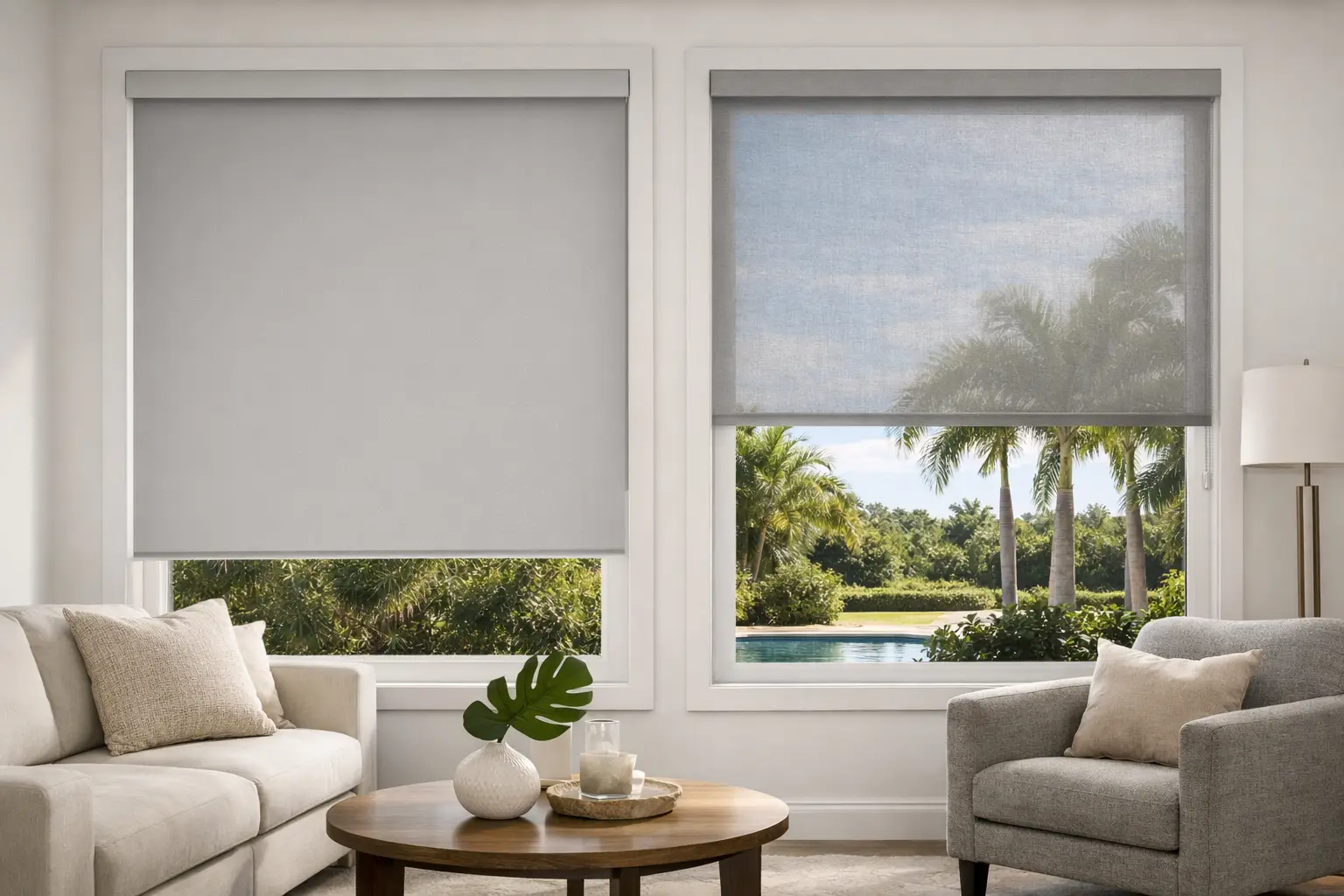
By 3 p.m., that beautiful South Florida sunlight can turn a comfortable room into a glare zone. If you are deciding between roller shades vs solar shades, the right choice usually comes down to one question: do you want to soften light, preserve your view, or do both depending on the room?
At first glance, these two shade styles look similar. They both have a clean, modern profile and operate with a simple roll-up design. But they perform differently once the sun starts hitting the glass, and that difference matters in living rooms, offices, bedrooms, and wide patio doors.
Roller shades vs solar shades: the main difference
The biggest distinction is the fabric. Roller shades are typically made from solid or more tightly woven materials designed to filter light or block it more substantially. Solar shades use a specialized screen fabric that reduces glare and UV exposure while still allowing you to see outside.
That means roller shades are often chosen for privacy, room darkening, and decorative flexibility. Solar shades are usually selected for view preservation, daytime glare control, and protection from harsh sunlight. Both can be custom made, both can look polished and tailored, and both can work beautifully in contemporary and transitional interiors. The better option depends less on appearance and more on how you use the room.
When roller shades make more sense
Roller shades are a strong choice when privacy and light control are at the top of the list. In bedrooms, media rooms, and street-facing spaces, many homeowners prefer the coverage and softness that roller shade fabrics provide. Depending on the material you select, you can get anything from gentle light filtering to near blackout performance.
They are also versatile from a design standpoint. If you want the shade to contribute to the room visually, roller shades offer more decorative range in color, texture, opacity, and pattern. That makes them easier to coordinate with upholstery, wall color, trim, and drapery panels.
In homes where windows face neighboring properties, golf courses, or busy streets, roller shades often provide a more reassuring sense of privacy. During the day, they can filter and diffuse light. At night, they can help create a more enclosed and comfortable atmosphere, especially when paired with the right fabric selection.
Best rooms for roller shades
Roller shades are often the better fit for bedrooms, nurseries, bathrooms, and any room where softness and privacy matter more than maintaining a clear exterior view. They also work well in formal living areas where the window treatment should feel more integrated into the design scheme rather than purely functional.
For offices, roller shades can also be a smart option if presentations, screen use, or video calls require stronger light control than a solar fabric can provide.
Where solar shades stand out
Solar shades are built for sun management. Their screen-like material cuts glare, reduces UV rays, and helps protect flooring, furniture, and artwork from fading, all while keeping the room visually connected to the outdoors.
That feature is especially valuable in South Florida homes with large expanses of glass, pool views, or waterfront exposure. Instead of closing off the room, solar shades manage brightness while preserving a lighter, more open feeling. You still get daytime comfort without losing the architecture of the window or the scenery beyond it.
This is why solar shades are popular in family rooms, kitchens, home offices, and commercial settings. They can make a bright room much more usable during peak sun hours, particularly where television glare or computer screen reflection is a daily frustration.
Understanding openness factor
When comparing solar shades, openness factor matters. This refers to how tight or open the weave is. A more open fabric preserves more of the view but allows in more light. A tighter weave increases glare control and privacy but reduces visibility to the outside.
There is no universal best percentage. A west-facing room with intense afternoon exposure may need a tighter fabric than a shaded breakfast area. This is one of those decisions that benefits from seeing samples in the actual space, not just relying on a product photo.
Privacy is where many shoppers get tripped up
If privacy is your top concern, this is where roller shades vs solar shades becomes a practical decision rather than a style one.
Solar shades offer limited privacy, especially at night. During the day, they can make it harder for people outside to see in, depending on lighting conditions and fabric openness. But once interior lights are on and it is dark outside, that privacy level changes. In many settings, silhouettes and interior activity can become visible.
Roller shades generally give you more reliable privacy, especially with light-filtering or blackout fabrics. If you want one shade that works around the clock without much compromise, roller shades usually have the edge.
For some homeowners, the answer is not one or the other. It may be layering a solar shade in a main living space with drapery panels for added softness and nighttime privacy. In other rooms, it may mean selecting roller shades where privacy matters most and solar shades where the view is part of the appeal.
Style differences are subtle but important
Both options suit clean-lined interiors, but they create different effects.
Roller shades tend to look more like a finished furnishing. Because the fabrics are available in a wider range of colors, textures, and opacities, they can either blend quietly into the room or add a bit of visual warmth. They are often the better choice when the window treatment should feel like part of the decorating plan.
Solar shades are more architectural and understated. They read as practical, refined, and light. In rooms with expansive glass, modern finishes, or a strong outdoor connection, that restraint can be exactly the right look.
Neither is inherently more stylish. It depends on whether you want the shade to soften the room or disappear into it.
Performance in sunny climates
In bright, warm climates, solar shades have an obvious advantage for daytime glare control and UV management. They are designed for exactly that job. If your furniture gets direct sun every afternoon or your living room feels too bright to enjoy, solar shades can make a dramatic difference without making the space feel closed in.
That said, roller shades can also help with heat and light, especially in performance fabrics designed for room darkening or insulation. They simply approach the problem differently. Rather than maintaining a filtered view, they prioritize stronger coverage.
For sliding doors and oversized windows, both can work well when custom fit and professionally installed. The key is selecting a product that operates smoothly and hangs properly across a broad span. In larger openings, details like alignment, hembar weight, and motorization matter more than many people expect.
Motorization works well with both
If your windows are tall, hard to reach, or used constantly throughout the day, motorization is worth considering. Both roller shades and solar shades pair well with motorized operation, and the convenience is not just about luxury. It makes it more likely that you will actually adjust the shades to control heat, glare, and privacy as the light changes.
In rooms with multiple windows, motorization also keeps the look consistent. Instead of several shades stopping at slightly different heights, everything moves together with a cleaner result.
So which one should you choose?
Choose roller shades if you want more privacy, more decorative options, and stronger control over how much light enters the room. They are often the safer choice for bedrooms and private areas, and they give you more flexibility in how the finished space feels.
Choose solar shades if your biggest concern is harsh sunlight, glare, and UV exposure, especially in rooms where you want to keep the view. They are particularly effective in bright living areas, offices, and homes with large windows that deserve to stay visually open.
If you are still unsure, that is normal. This is one of those product decisions where the right answer depends on window orientation, room use, lighting conditions, and personal preference. A fabric that looks perfect in a sample book can behave very differently at 4 p.m. on a west-facing wall.
That is why working with an experienced local specialist matters. Boca Blinds helps homeowners compare materials, opacities, and operating options in the actual space so the finished result looks right and performs the way it should. The best shade is not just the one that fits the window. It is the one that fits how you live with the light every day.