

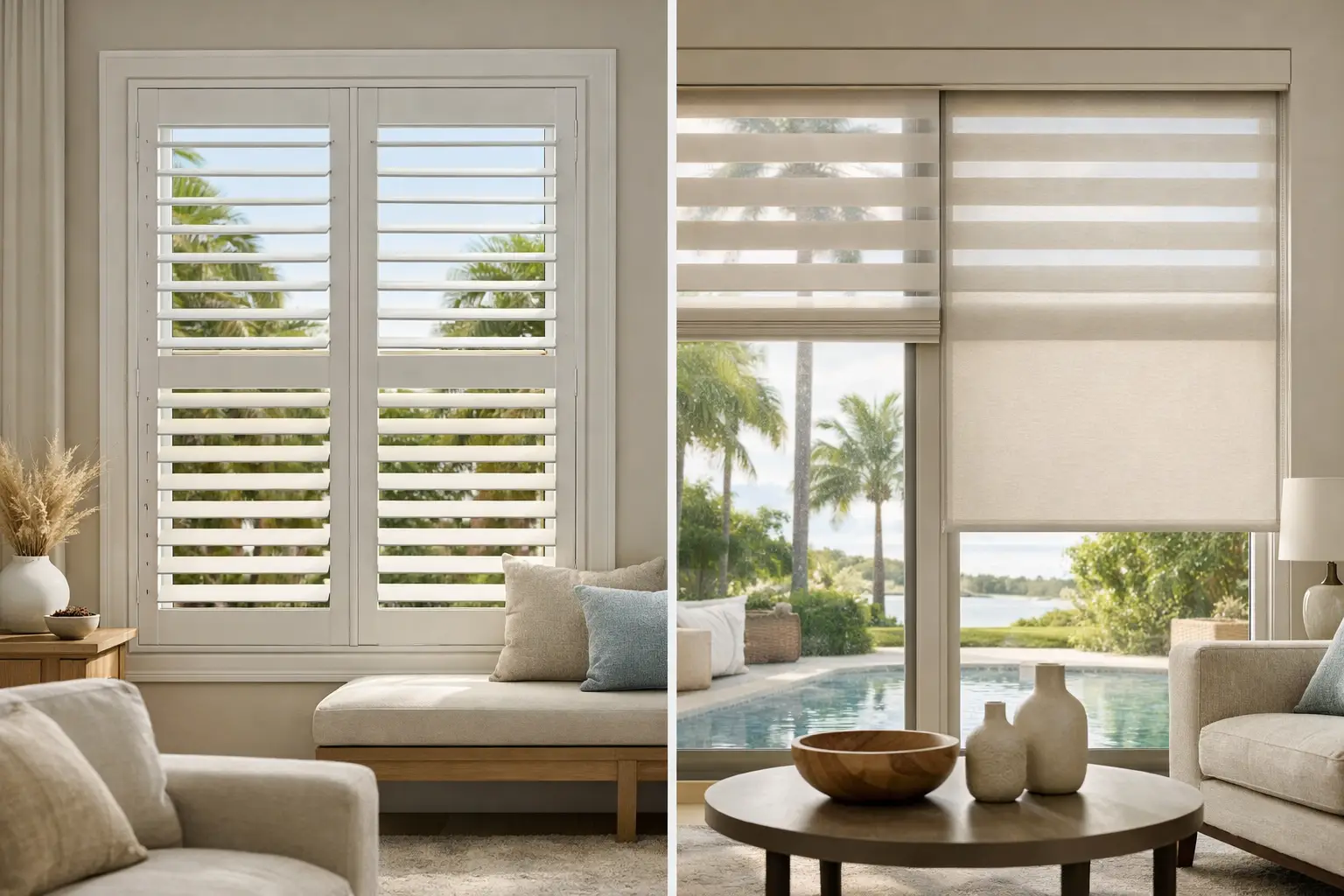
A bright South Florida room can look beautiful at 9 a.m. and feel unlivable by 2 p.m. That is usually when the question shifts from decorating to solving a real problem: plantation shutters vs blinds. Both can improve privacy, manage glare, and finish a room properly, but they do it in very different ways.
This choice is less about which product is “better” in the abstract and more about what matters most in your home. Some homeowners want a polished architectural look that feels built in. Others want a versatile, budget-conscious option that still gives them strong light control. The right answer often comes down to priorities like style, moisture exposure, window shape, and how long you plan to stay in the home.
Plantation shutters vs blinds at a glance
Plantation shutters are rigid window coverings with wide louvers mounted inside a frame. Because they are custom fitted and installed as a more permanent feature, they tend to feel like part of the home itself. They are often chosen for their clean lines, timeless appearance, and durability.
Blinds are a more flexible category. They use slats made from materials like faux wood, wood, aluminum, or composite, and they raise, lower, and tilt for different levels of light and privacy. Blinds can suit a wide range of budgets and room types, which is one reason they remain so popular.
At first glance, both products seem to offer the same core benefits. In practice, the experience is different. Shutters usually deliver a more finished, upscale look. Blinds usually offer more variety in price, color, and operating style.
Style and first impressions
If appearance is high on your list, shutters usually have the advantage. Plantation shutters create a tailored, architectural effect that works well in traditional, coastal, transitional, and many contemporary interiors. They look intentional rather than added on, which is a major reason homeowners often choose them in main living areas, dining rooms, and primary suites.
Blinds can look attractive too, especially when custom fitted and professionally installed. Faux wood blinds in particular can create a clean, substantial look that fits many South Florida homes. Still, they generally read as a window treatment, while shutters read more like a built-in design element.
That difference matters if you are updating a room where finish and resale appeal are part of the goal. A beautifully designed home benefits from window treatments that feel integrated, not temporary.
Light control and privacy
This is where the conversation gets more nuanced. Both shutters and blinds allow you to tilt slats and adjust incoming light, but they behave differently throughout the day.
Plantation shutters provide excellent control over filtered light. Their wider louvers can direct sunlight up or down while preserving privacy, and because the frame is fixed in place, they often create a neat, consistent look from room to room. They are especially useful where you want daylight without sacrificing a sense of enclosure.
Blinds can be more precise in some situations because they can be raised fully, lowered fully, or tilted to smaller angles. If you want a completely open window during part of the day, blinds make that easy. That flexibility appeals to homeowners who want maximum control over changing light conditions.
For privacy, both perform well when properly selected. The difference is often visual. Closed shutters tend to look crisp and orderly. Closed blinds can sometimes show more cord detail, route holes, or stack lines depending on the product.
Durability in everyday living
Durability is one of the strongest arguments for shutters. Because they are custom built and permanently mounted, they hold up extremely well over time when made from quality materials and installed correctly. They are less likely to shift, tangle, or show wear from daily handling the way some blinds can.
That said, not all shutters belong in every room. Material matters. In humid or moisture-prone spaces such as bathrooms, laundry rooms, and certain kitchens, composite or faux wood shutters often make more sense than natural wood.
Blinds vary more widely in durability because the category includes many materials and construction levels. A well-made faux wood blind can be a very practical option for busy households, especially where humidity, easy maintenance, and value are major concerns. Lower-grade blinds, on the other hand, can bend, warp, or wear out faster.
For homes with children, pets, or high traffic rooms, the better question is not simply shutters or blinds. It is which material and operating system will hold up best in that specific space.
Cleaning and maintenance
Neither option is maintenance-free, but shutters are often easier to keep looking orderly. Their solid panels and larger louvers can be dusted quickly, and because they stay in place, they are not prone to the twisting and misalignment that can happen with blinds.
Blinds require regular dusting as well, and depending on slat size and material, cleaning can take a bit more effort. In return, they give you a lighter visual footprint and often a lower initial investment.
If you want a window treatment that continues to look neat with minimal fuss, shutters tend to be the easier long-term choice. If your priority is practical performance at a more accessible price point, blinds still make a strong case.
Cost and long-term value
Cost is usually where the decision sharpens. Plantation shutters generally cost more than blinds because they are custom crafted, framed, and installed as a more permanent feature. They are an investment product.
Blinds usually come in at a lower price, even when customized. That makes them appealing when covering multiple windows, furnishing a new home, or balancing upgrades across several rooms at once.
The real question is how you define value. If you plan to stay in the home for years and want a polished finish with lasting appeal, shutters may justify the higher upfront cost. If you want attractive, dependable light control across many windows while keeping the project more budget-conscious, blinds may offer better value for your goals.
There is no need to force one answer for the entire house, either. Many homeowners mix products by room, investing in shutters for the most visible spaces and using blinds where function and efficiency matter more.
Plantation shutters vs blinds for different rooms
Living rooms, dining rooms, and front-facing spaces often benefit from plantation shutters because these rooms usually carry the most visual weight. The structured look of shutters can elevate the entire home and create a consistent exterior appearance from the street.
Bedrooms are more mixed. Some homeowners love shutters for their clean look and privacy, while others prefer blinds if they want a treatment that can be fully lifted to open the view. If room darkening is a major concern, the broader window treatment plan may matter as much as the choice between shutters and blinds.
Bathrooms and kitchens depend heavily on material selection. Moisture-resistant blinds can perform very well, and so can composite shutters. In these spaces, durability and easy cleaning often outweigh purely decorative considerations.
Home offices are another area where light management becomes practical, not just aesthetic. Blinds can be a smart solution if you frequently adjust for screen glare throughout the day. Shutters also work well when you want a more finished, executive look with steady control over daylight.
When shutters are the better fit
Shutters usually make the most sense when you want a custom, upscale appearance and are looking for a long-term solution. They are ideal for homeowners who care about architectural detail, value consistency from room to room, and prefer a product that feels substantial.
They are also a smart option for specialty windows, depending on shape and layout, because custom fabrication can create a more refined finished result. In many homes, shutters become part of the character of the space rather than just a covering for the glass.
When blinds are the better fit
Blinds are often the better choice when flexibility, budget, and material options are leading the conversation. They work especially well for larger projects, secondary rooms, offices, and spaces where you want dependable performance without making the same level of investment as shutters.
They can also be an excellent solution for homeowners who want a clean look with straightforward operation and a wide range of finishes. A well-chosen blind is not a compromise. It is often the most practical answer.
A good window treatment decision should make your home more comfortable every day, not just look good during the estimate. If you are weighing plantation shutters vs blinds, the smartest move is to compare them in person, on your actual windows, with guidance based on how you live. That is where experience matters most, and it is why many South Florida homeowners turn to Boca Blinds for a more confident decision.