

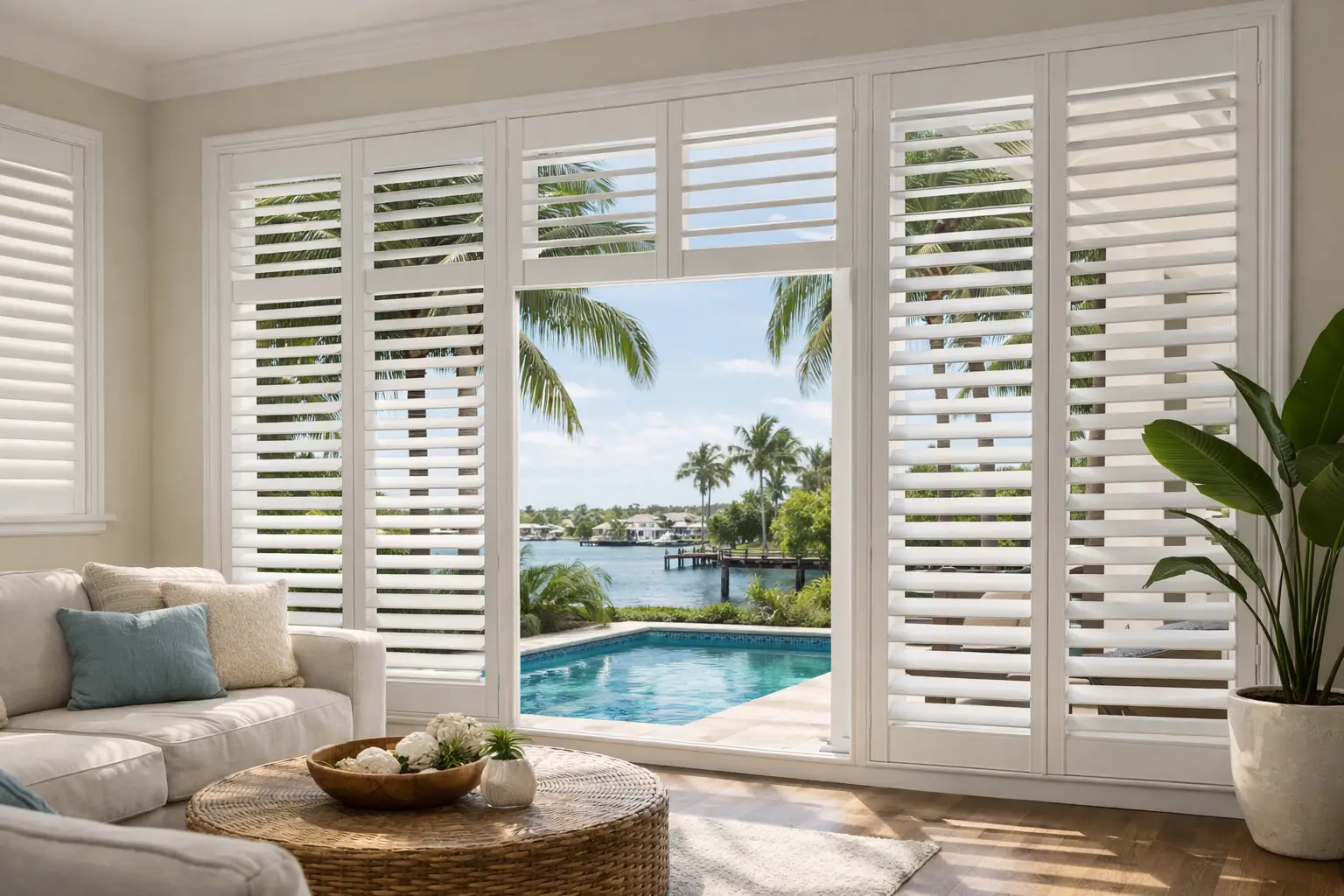
A beautiful shutter can look simple from across the room. Up close, the details determine whether it performs well for years in South Florida’s sun, humidity, and active daily living. This plantation shutters buying guide explains what to look for before choosing a style, material, and installation plan for your home.
Plantation shutters are a permanent-looking window treatment with a tailored, architectural presence. They can add privacy without making a room feel closed off, manage strong afternoon glare, and complement everything from coastal interiors to traditional homes. The right choice is rarely about selecting the first white shutter sample you see. It comes down to the window, the room, and how you want to live with the treatment every day.
Start With How the Room Needs to Function
Before comparing materials or finishes, consider the practical demands of each room. A bedroom may need greater privacy and room-darkening capability. A family room may need flexible light control without sacrificing a clear view. In a kitchen or bathroom, moisture resistance and easy cleaning are often the priority.
Shutters offer excellent directional light control because louvers can be tilted to soften direct sun while still allowing daylight into the room. When fully opened, the panels clear the glass more effectively than many other window coverings. That flexibility is one reason they are especially popular on South Florida windows exposed to intense sunlight.
However, shutters do not create complete blackout conditions on their own. Small lines of light can remain between louvers and around the frame. If a room requires near-total darkness, such as a nursery, media room, or bedroom for a light-sensitive sleeper, discuss layered solutions or carefully selected shutter configurations during your consultation.
Plantation Shutters Buying Guide: Choose the Right Material
Material affects the shutter’s appearance, durability, weight, and suitability for the room. It also affects the investment level. There is no single best choice for every application.
Wood shutters
Natural wood shutters are valued for their refined finish, lighter weight, and ability to handle larger panels in many applications. They bring an unmistakable warmth to a living room, dining room, or primary suite, especially when a custom stain is part of the design plan.
Wood is not always the first recommendation for high-humidity spaces or areas with frequent moisture exposure. While quality wood shutters are professionally finished for durability, bathrooms, laundry rooms, and windows near pool areas may be better served by a moisture-resistant alternative.
Composite and faux wood shutters
Composite and faux wood shutters can deliver the clean, classic look homeowners want while offering strong resistance to humidity and everyday wear. These materials are often an excellent fit for South Florida homes, particularly in bathrooms, kitchens, and high-traffic areas.
The trade-off is weight. Some composite products are heavier than wood, which can influence panel size and the way shutters are configured on wide or tall windows. A professional measurement helps ensure the finished treatment operates smoothly and has the appropriate support.
Vinyl shutters
Vinyl shutters are another moisture-resistant option and can be practical for certain spaces. Product quality varies considerably, so it is worth looking beyond the initial price. A well-made shutter should feel stable, close cleanly, and retain its appearance under regular sun exposure. For prominent living spaces, many homeowners prefer the more substantial look and finish options available in premium composite or wood collections.
Select a Louver Size That Fits the Window
Louver size changes the character of a shutter more than most people expect. Larger louvers create a more open view when tilted or opened and tend to suit expansive windows, sliding glass doors, and contemporary interiors. Smaller louvers can feel more traditional and may be a natural choice for modestly sized windows or rooms with classic architectural details.
A 3 1/2-inch louver is a popular middle ground. It provides generous light and visibility while maintaining a balanced, familiar shutter profile. Larger 4 1/2-inch louvers make a stronger visual statement and can be especially appealing in homes with high ceilings and broad windows.
The best proportion depends on more than current design trends. Window width, ceiling height, mullions, furniture placement, and the view outside all matter. Seeing samples in your own home is more useful than making the decision under showroom lighting alone.
Consider Panel Configuration and Everyday Operation
Shutters are custom-built around the window’s dimensions and opening style. The configuration should make the window easy to use, not simply look attractive when closed.
For a standard window, hinged panels may be all that is needed. Wider openings can use multiple panels that fold back, allowing more of the glass to be exposed. Sliding glass doors may call for bypass or bi-fold shutter panels, depending on the available wall space and how frequently the door is used.
Divider rails are another important choice. A divider rail separates upper and lower louvers so each section can be adjusted independently. This can be particularly helpful on street-facing windows. You can angle the lower louvers for privacy while keeping the upper section open for natural light.
Hidden tilt rods offer a clean, contemporary look because the louvers move together through an integrated mechanism. Traditional front tilt rods provide a more classic shutter appearance. Both can work beautifully. This is primarily a design preference, although ease of operation and the specific product construction should also be considered.
Look Closely at Color, Finish, and Frame Details
White plantation shutters remain a favorite because they work with nearly every palette and offer a fresh, finished appearance. Yet white is not one color. Warm whites, bright whites, and soft off-whites can look noticeably different next to trim, wall paint, cabinetry, and flooring.
Bring finish samples close to the window and look at them during different times of day. South Florida daylight can be strong and cool at midday, then much warmer in the late afternoon. A color that appears perfect under indoor lighting may feel too stark or too creamy in the room itself.
The frame deserves equal attention. A shutter frame creates the finished border around the window and can help address small variations in the opening. The right frame profile should complement existing trim rather than compete with it. On some windows, a cleaner, narrower frame creates the most polished result. On others, a more substantial frame better matches the home’s millwork.
Do Not Treat Measurement and Installation as an Afterthought
Custom shutters need precise measurements. Windows are not always perfectly square, particularly in older homes, and small differences can affect alignment, closure, and the finished appearance. Specialty shapes, French doors, bay windows, and large openings require even more planning.
Professional installation also protects the value of the product. Panels need to be level, properly supported, and adjusted so they open and close without rubbing. Hardware placement matters, as does clearance around handles, locks, and trim. These details are easy to overlook until a shutter is installed incorrectly.
Boca Blinds has served South Florida homeowners since 1976, providing in-home design guidance and professional installation for custom window treatments. For a purchase that becomes part of your home’s architecture, experienced measurement and installation provide meaningful peace of mind.
Compare Value Beyond the Initial Quote
Plantation shutters are generally a higher initial investment than many blinds or shades, but they can provide long-term value through durability, timeless style, and custom fit. When comparing quotes, make sure you are comparing like for like. Material, louver size, panel configuration, frame style, finish, hardware, warranty coverage, and installation can all affect the final price.
A lower quote may reflect fewer customization options, a less suitable material, or installation that does not account for the challenges of a particular opening. Conversely, the most expensive option is not automatically necessary. A well-selected composite shutter may be a smarter investment than wood in a humid bathroom, while wood may be worth considering for a formal room with larger windows and a stained finish.
Ask to see full-size samples when possible. Open and close the panels. Tilt the louvers. Look at how the finish feels and how the hardware operates. This is a treatment you will use for years, so the experience matters as much as the first impression.
The best shutter choice should make the room feel more comfortable every day: softer sunlight in the afternoon, dependable privacy at night, and a finish that looks as though it was always meant to be there. A personalized home consultation gives you the opportunity to see those decisions in context before committing to the details.