

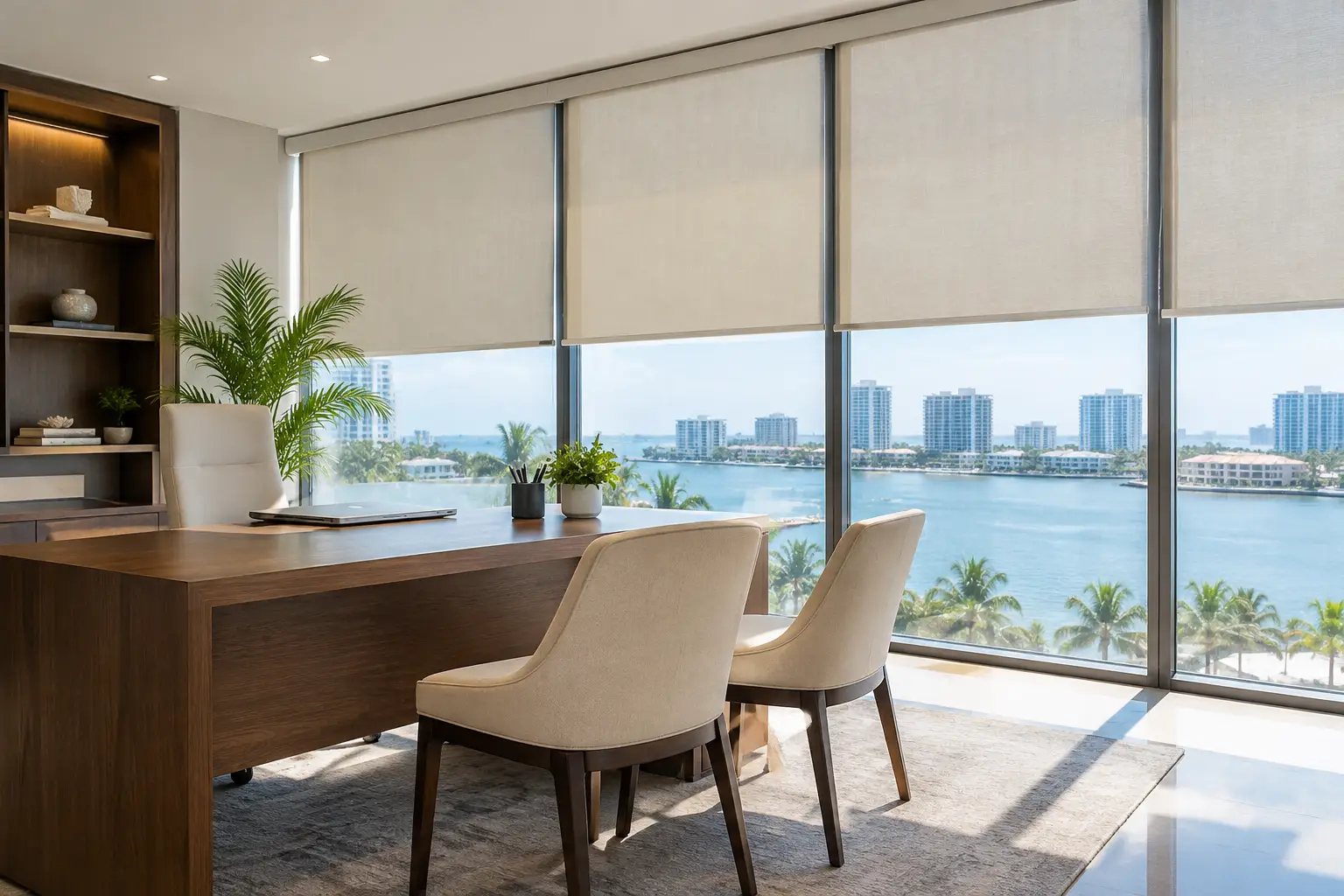
The 3 p.m. Florida sun can turn a productive conference room into a glare-filled space in minutes. Screens become difficult to read, clients squint across the table, and employees start adjusting their seats instead of focusing on work. The right office blinds Boca Raton businesses choose solve that daily problem while giving the workplace a more finished, professional appearance.
Window treatments in an office have a bigger job than simply covering glass. They shape light, protect privacy, support comfort, and contribute to the impression your business makes on clients and staff. A medical office may need privacy without making waiting areas feel closed in. A law firm may want tailored finishes that reinforce a refined interior. A home office may need dependable glare control for video calls and computer work.
A custom approach helps make those decisions easier. Rather than choosing a standard blind based on color alone, consider how each window affects the way the space is used throughout the day.
Start With How the Office Uses Its Windows
Every office has different daylight patterns, sightlines, and privacy needs. A bright east-facing office experiences a very different issue than a lobby with broad western exposure. Before selecting a product, look at where people sit, where monitors are located, and when direct sun is strongest.
For workstations, the priority is often controlling glare while keeping enough natural light to avoid a dark, closed-in feel. In meeting rooms, adjustable light can make presentations more comfortable and provide privacy when needed. Street-level offices may need coverage that limits outside views into the space without sacrificing the welcoming quality of daylight.
It also pays to consider the people using the room. An executive office, reception area, treatment room, and shared workspace do not need to perform the same way. Choosing one window treatment for every room can create consistency, but it can also force unnecessary compromises. Coordinating different products in complementary colors and materials is often the better design decision.
Office Blinds Boca Raton Businesses Can Tailor to the Space
The best option depends on the window, the building, and the desired atmosphere. There is no single treatment that suits every commercial setting, but several categories work especially well for South Florida offices.
Solar Shades for Views and Screen Comfort
Solar shades are a strong choice for offices with large windows, attractive outdoor views, or heavy daytime sun. Their specialized fabrics filter harsh light and reduce glare while preserving a connection to the outdoors. They can give an office a clean, contemporary appearance without the visual weight of heavier fabrics.
The openness of the fabric matters. A more open weave generally allows more view and daylight, while a tighter weave offers greater shading and privacy. This is a meaningful trade-off: the view you want to preserve may not provide the level of privacy needed for a ground-floor meeting room. A design consultation can help identify the fabric that makes sense for each exposure.
Roller Shades for a Clean, Modern Finish
Roller shades are simple in appearance but highly adaptable. They fit neatly into modern offices, professional suites, and home workspaces, and they are available in a broad range of colors, textures, and light-filtering levels. When raised, they stack compactly, keeping windows visually open.
For rooms that need complete light control at certain times, such as a presentation room or a space with sensitive screens, blackout roller shades may be appropriate. They are not necessary for every office, however. In a reception area or open work area, light-filtering material can create a brighter, more inviting result.
Faux Wood Blinds for Adjustable Light
Faux wood blinds offer the familiar appeal of horizontal slats with practical control over direction and intensity of light. Tilting the slats lets occupants manage sun and privacy without fully covering the window. Their durable construction also makes them a sensible choice for spaces that receive strong sunlight or need a classic, structured look.
These blinds are often well suited to private offices, administrative areas, and professional environments with traditional furnishings. The consideration is maintenance: horizontal slats have more surfaces than a flat shade, so they require occasional dusting to keep their crisp appearance.
Cellular Shades for Comfort and Efficiency
Cellular, or honeycomb, shades are designed with insulating pockets that can help moderate the feeling of heat near windows. In offices where certain rooms become noticeably warmer in direct sun, this added layer can improve comfort while softening daylight.
Their look is more understated than a blind with visible slats, which makes them a natural fit for offices seeking a calm, tailored finish. They are available in light-filtering and room-darkening options, allowing the treatment to serve both practical and aesthetic goals.
Privacy Is More Than an Afterthought
Many office window treatment decisions begin with glare, but privacy deserves equal attention. Windows facing a parking lot, walkway, neighboring building, or public street can expose work areas, computer screens, confidential conversations, and treatment spaces.
The answer is not always a fully opaque covering. Top-down and bottom-up operating options, light-filtering shades, and carefully selected solar fabrics can allow useful daylight while reducing direct sightlines. For conference rooms or private offices, layering treatments may provide more flexibility. A shade can handle daytime glare, while drapery panels or a second layer can provide added privacy and a more polished design statement.
Motorized window coverings can be particularly useful where privacy needs change throughout the day. With the touch of a button, a room can shift from open and light-filled to presentation-ready or private. Automation also makes sense for tall windows, hard-to-reach glass, and offices with multiple treatments that need to move together.
Choose Materials That Support a Professional Interior
Office window treatments should look intentional from every angle. This does not mean every room needs dramatic color or formal drapery. In many professional spaces, neutral shades, soft textures, and clean lines provide the most enduring result.
A light fabric can brighten an interior with dark furnishings, while deeper tones may reduce visual glare and add definition to a large window wall. Woven wood shades can bring warmth to a design-focused studio or welcoming reception area. Plantation shutters may suit offices in buildings with an architectural or coastal character, provided their structured style aligns with the rest of the space.
Consistency matters most in client-facing areas. Matching treatments across visible offices, hallways, and reception spaces creates an organized impression. In employee-only rooms, performance may take priority, but the selections can still coordinate with the overall palette.
Why Professional Measuring and Installation Matter
Commercial windows are rarely as straightforward as they appear. Frames may be uneven, openings may have limited mounting depth, and large expanses of glass may require coordinated treatments. A poor fit can leave light gaps, interfere with window operation, or make an otherwise attractive product look unfinished.
Professional measurement helps determine the correct mounting method, dimensions, control placement, and fabric direction before anything is ordered. Installation is just as important. Properly mounted blinds and shades operate more smoothly, hang evenly, and are better positioned to deliver the privacy and light control you selected them for.
For Boca Raton offices, local experience also matters because sunlight, humidity, building layouts, and coastal design preferences influence the right recommendation. Boca Blinds has served South Florida since 1976, providing personalized guidance and professional installation for clients who want a custom-fitted result rather than a one-size-fits-all solution.
A Better Window Treatment Decision Begins at the Window
Bring a practical list to your consultation: which rooms have glare, what times of day are most difficult, where privacy is needed, and whether you want manual or motorized operation. Photos of the office and samples of existing finishes can also help guide color and material choices.
The most effective office window treatment is the one that supports the way your people work while presenting your business at its best. When light control, privacy, comfort, and design are considered together, the windows stop being a daily distraction and become a lasting asset to the workspace.