

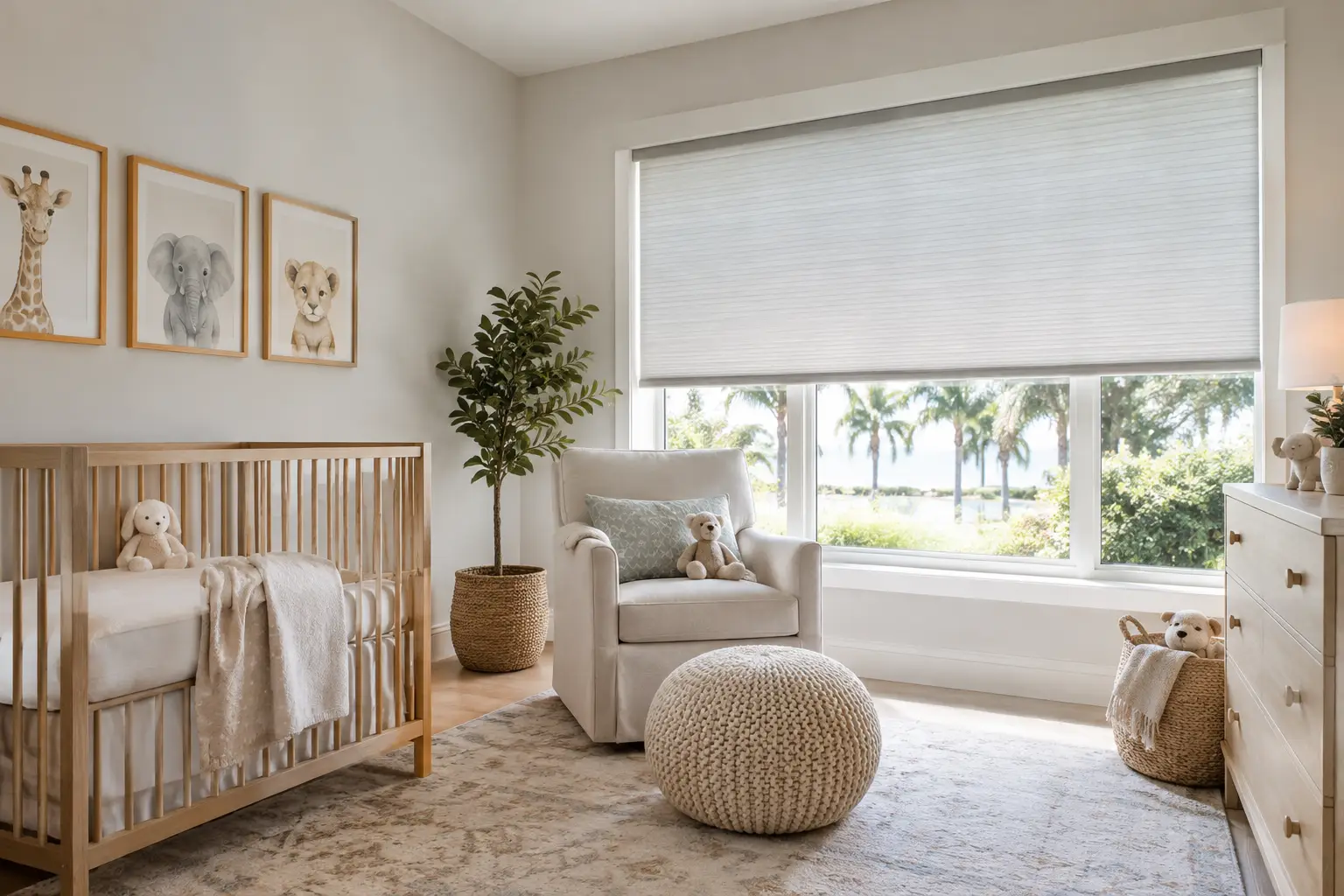
A nursery can look perfectly prepared at noon and feel entirely different at 6 a.m., when bright Florida sun reaches the crib before the household is ready to wake up. The right nursery window blinds help manage that changing light, preserve privacy, and create a more restful setting without sacrificing the polished look of the room.
For parents, this is not simply a decorating decision. Window treatments need to work around nap schedules, growing children, humid South Florida conditions, and the practical need to clean and operate them easily. A custom solution makes those details easier to address from the beginning.
Start With Child Safety and Simple Operation
Safety should guide every nursery window covering decision. Treatments with dangling cords can create an unnecessary concern in a room designed for a child. Cordless blinds and shades offer a cleaner appearance while removing loose operating cords from the equation.
Motorized shades are another strong choice, particularly for larger windows, hard-to-reach openings, or nurseries where parents want to adjust the room without disturbing a sleeping child. With motorization, a shade can be raised for morning light or lowered before naps with a controlled, consistent operation. It also keeps the window area visually uncluttered, which suits the calm, considered design many parents want for a nursery.
No matter which style you choose, placement matters. Keep cribs, changing tables, and climbable furniture away from windows whenever possible. A professional measurement and installation helps ensure the treatment is securely fitted, operates properly, and looks intentional rather than added as an afterthought.
Decide How Much Light the Room Really Needs
Parents often ask for blackout nursery window blinds, but complete darkness is not always the only goal. The best choice depends on the window direction, nearby outdoor lighting, the child’s sleep routine, and whether the room must serve as a play space during the day.
A blackout roller shade or room-darkening cellular shade can make a noticeable difference in a sun-filled bedroom. These treatments limit glare and reduce the strong early-morning or late-afternoon light common in South Florida homes. For the most effective light control, the shade should be custom-fit to the window. A poorly sized treatment can leave bright gaps at the sides that defeat the purpose during naptime.
Keep in mind that “blackout” usually refers to the opacity of the fabric itself. Light can still enter around the edges of many inside-mounted shades. If maximum darkness is a priority, a designer may recommend a layered approach, such as a room-darkening shade paired with custom drapery panels. Layering also adds softness and visual depth, helping a nursery feel warm rather than overly functional.
For rooms where daylight is welcome but harsh glare is not, light-filtering shades are often the better fit. They diffuse direct sunlight and soften the view outside while maintaining a bright, cheerful atmosphere. This option can be especially appealing in a nursery that faces a shaded yard or receives gentler light for much of the day.
Best Nursery Window Blind Styles to Consider
There is no single right treatment for every nursery. The best material and operating style should reflect how the room is used, how much sun it receives, and the home’s overall interior design.
Cellular Shades for Comfort and Light Control
Cellular, also called honeycomb, shades are a practical nursery choice because their structured cells help provide an added layer of insulation at the window. In a warm climate, that can support a more comfortable room while also offering a tailored, soft appearance.
They are available in light-filtering and room-darkening fabrics, making them flexible for different sleep preferences. Their streamlined profile is useful when parents want effective coverage without a bulky treatment. Cordless and motorized operation make cellular shades even more suitable for a child’s room.
Roller Shades for a Clean, Modern Look
Roller shades have a simple, tailored look that works beautifully in contemporary, coastal, and transitional homes. Available in a wide range of fabric colors and opacities, they can blend quietly into the room or become a subtle design feature.
A room-darkening roller shade is an excellent option for naps and bedtime, while a light-filtering fabric can soften daytime brightness. Roller shades also pair well with decorative drapery, allowing homeowners to combine practical light control with a more finished, furnished look.
Faux Wood Blinds for Durable Everyday Use
Faux wood blinds bring the classic look of painted wood while standing up well to humidity and everyday use. They can be tilted to direct light upward or downward, giving parents more control than a single-panel shade provides.
This style is especially useful when privacy is a concern but the room still needs natural light. Tilted slats can limit direct views into the room while keeping it from feeling closed off. For a nursery, cordless operation is the preferred approach, and a professional can help determine whether the window layout and blind style are appropriate for the space.
Plantation Shutters for a Built-In Finish
For homeowners planning a long-term nursery or a room that will grow with the child, plantation shutters provide lasting architectural appeal. Their adjustable louvers offer excellent privacy and light direction, and their clean lines complement many South Florida homes.
Shutters do not create the same level of room darkening as a blackout shade, particularly around the panel edges and louvers. They are often best for families who value durability, privacy, and a built-in look, or for rooms where layered drapery can add additional light control when needed.
Match the Treatment to the Room, Not Just the Color Palette
A soft white shade may look lovely in a nursery photo, but the practical details deserve equal attention. Consider whether the window faces east or west, whether a streetlight shines toward the room, and whether the nursery gets hot in the afternoon. These factors can change which opacity, material, and mounting style will serve the family best.
Color still matters. Neutral shades in warm white, linen, sand, or soft gray can carry a room through changing decor as a baby becomes a toddler and then a school-age child. A subtle woven texture can add character without competing with wallpaper, artwork, or bedding. If the room already has a strong accent wall or patterned rug, a quieter window treatment often provides welcome balance.
For a more decorative result, drapery panels can frame a shade or blind without being the primary source of privacy. This combination gives the room a fuller, more custom appearance and lets homeowners introduce color, pattern, or softness in a way that is easy to coordinate with the rest of the home.
Why Custom Measuring Makes a Difference
Nursery windows are rarely as straightforward as they appear. Deep sills, molding, sliding glass doors nearby, unusually shaped openings, and furniture placement can all affect which treatment will operate and fit best. A custom consultation turns those variables into part of the plan rather than surprises after purchase.
Professional installation is equally valuable for a nursery. A treatment should sit level, open smoothly, and be mounted securely. It should also leave the room looking finished, with no awkward gaps, crooked hardware, or makeshift adjustments that distract from the design.
Boca Blinds has helped South Florida homeowners select and install custom window treatments since 1976. An experienced in-home consultation can narrow the choices quickly, whether your priority is a darker room for naps, cordless operation, humidity-friendly materials, or a style that coordinates with the rest of your home.
A nursery changes quickly, but a well-chosen window treatment can stay useful long after the crib is gone. Choose a design that supports restful days now and still feels at home when the room becomes a child’s favorite place to read, play, and grow.