

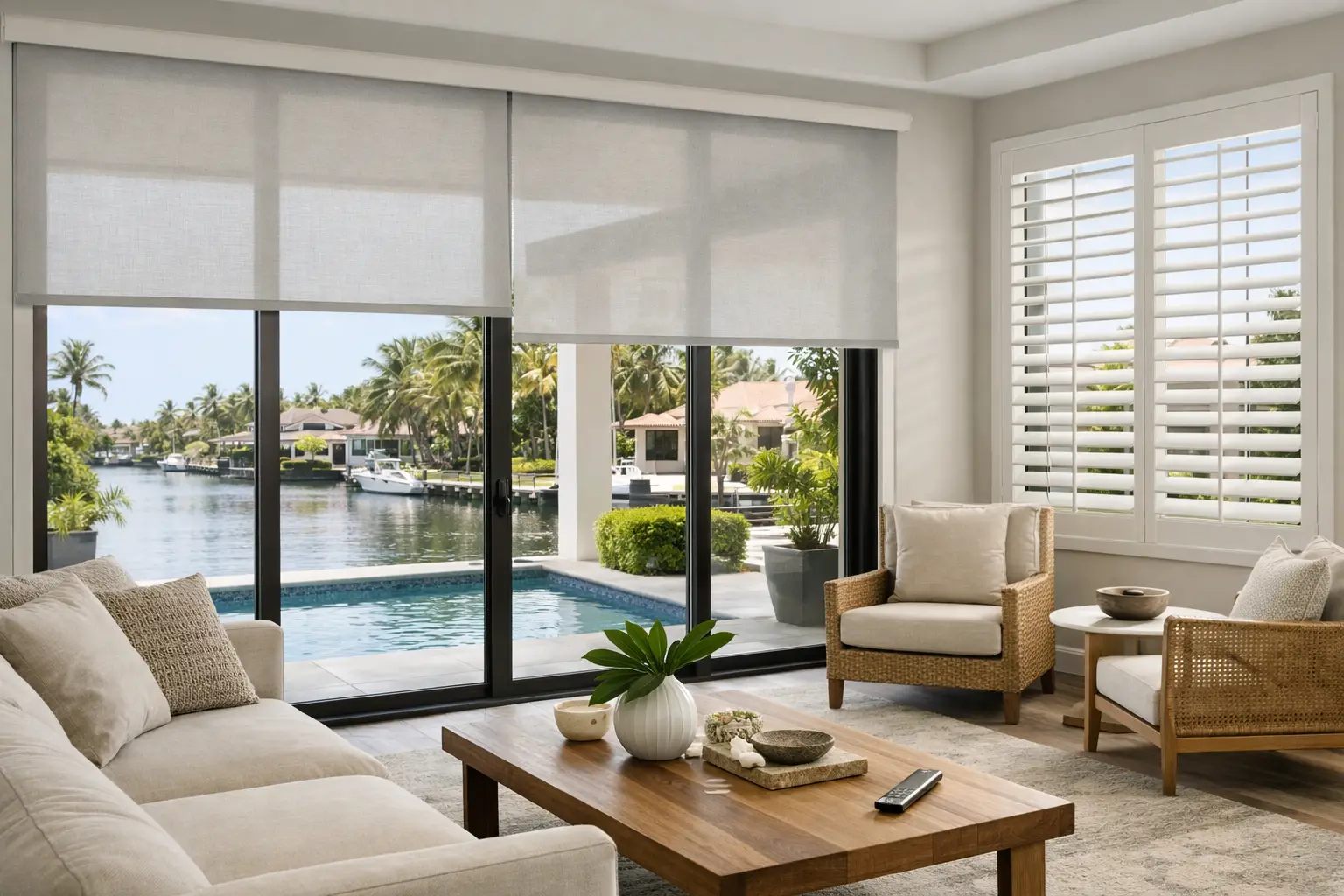
A great motorized shades buying guide starts with the moments you want to improve: the morning sun pouring through a bedroom, afternoon glare across a home office, or hard-to-reach windows over a staircase. Motorization is not simply a convenience feature. When selected thoughtfully, it gives you more consistent light control, better privacy, and a polished finish that fits the way your home is used.
For South Florida homeowners, the decision also involves strong sunlight, wide glass doors, high ceilings, and interiors that need protection from fading. The best choice is rarely one product for every window. It is a coordinated plan that considers the room, window type, fabric, operation, and the level of control you want each day.
Start With the Windows You Want to Control
Before choosing a shade style or control system, look at what each window needs to do. A room with direct western exposure may need glare reduction and UV protection. A primary bedroom may call for room-darkening fabric and quiet scheduled operation. In a living area with beautiful outdoor views, preserving the view can matter just as much as managing heat.
Motorized shades are especially useful for large windows, sliding glass doors, clerestory windows, and windows located behind furniture. They also make sense when several shades should move together. Rather than walking from window to window as the sun shifts, you can operate an entire wall of shades with one command.
It helps to think in zones. You may want the kitchen and family room shades to operate as one group while bedrooms remain independent. A professional consultation can identify those daily patterns before the shades are ordered and installed.
Choose the Right Shade Style First
Motorization can be added to many shade types, but the shade itself determines the look, light control, and privacy you receive. The fabric and construction should suit the room before you decide on the technology.
Roller and Solar Shades
Roller shades offer a clean, tailored appearance that works well in contemporary homes, offices, and rooms with expansive glass. They are available in a broad range of colors, textures, and opacities. Solar shades are a particularly practical choice for South Florida spaces because they reduce glare and help filter sunlight while preserving a degree of outward visibility.
The trade-off is nighttime privacy. When interior lights are on, a more open solar fabric may reveal silhouettes. For bedrooms and more private areas, a room-darkening roller shade or a layered treatment may be a better fit.
Cellular Shades
Cellular, or honeycomb, shades have pleated cells that create an insulating layer at the window. They provide a softer visual effect than a roller shade and are a strong option for bedrooms, nurseries, and rooms where comfort and energy efficiency are priorities.
They come in light-filtering and room-darkening options. Their compact stack can also be useful when you want to preserve as much glass as possible when the shade is raised. For windows exposed to intense sun, the fabric selection still matters, since light filtering and room darkening produce very different results.
Sheer Shades and Layered Designs
Sheer shades gently filter daylight while adding dimension and softness to the room. They are well suited to formal living spaces, dining rooms, and interiors where the window treatment is part of the design statement. Some styles combine sheer fabric with adjustable vanes, allowing you to soften the sun without closing off the room completely.
These options can be ideal for daylight, but they may not offer the same blackout performance as a dedicated room-darkening shade. If sleep quality or complete privacy is the goal, consider pairing them with drapery or selecting a more opaque treatment for the bedroom.
Decide How You Want Motorized Shades to Operate
The right power and control method depends on your windows, renovation plans, and preferred level of automation. A well-designed system should feel easy for every member of the household to use.
Battery-powered motorized shades are often a practical choice for existing homes because they do not require electrical wiring at every window. They provide a clean appearance and can be installed in many locations with minimal disruption. Batteries will eventually need replacement or recharging, so accessibility should be considered for very high windows.
Hardwired systems are often selected during new construction or major renovations. Since power is supplied directly to the shades, they eliminate routine battery maintenance and are particularly appealing for a large number of automated windows. They require early coordination with the electrical plan, which is why it pays to involve a window treatment professional before walls are closed.
Rechargeable options can offer a middle ground for some applications. The best fit depends on the shade size, frequency of use, mounting height, and how readily the charging connection can be reached.
Control can be as simple as a handheld remote or wall-mounted control. For greater convenience, many homeowners choose programmable scenes, app control, or integration with compatible home automation systems. A “morning” scene might raise shades in shared living areas while leaving bedrooms private. An “away” setting can lower selected shades during the hottest part of the day or when the home is unoccupied.
Automation should serve your routine, not complicate it. If you prefer a straightforward remote, that may be the most satisfying choice. If your home already uses smart controls for lighting or climate, integrated shade control can be a natural extension of that system.
Match Opacity to Privacy, Glare, and Sleep
Fabric openness and opacity are among the most important choices in a motorized shade purchase. They affect how much daylight enters, whether you can see outside, and how private the room feels after dark.
Light-filtering fabrics soften bright Florida sun and reduce harsh contrast without making the room feel closed in. Solar fabrics can help control glare on televisions and computer screens while maintaining a connection to the view. More opaque fabrics provide stronger privacy and a darker environment, making them a better choice for bedrooms, media rooms, and street-facing windows.
No single opacity is right for an entire home. A sun-filled great room may benefit from solar shades, while bedrooms need room-darkening materials. In some rooms, layering is the answer: a functional motorized shade for daily control paired with stationary drapery panels for softness and additional coverage.
Consider Mounting, Size, and Professional Measurements
Motorized shades have precise mechanical components, so accurate measurement matters. The depth of the window frame, the condition of the mounting surface, trim details, door handles, and nearby furniture can all affect the final installation. This is particularly true for inside-mounted shades, where even small variations in the opening can affect fit and operation.
Large shades also need careful specification. Wider windows may require particular fabric choices, motor capacities, or separate shades that operate together. A professional can help determine where dividing a large opening will improve performance without compromising the visual design.
For sliding doors, consider how often the door is used and where the shade stack will sit when open. The goal is to preserve access while keeping the treatment proportional to the architecture.
Look Beyond the Shade to the Finished Room
A motorized shade should complement the room when it is both raised and lowered. Consider the headrail, fabric color, texture, and how the shade coordinates with paint, flooring, furnishings, and any existing drapery. Neutral fabrics can create a refined, quiet backdrop, while woven textures can add warmth to a coastal or transitional interior.
Also consider how the shades will look from outside. Consistent exterior-facing colors can create a more unified appearance, especially on homes with many visible windows. Your design choices do not have to be identical in every room, but they should feel intentional across the home.
Plan for Long-Term Use and Support
Motorized shades are a long-term home improvement, so product quality, warranty coverage, and installation expertise deserve attention. Ask how the system will be programmed, what maintenance is expected, and who will help if a shade needs adjustment later. The answers matter more than a feature list.
Boca Blinds has served South Florida homes and offices since 1976, providing personalized design guidance, custom window treatments, and professional installation. An in-home consultation gives you the opportunity to see fabrics in your own light, discuss power options, and create a plan for every room rather than making isolated decisions window by window.
The right motorized shades should disappear into your routine while making the home feel more comfortable, private, and beautifully finished. Start with the light you live with every day, then let the right fabric, control system, and professional installation bring the solution into focus.