

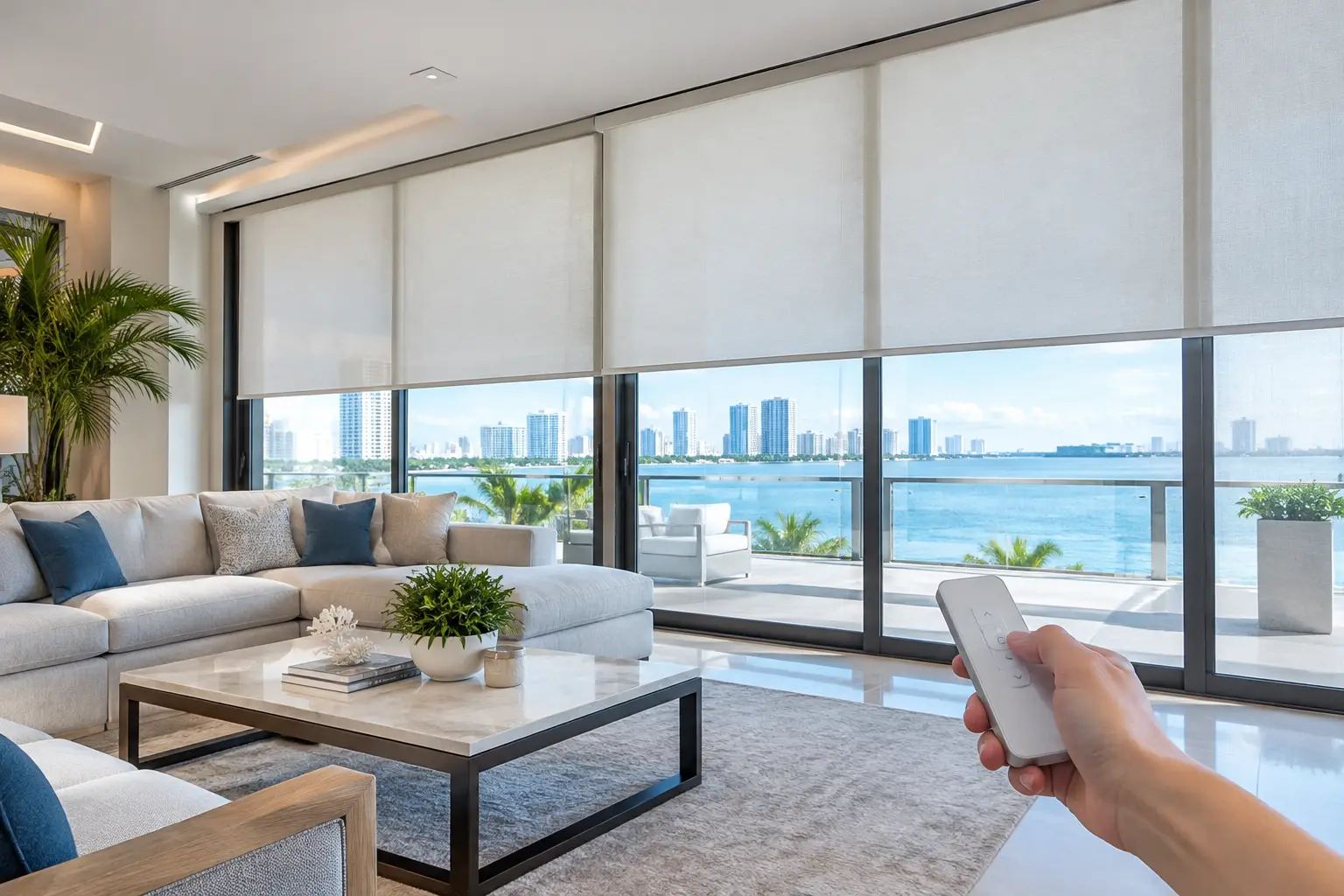
A bright South Florida afternoon can turn a beautiful room into a space that feels too warm, too exposed, or difficult to enjoy. Motorized draperies give homeowners a refined way to manage changing sunlight and privacy without interrupting the room’s design. With the touch of a button, a wall control, or a programmed schedule, custom drapery panels can move precisely when you want them to.
For homes with expansive glass, high windows, or frequently used living areas, this convenience can make a noticeable difference every day. The right system should feel quiet, purposeful, and beautifully integrated – not like a gadget added after the fact.
Why motorized draperies make sense in South Florida
Draperies have always brought softness, color, and visual scale to a room. Motorization adds practical performance, especially in a region where sun exposure is part of daily life. Rather than manually opening and closing heavy panels throughout the day, homeowners can adjust them in seconds to reduce glare, protect furnishings, or create privacy as evening arrives.
This is particularly valuable in rooms with wide sliding doors, walls of windows, or views that deserve to remain open when conditions allow. Motorized operation lets you enjoy the view in the morning, soften harsh light during the afternoon, and close the room comfortably at night.
The benefit is not limited to convenience. Regularly closing draperies during intense sun can help reduce direct exposure on flooring, artwork, upholstery, and wood furnishings. While draperies are not a replacement for properly designed solar shades or other sun-control solutions in every setting, they can be an important part of a layered window treatment plan.
Where motorized draperies work best
Motorization is especially well suited to draperies that are large, tall, hard to reach, or used repeatedly. In a great room, it allows the entire wall of fabric to move evenly and elegantly. In a bedroom, it makes morning and nighttime routines feel more comfortable. In a media room, it can help control light without requiring someone to cross the room to adjust every panel.
They are also a strong choice for homes with two-story windows, transoms, or furniture placed in front of the window. If accessing the drapery requires moving around a sofa, dining table, or bed, a motorized track removes that small daily inconvenience.
Office settings can benefit as well. Conference rooms, executive offices, and reception areas often need a polished appearance while managing glare on screens and maintaining privacy. A custom motorized drapery system offers a more finished look than many standard window coverings and can be programmed around the way the space is used.
Choosing fabric, fullness, and lining
A motorized track performs best when it is paired with draperies designed for the window and the room. Fabric weight, panel width, lining, pleat style, and track placement all affect the final appearance and operation. This is why a custom consultation is more valuable than selecting panels based on size alone.
Sheer draperies can filter bright daylight while keeping a room open and airy. They are a natural fit for living rooms, dining rooms, and spaces with attractive outdoor views. Decorative fabrics add color, texture, and greater privacy, while lined draperies provide more substantial light control and a tailored presence.
For bedrooms, a room-darkening lining may be the better choice when rest and privacy are priorities. In other rooms, a lighter lining may preserve a softer glow. The best option depends on the direction of the windows, the amount of existing shade, and whether the room needs daytime glare control, nighttime privacy, or both.
Fullness deserves attention, too. A panel that looks generous and graceful when closed must also stack neatly when open. Custom measurements help ensure the draperies cover the window properly without blocking more glass than necessary. The result should look intentional from every angle, whether the panels are open, partially closed, or drawn all the way across.
Layering draperies with shades or blinds
Many homeowners get the best performance by pairing motorized draperies with another window treatment. For example, solar shades can manage daytime glare and UV exposure while preserving a view, and draperies can add softness and privacy after dark. Cellular shades may support insulation and light control, while drapery panels provide the decorative finishing layer.
This approach is especially useful on large windows and sliding glass doors. Each treatment can serve a distinct purpose rather than asking one product to do everything. During an in-home consultation, the design can be coordinated so fabrics, hardware, shades, and surrounding finishes complement one another.
Control options that fit your routine
Motorized draperies can be operated in several ways, and the right choice depends on how you live in the home. A handheld remote is simple and familiar. Wall-mounted controls provide a fixed, easy-to-find option near the room entrance. Some systems can also be operated through an app or incorporated into a compatible home automation setup.
Schedules are especially helpful for predictable routines. Draperies can be set to close during the strongest afternoon sun or open in the morning without requiring a second thought. In a seasonal residence, scheduled operation may also help the home look occupied while you are away.
Automation should support your lifestyle, not make it more complicated. Some homeowners prefer one button for a single room, while others want grouped control for an entire main living area. Discussing how each room is actually used will lead to a system that feels natural from day one.
What to know before installation
A beautiful motorized drapery installation begins long before the track is mounted. Window width, ceiling height, molding, furniture placement, and the desired stacking location all need to be considered. The goal is to make the treatment look like it belongs to the architecture rather than competing with it.
Power planning matters as well. Some motorized systems use rechargeable battery power, while others are hardwired. Battery-powered options can be useful where wiring is not practical. Hardwired solutions can be a smart choice for new construction, major renovations, or large installations where ongoing charging would be less convenient.
Neither approach is automatically better. Battery power may offer flexibility, while hardwired power can provide a more permanent solution. The right recommendation depends on the window location, the number of treatments, access to power, and your preferences for maintenance.
Professional measuring and installation are particularly important with draperies because small inaccuracies are visible. A track that is out of alignment, panels that drag, or fabric that does not stack correctly can take away from an otherwise beautiful room. Experienced installation helps protect the investment in both the fabric and the motorized hardware.
Design details that create a finished look
Motorization does not require sacrificing character. The drapery style can be traditional, transitional, coastal, contemporary, or tailored to the existing furnishings. Ripplefold-style panels create a clean, modern wave across the track, while more structured pleats can bring formality and depth.
Hardware placement also changes the effect. Ceiling-mounted tracks can make ceilings appear higher and allow draperies to frame large windows dramatically. Wall-mounted tracks may be preferable when ceiling details, soffits, or construction conditions call for a different solution. In many homes, the hardware can be discreet so the fabric remains the visual focus.
Color selection should account for more than a fabric swatch in isolation. Sunlight shifts throughout the day, and a warm neutral may look different beside cool flooring, white walls, or ocean-inspired finishes. Seeing materials in the home helps make sure the final choice works with the room’s light, furnishings, and architecture.
A tailored approach to motorized draperies
Motorized draperies are most successful when the design, fabric, controls, and installation are planned as one complete system. Boca Blinds has served South Florida homeowners since 1976 with personalized guidance that helps take the uncertainty out of custom window treatments. From a single bedroom window to a full-home design, professional input can clarify which options will provide the beauty and daily function you expect.
If your windows bring in more sun than comfort, or your current draperies are difficult to operate, a free in-home consultation is a practical place to begin. The best window treatments do more than cover glass – they help your home feel composed, comfortable, and ready for the way you live.