

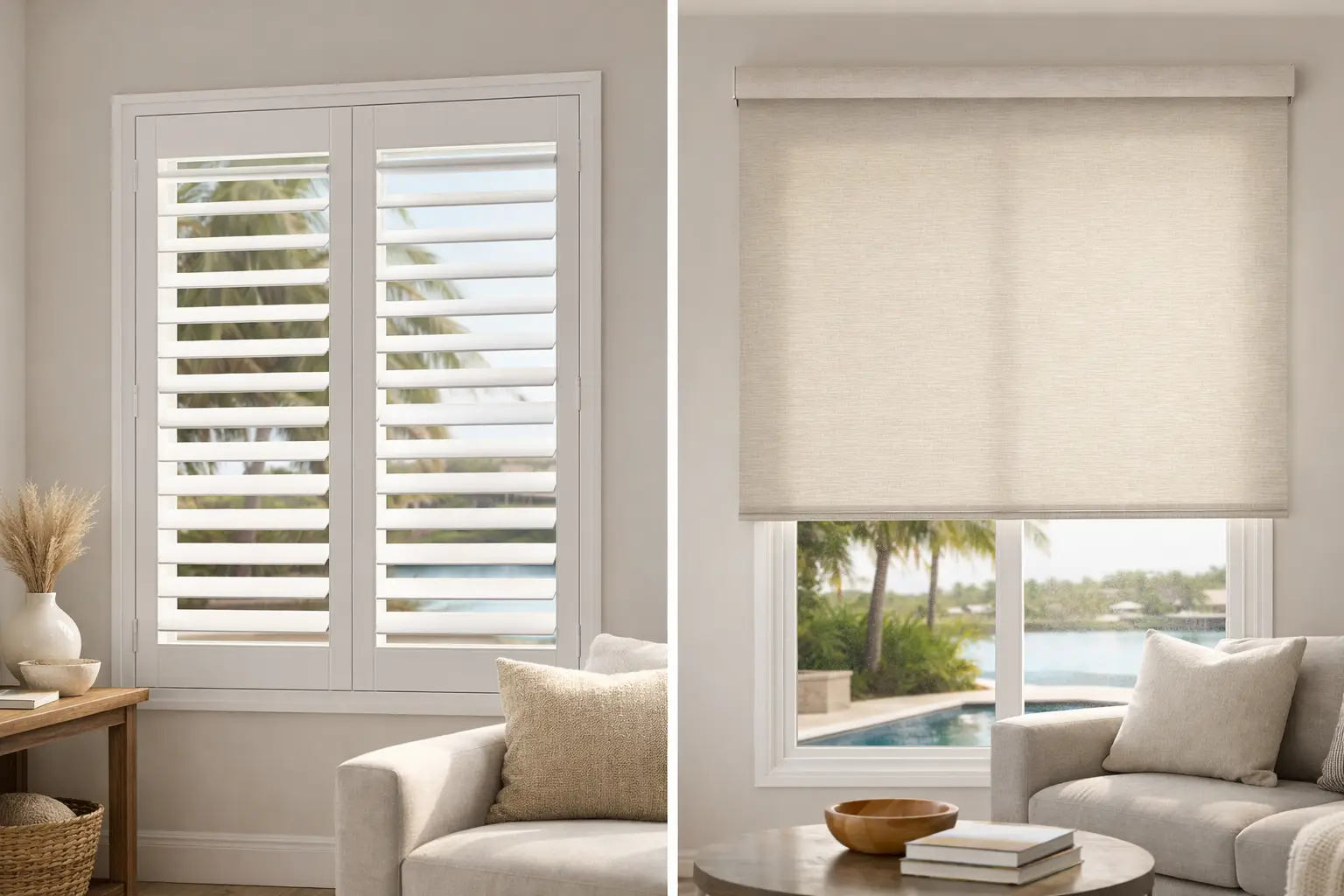
A beautiful blind can look like an afterthought if it is mounted in the wrong place. The decision between inside mount vs outside mount blinds affects more than appearance – it shapes how much light enters the room, how private the window feels, whether the treatment clears trim and handles, and how polished the final installation looks.
For South Florida homeowners, this choice also matters when managing intense sun, afternoon glare, and the wide windows and sliding doors common in coastal and suburban homes. There is no single right answer for every room. The best mounting style depends on the window itself, the product you choose, and the result you want to achieve.
What Is an Inside Mount?
Inside-mount blinds are installed within the window opening. The headrail, brackets, and operating components sit inside the frame or recess, creating a clean, tailored appearance. This is often the preferred choice when a window has sufficient depth and attractive trim that deserves to remain visible.
An inside mount makes the treatment feel integrated with the architecture. It works especially well with faux wood blinds, roller shades, solar shades, cellular shades, and many Hunter Douglas options designed for a precise custom fit. In a room with detailed molding, an inside mount lets the window casing become part of the design instead of covering it.
Because the treatment sits within the opening, measuring must be exact. Window frames are not always perfectly square, even in newer homes. Professional measuring accounts for variations in width, depth, and sill clearance so the blind can raise, lower, and tilt properly without rubbing against the frame.
Benefits of inside-mount blinds
The main advantage is the refined, built-in look. Inside mounts preserve trim, take up less visual space, and can make a room feel orderly and uncluttered. They are also a practical choice when furniture sits close to the window or when the goal is to keep the treatment neatly contained within the frame.
For homeowners who want to reduce glare while keeping a view, an inside-mounted solar shade can be particularly effective. It maintains a streamlined profile and can help soften bright South Florida sunlight without overwhelming the window.
Inside mounts also pair beautifully with decorative draperies or side panels. The shade or blind handles privacy and light control, while fabric panels add softness and color around the opening.
Where inside mounts can fall short
Inside mounts require adequate mounting depth. A shallow window opening may not have enough room for the selected product, especially if the blind has a larger headrail or the window includes a crank, handle, or other obstruction.
They also leave small gaps along the sides of the window. Custom products minimize those gaps, but an inside-mounted blind cannot fully overlap the opening. In bedrooms, media rooms, or areas where maximum darkness is the priority, those light edges may be noticeable.
The same detail matters for privacy. Most rooms will have excellent privacy with an inside mount, but an outside mount may offer more coverage when a window is unusually shallow, narrow, or exposed to close neighboring homes.
What Is an Outside Mount?
Outside-mount blinds are installed on the wall, window trim, or above the opening rather than inside it. The treatment extends beyond the window on the sides and often above the top edge, covering more of the opening.
This style is a smart solution for windows with limited depth, uneven frames, or obstructions that prevent an inside installation. It can also create a stronger visual statement, especially when used to make a small window appear taller or wider.
For example, mounting a roller shade several inches above a window can draw the eye upward and give the room a more generous sense of height. When raised, the shade also sits higher, leaving more glass visible. That can be useful for preserving daylight and a view during the day.
Benefits of outside-mount blinds
Outside mounts provide broader coverage. Since the treatment overlaps the opening, it can block more side light and improve privacy. This makes it a popular choice for bedrooms, nurseries, home offices, and rooms where television glare is a concern.
An outside mount is also forgiving when the window opening is imperfect. Rather than trying to fit a product into a slightly out-of-square recess, the treatment covers the opening from the exterior. This can produce a more balanced-looking result on older windows or openings with uneven drywall.
For cellular and honeycomb shades, outside mounting can support stronger light control and help reduce the visual impact of gaps around the glass. It is also often the practical answer for French doors and certain doors with shallow glass frames, provided the hardware is placed where it will not interfere with operation.
Considerations before choosing an outside mount
Outside-mounted treatments cover some or all of the trim, so they may not be the first choice when the casing is a standout architectural detail. The stack of the blind or shade is more visible as well, particularly when the product is raised.
Placement requires planning. The wall area above and beside the window must be suitable for brackets, and the treatment needs enough clearance from nearby doors, cabinetry, crown molding, or ceiling lines. A professional consultation helps avoid the common mistake of selecting a beautiful product without accounting for where its hardware will sit.
Inside Mount vs Outside Mount Blinds: How to Choose
Start with the window, not the product photo. An inside mount is usually ideal when the frame has enough depth, the trim is attractive, and you prefer a tailored look. An outside mount is often better when you need more light coverage, greater privacy, or a solution for a shallow or irregular opening.
Think about how the room is used. In a sunny family room, an inside-mounted solar shade may provide the right balance of glare reduction and daytime visibility. In a bedroom, an outside-mounted room-darkening shade may be more appropriate because it overlaps the glass and limits light around the edges.
Your design goals matter just as much. If you are updating a formal living room with plantation shutters, the mounting decision will be influenced by the shape of the opening and the existing trim. If you are adding woven woods with drapery panels, the mounting plan should consider the layers together so the finished window feels intentional rather than crowded.
Product Type Can Influence the Best Mount
Some products are flexible and work beautifully either way. Roller shades, solar shades, and cellular shades are commonly installed inside or outside the opening. The choice comes down to depth, coverage, and the desired look.
Horizontal blinds, including faux wood blinds, need appropriate clearance for their headrails and slats. An inside mount can look especially crisp, but a shallow opening may require an outside mount. Shutters require careful evaluation because the frame and panel configuration must be proportioned to the window and installed securely.
Motorized window treatments introduce another layer of planning. The mounting location affects access, battery placement when applicable, and how the treatment clears trim or other design features. Planning the details before installation keeps the finished result clean and easy to use.
Why Professional Measuring Makes a Difference
Mounting choice is one reason window treatments should not be treated as a simple off-the-shelf purchase. A fraction of an inch can affect whether an inside-mounted blind operates smoothly, whether an outside-mounted shade covers the intended area, and whether multiple windows align consistently across a room.
An experienced design professional can assess window depth, frame condition, trim proportions, sun exposure, and the practical needs of the household. They can also show how different fabrics, slat sizes, opacity levels, and operating systems will look in the actual space. That guidance is especially valuable in homes with a mix of arches, large picture windows, sliders, and doors.
Boca Blinds has helped homeowners throughout Boca Raton and surrounding South Florida communities make these decisions since 1976. From the first measurement through professional installation, the goal is a custom window treatment that looks right, functions reliably, and enhances the home for years to come.
If you are deciding between an inside or outside mount, bring the question into the room where the treatment will live. Consider the view, the sunlight at different times of day, the trim you want to showcase, and the privacy you expect after dark. A thoughtful consultation turns those details into a window treatment that feels made for your home.