

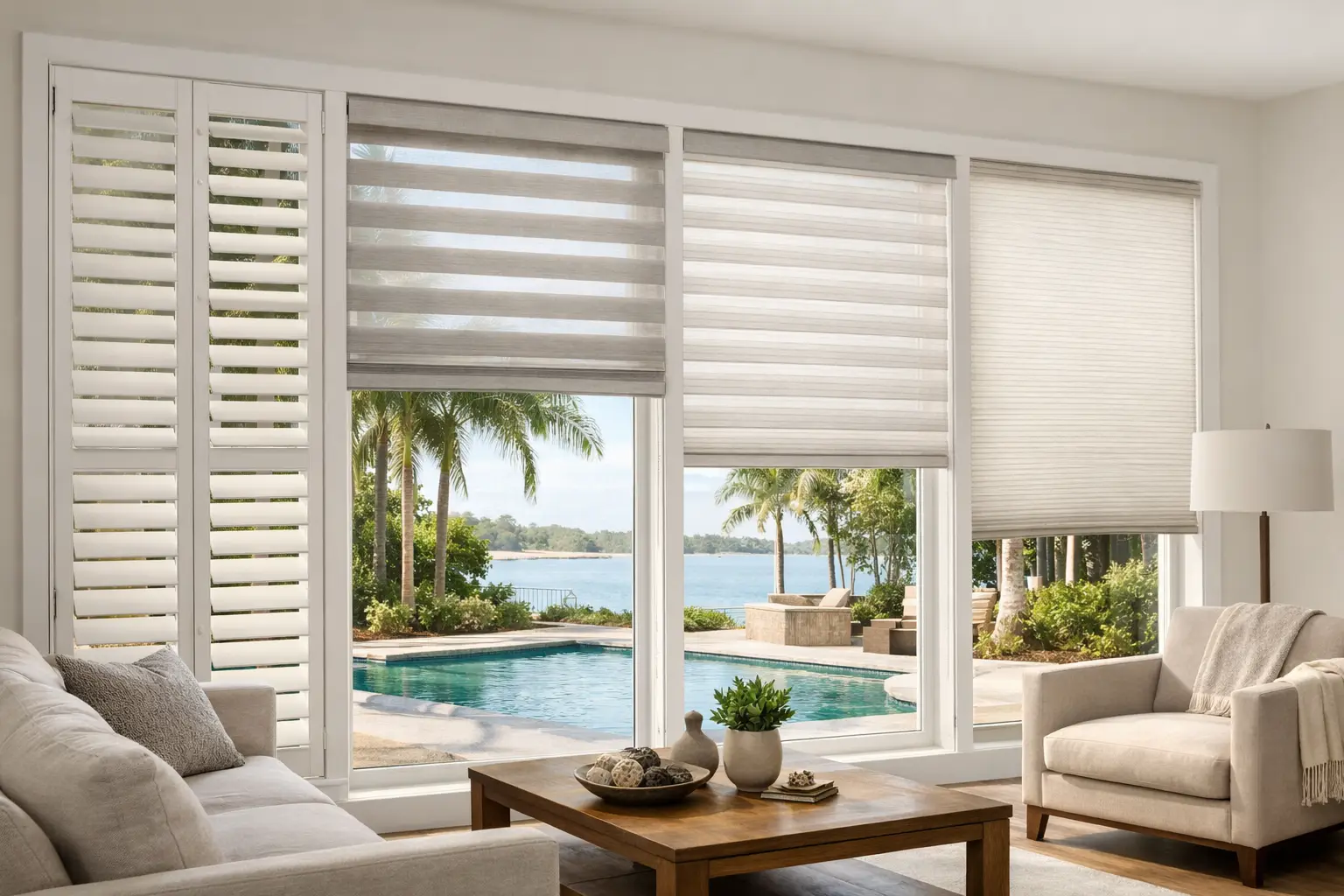
Florida sunlight can make a room feel spectacular at 10 a.m. and uncomfortably bright by lunchtime. This Hunter Douglas blinds review looks beyond appearance to the details that matter in a South Florida home: how a treatment handles glare, protects interiors, preserves a view, provides privacy, and works day after day.
Hunter Douglas is widely associated with well-designed, custom window coverings, but a respected name is not a substitute for choosing the right product. The best option depends on the room, window shape, sun exposure, desired level of privacy, and the way you want the finished space to feel. For homeowners who value tailored design and dependable operation, the collection offers substantial strengths, with a few considerations worth understanding before making a decision.
Hunter Douglas Blinds Review: Where the Quality Shows
The clearest difference is in customization. Rather than selecting a standard-size blind and adapting your expectations to it, Hunter Douglas window treatments are specified for the window and the room. That includes dimensions, fabric or slat material, color, control style, opacity, and mounting details. The result can look integrated with the home instead of added as an afterthought.
That level of fit is particularly valuable for the large glass openings, sliding doors, arches, and unusually shaped windows common in Boca Raton and nearby communities. A proper custom measurement helps the treatment hang evenly, operate correctly, and provide more consistent light coverage at the edges. It also gives the design more polish, especially in living rooms, primary bedrooms, and spaces with open sightlines.
Material and operating quality are another reason these products appeal to homeowners planning a long-term improvement. Collections are designed with coordinated components, refined finishes, and control systems intended for frequent use. The difference may seem subtle in a showroom, but it becomes more apparent on windows that are raised, tilted, or adjusted several times a day.
The brand also offers a broad range of solutions rather than treating every window as a blind application. That matters because a west-facing family room, a bedroom overlooking a neighboring property, and a bright office rarely need the same treatment. A thoughtful design plan can mix product styles while maintaining a cohesive color palette throughout the home.
Light Control Is the Main Reason to Consider Them
For many South Florida homeowners, light control is the real test. Direct sun can create screen glare, fade flooring and furnishings, raise discomfort near windows, and make a beautiful room difficult to use at certain hours. Hunter Douglas options give you more ways to soften that sun without automatically making the room dark.
Sheer shadings and light-filtering fabrics can diffuse harsh daylight while retaining an airy appearance. They are often a strong choice for formal living areas and dining rooms where the goal is to reduce glare without losing the open feel of the space. Solar shades are especially useful where a view is part of the room’s appeal. They can help manage glare and ultraviolet exposure while still allowing an outward view during the day, depending on the selected openness.
For bedrooms and media rooms, room-darkening or blackout-oriented solutions provide more control. The distinction is worth discussing carefully: room-darkening fabrics reduce a great deal of light, while true blackout performance also depends on the shade design, side gaps, mounting position, and the window itself. A professional consultation helps set realistic expectations before installation.
Privacy works in a similar way. A treatment that provides excellent daytime glare control may not offer the same privacy once interior lights are on after dark. In homes near a golf course, waterfront walkway, or neighboring property, combining a sheer or solar layer with a more private shade or drapery can offer flexibility without sacrificing the design.
Popular Options and the Rooms They Suit
Hunter Douglas includes several product categories, and each answers a slightly different need. The following options are often worth considering during a custom consultation:
- Cellular shades use a honeycomb construction that creates air pockets. They can be an excellent fit for bedrooms, offices, and sun-exposed rooms where insulation, soft light, and a clean profile are priorities.
- Roller and solar shades have a streamlined look that suits contemporary interiors, kitchens, offices, and rooms with a view. Fabric selection determines whether the effect is more transparent, light filtering, or room darkening.
- Wood and alternative wood blinds provide adjustable vanes for variable light and privacy. Their architectural appearance works well with traditional, transitional, and coastal-inspired interiors.
- Sheers and woven-style treatments bring texture and softness to larger living spaces. They are especially appealing when the window treatment should feel decorative as well as functional.
Plantation shutters may also be a better answer for certain homes, particularly where a permanent, architectural look and adjustable louvers are desired. The right choice is not always the product that looks best in a small sample. It is the one that performs well on your particular windows and supports how you use the room.
Automation Adds Convenience, Not Just Technology
Motorized window coverings are often viewed as a luxury feature, but their practical value is easy to see on tall windows, hard-to-reach glass, or rooms with many treatments. With motorization, shades can be adjusted without cords or manual lifting, making everyday light management simpler and creating a cleaner appearance.
Automation can also support a more consistent routine. A homeowner may prefer shades to lower during the brightest part of the afternoon, then open later to bring back the view. In a bedroom, automated shades can be set to support a quieter morning or a more private evening. The most useful systems are the ones that match the household’s habits rather than adding complexity.
Still, motorization is not necessary for every window. A simple manual treatment can be ideal for a guest room, a rarely used window, or a space where the shade is normally left in one position. The best design balances convenience, room function, and visual priorities.
What to Consider Before You Choose
A Hunter Douglas treatment is a custom design purchase, so the selection process deserves more care than an off-the-shelf blind. Start with the window’s direction and the time of day the room receives its strongest light. Notice whether glare, heat, fading, privacy, or sleep disruption is the biggest concern. Then consider how much of the view you want to keep when the treatment is lowered.
Fabric and color deserve attention as well. A light fabric can preserve brightness, but it may not deliver the same room-darkening result as a darker or more opaque choice. A darker solar fabric may improve daytime glare management, yet can change how clearly you see outside. Samples should be viewed in the actual room whenever possible, because sunlight, wall colors, and surrounding landscaping all affect how a material reads.
Installation is equally important. Even a beautifully selected product can disappoint if it is mounted at the wrong height, measured imprecisely, or installed without accounting for handles, trim, sliders, or window cranks. Experienced installation protects both the appearance and the performance of a custom treatment.
Is Hunter Douglas a Good Fit for Your Home?
Hunter Douglas is a strong fit for homeowners who want more than a basic window covering and appreciate design choices that serve a practical purpose. The collection offers meaningful flexibility for glare reduction, privacy, insulation, child-safe operation, and style. It is particularly compelling for prominent rooms, challenging windows, and homes where details matter.
It may be less necessary when the goal is simply to cover a small, low-use window with the most basic treatment possible. Custom products are most valuable when the fit, finish, light management, and daily experience justify a more considered approach.
At Boca Blinds, we help homeowners compare those trade-offs in the home, where fabric samples and operating styles can be evaluated in the light they will actually face. A free consultation can turn a broad product search into a clear plan for rooms that feel more comfortable, private, and beautifully finished.