

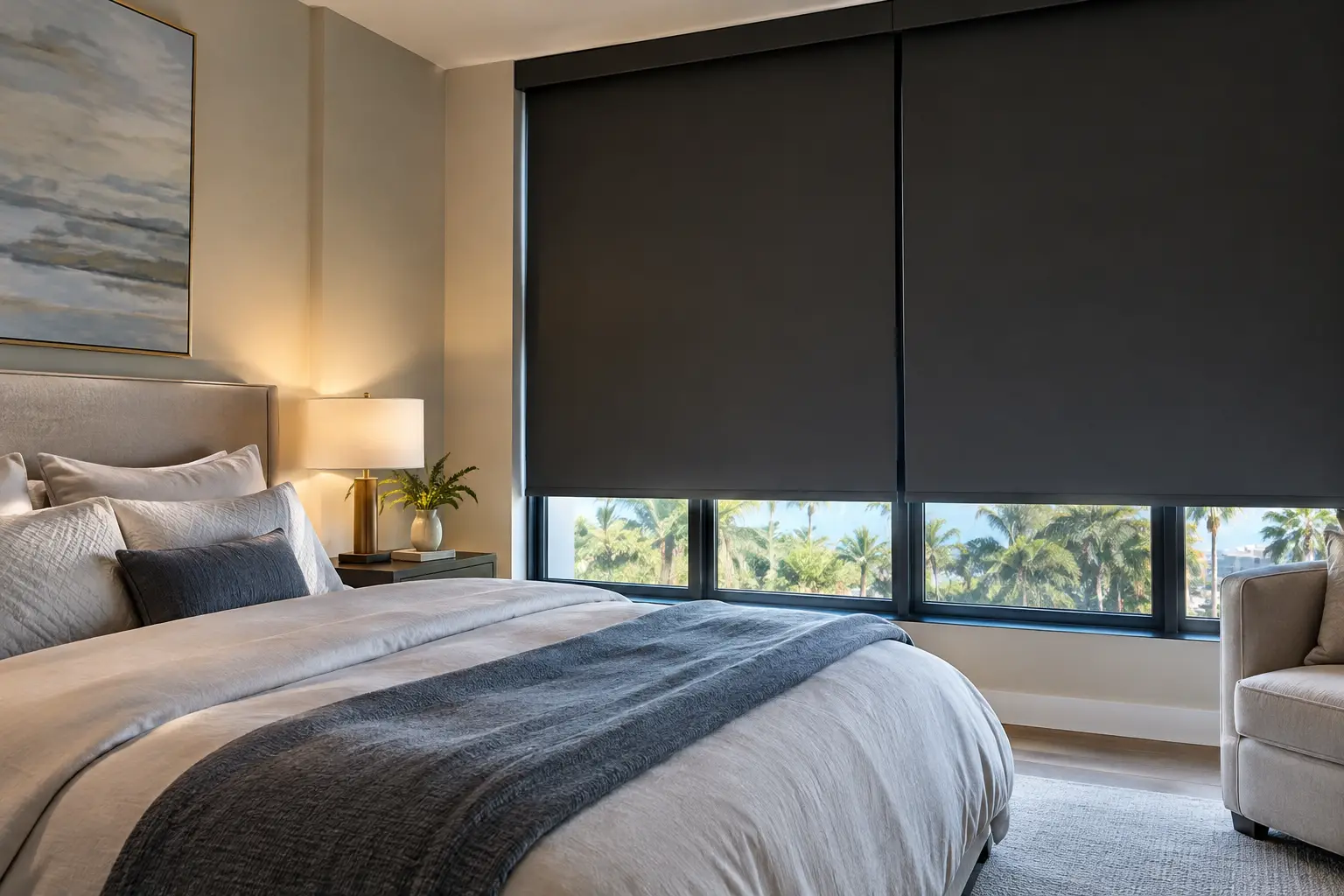
A bright strip of Florida morning sun at the edge of a window can be enough to wake a light sleeper, fade a favorite rug, or put glare across a home office screen. Knowing how to use blackout shades well is about more than pulling them down at bedtime. The right shade, properly fitted and operated, gives you meaningful control over light, privacy, comfort, and the appearance of the room.
Blackout shades are especially useful in South Florida homes, where strong sunlight is part of daily life. They can make bedrooms more restful, media rooms more enjoyable, nurseries more predictable, and west-facing rooms more comfortable later in the day. Their performance, however, depends on the fabric, the fit, the mounting choice, and how the shade is used with the rest of the window treatment.
Start With What Blackout Shades Actually Do
A blackout shade uses an opaque material or a room-darkening construction designed to block light passing through the shade itself. When lowered, it also provides privacy because people cannot see through the fabric from outdoors.
That does not always mean a room will become completely dark. Light can still enter around the sides of the shade, above the headrail, or below the bottom rail. This is normal, particularly with inside-mounted shades, which sit within the window opening. For many homeowners, that small amount of edge light is perfectly acceptable. For someone working overnight shifts, setting up a nursery, or creating a dedicated media room, the details of the installation matter more.
Blackout and room-darkening are sometimes used interchangeably, but there can be a practical difference. A room-darkening shade reduces a substantial amount of daylight. A true blackout fabric blocks light through the material more fully. During a design consultation, it helps to explain whether your goal is softer morning light, a darker sleeping space, or near-total darkness. That distinction guides the right product and mounting approach.
How to Use Blackout Shades in Each Room
In a bedroom, lower blackout shades before you begin your evening routine rather than waiting until you are ready to sleep. This creates a calmer atmosphere and prevents outdoor lighting from interrupting the room later. If you enjoy natural light during the day, raise the shade fully or stop it at a height that preserves privacy while allowing daylight to enter.
For a nursery or child’s room, blackout shades can support more consistent nap and bedtime conditions. A cordless operating system is often the cleanest choice for a polished look and helps eliminate dangling cords. The shade should still be easy for adults to adjust, especially when daylight levels change quickly through the seasons.
In a media room, close shades before turning on the television or projector. Doing so reduces reflected glare and can improve picture clarity without forcing the room to feel permanently closed off. If the room is also used for entertaining, consider pairing blackout shades with decorative drapery panels. The shades provide performance, while the drapery adds softness and visual presence.
Home offices need a more flexible approach. Lower the shade enough to control direct sun on a monitor, but do not automatically darken the entire room. Many homeowners find that raising the shade slightly from the sill or using a top-down/bottom-up configuration gives them daylight without exposing the room to distracting glare. If a window receives harsh afternoon sun, a blackout shade can also be lowered during the hottest hours and raised again when the light softens.
Choose the Right Mounting Style
The way a blackout shade is mounted affects both appearance and light control. An inside mount fits within the window frame. It has a tailored, built-in appearance and keeps the window trim visible, making it a popular choice in well-finished homes. Because clearance is needed for the shade to operate, a narrow gap around the edges is expected.
An outside mount is installed above and beyond the window opening. The shade overlaps the frame, helping reduce the light gaps found with an inside mount. This can be the better choice when darkness is the priority or when the window opening is shallow, uneven, or not suitable for an inside installation.
For the strongest possible light control, some windows benefit from added side channels, a larger overlap, or layered treatments. Drapery panels that extend past the window frame can soften side light while giving the room a more finished design. The best solution depends on the window shape, surrounding trim, furniture placement, and how dark the room truly needs to be.
Use Blackout Shades for Heat and Sun Management
Blackout shades are not a substitute for air conditioning, but they can be part of a smarter strategy for managing intense sun. Close them before direct sunlight reaches the glass, especially on east- and west-facing windows. Waiting until a room already feels hot means solar heat has had more time to build up.
Cellular blackout shades can be an excellent option when insulation is a concern. Their honeycomb-shaped cells create air pockets that can help moderate heat transfer at the window. Roller blackout shades offer a clean, contemporary profile and are often well suited to large openings. Both can be customized to coordinate with the room, but their benefits are slightly different: cellular shades lean toward insulation, while roller shades are valued for their streamlined look and straightforward operation.
Keep expectations balanced. Darker rooms may feel more comfortable during sunny hours, yet the greatest performance comes from selecting a well-fitted shade for the window and using it consistently. Large expanses of glass, sliding doors, and unusually exposed elevations may need a more tailored plan than a standard shade alone.
Get the Most From Motorized Operation
Motorized blackout shades make daily light control much easier, particularly on tall windows, wide openings, and windows located behind furniture. Instead of leaving shades in one position because they are inconvenient to reach, you can adjust them when the sun changes or when privacy is needed.
Set a simple routine that fits your household. You might lower bedroom shades in the evening, raise them after waking, and close west-facing shades before the strongest afternoon light arrives. In rooms with multiple windows, operating shades together creates a more orderly appearance and saves time.
Motorization is helpful, but it should support your lifestyle rather than add unnecessary complexity. A bedroom may benefit from scheduled operation, while a guest room may only need easy handheld control. Professional planning helps ensure the power option, control method, and shade style suit the window and the way you use the room.
Care for Blackout Shades Without Damaging Them
Routine care is simple. Use a feather duster, microfiber cloth, or the soft brush attachment on a vacuum at low suction to remove surface dust. Work gently and follow the direction of the fabric or pleats. For cellular shades, avoid crushing the cells. For roller shades, keep the fabric supported as you wipe.
Do not saturate blackout fabrics with water or use harsh household cleaners. Many blackout backings and specialty fabrics can be damaged, stained, or warped by the wrong cleaning method. If you notice a spot, start with the manufacturer’s care guidance or seek professional advice before treating it.
Operate the shade smoothly rather than pulling it down quickly or forcing it past an obstruction. Keep furniture, lamps, and window cranks clear of the shade’s path. These small habits protect the fabric, hardware, and alignment over time.
When a Layered Window Treatment Makes Sense
Blackout shades solve the functional need for darkness and privacy, but they do not have to carry the entire design. Layering them with drapery, sheers, or side panels can make a room feel warmer and more complete. It also gives you more options throughout the day.
For example, a bedroom may use sheer panels for filtered daylight and blackout shades for sleep. In a formal living room, a blackout roller shade can disappear neatly when raised while drapery provides color and texture. This approach is particularly useful when a homeowner wants performance at night without sacrificing an inviting daytime look.
A professional measure is valuable here. A few fractions of an inch affect side gaps, alignment, and how well separate treatments work together. Boca Blinds can help homeowners compare blackout options in their own space, then coordinate the fabric, mounting style, and operation for a finished result.
The most effective blackout shade is the one that matches your real routine: open when you want daylight, closed before glare and heat take over, and fitted carefully enough to give the room the privacy and rest it deserves.