

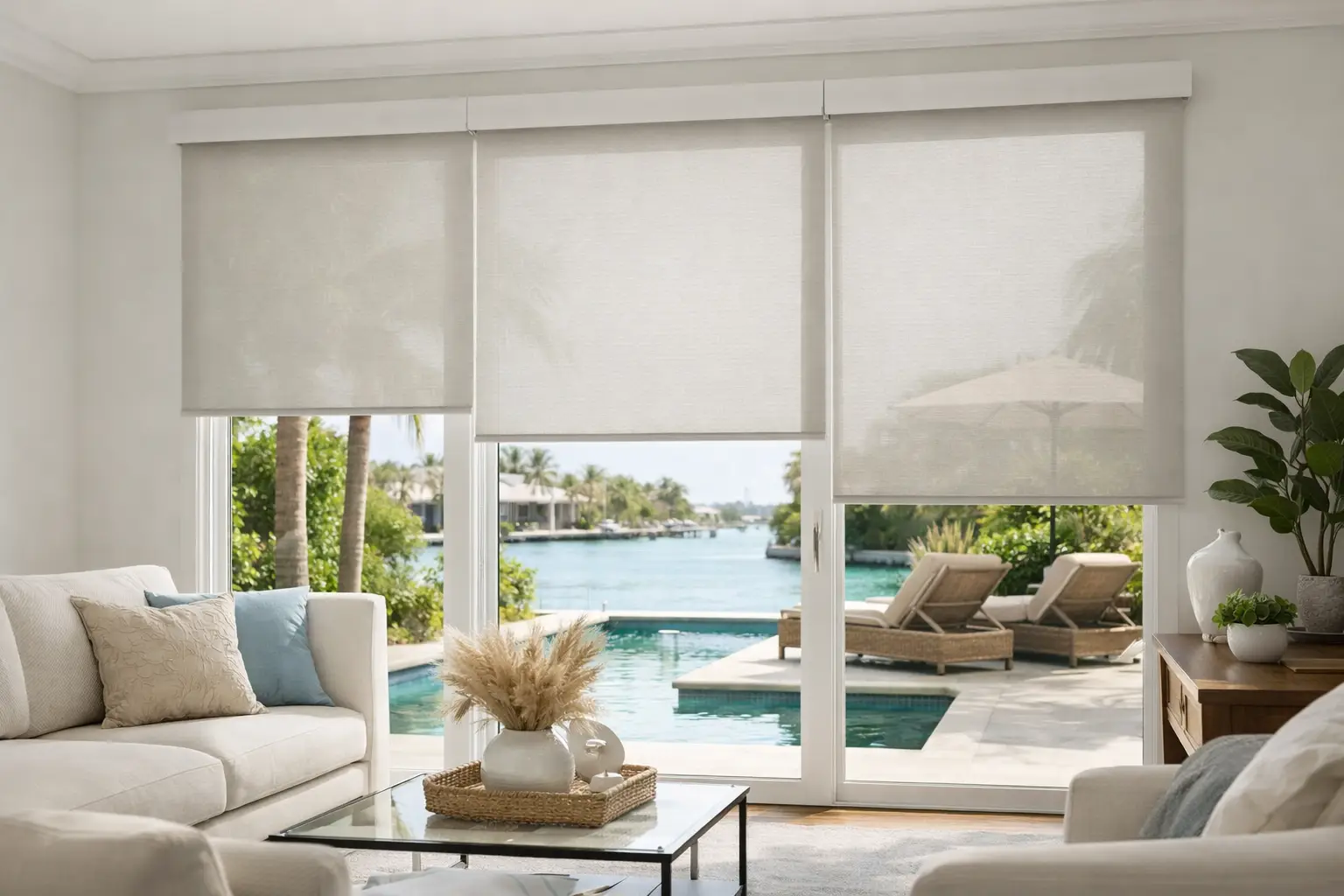
A west-facing living room in Boca Raton can be beautiful at 10 a.m. and nearly unusable by 3 p.m. when the sun hits the television, floors, and upholstery. Knowing how to pick roller shades starts with that real-world question: what does each window need to do for your home? The right shade should soften harsh light, protect interiors, preserve a view when desired, and look intentional within the room.
Roller shades have a clean, tailored profile that works especially well in South Florida homes. They can stand quietly behind draperies, complement contemporary architecture, or provide a polished finish in a coastal, transitional, or traditional interior. Yet the best choice is rarely just a matter of selecting a color. Opacity, fabric openness, privacy needs, mounting style, and operation all affect how the finished shade performs every day.
How to Pick Roller Shades by Room and Window Exposure
Begin with the purpose of the room, then consider the direction the window faces. A shade that works beautifully in a bright kitchen may not offer enough nighttime privacy for a bedroom. Similarly, a room with broad east- or west-facing glass often needs stronger glare and heat management than a shaded guest room.
In living rooms, family rooms, and offices, many homeowners want to reduce glare while maintaining a connection to the outdoors. Solar roller shades are often an excellent fit here. Their specialty fabrics filter sunlight and help protect furnishings from damaging UV exposure while allowing a degree of outward visibility during the day. They are particularly useful on large sliding doors, walls of windows, and rooms where a view is part of the home’s appeal.
Bedrooms and bathrooms usually call for more privacy. A room-darkening roller shade blocks significantly more light than a solar shade, while blackout fabrics are the strongest option for sleeping areas, media rooms, or anyone sensitive to early morning light. Keep in mind that a blackout fabric does not automatically create total darkness. Light can still pass around the sides of the shade depending on the mounting method and window shape. For the darkest result, a professional can recommend the right fit and any complementary treatments.
Kitchens and casual dining spaces tend to benefit from light-filtering fabrics. These shades diffuse intense sun without making the room feel closed off. The effect is softer and more comfortable than bare glass, especially during bright Florida afternoons.
Choose the Right Opacity and Openness
The term opacity describes how much light a fabric allows through. It is one of the most important decisions in selecting a roller shade because it determines the balance between brightness, view, and privacy.
Solar shades are commonly described by openness factors. A more open weave lets in more light and provides a clearer daytime view, but it also offers less glare control and less privacy. A tighter weave filters more sun and offers greater visual privacy, though the view becomes softer and less defined.
For a room where you want to enjoy the landscape during daylight hours, a medium openness fabric can be a practical compromise. For an office with computer screens or a sunny great room with delicate furnishings, a tighter solar fabric may be the better choice. At night, however, solar shades do not provide complete privacy when interior lights are on. If privacy after dark matters, consider pairing them with drapery panels, side panels, or a second shade solution.
Light-filtering roller shades offer daytime privacy and a gentle glow, but silhouettes may be visible at night depending on the fabric and lighting. Room-darkening and blackout shades provide the strongest privacy. A showroom sample is helpful, but viewing a larger sample against the actual window is even better because the same fabric can look different in direct sun than it does under showroom lighting.
Select a Fabric That Supports Your Design
Roller shade fabrics are far more varied than the plain white vinyl shades many homeowners remember. Today’s collections include refined woven textures, linen-like looks, subtle patterns, modern solids, and performance fabrics designed for humid, sun-filled spaces.
The fabric should support the room rather than compete with it. In a home with layered textures, natural wood finishes, and upholstered furniture, a woven neutral can add warmth without visual clutter. A smooth, architectural fabric may suit a contemporary condominium or an office where clean lines are the priority. White and soft ivory shades generally keep a room bright, while warmer taupes and grays can frame a window more distinctly.
Color also changes how the shade performs. Lighter fabrics typically reflect more sunlight and create an airy appearance. Darker solar fabrics can improve outward visibility and reduce glare, but they may make a room feel more visually defined when lowered. There is no universally correct choice. The best fabric depends on the orientation of the window, the wall color, the amount of natural light, and whether the shade is meant to disappear or make a design statement.
For coastal homes, fabric durability deserves attention as well. Sun exposure, humidity, and frequent use place real demands on window treatments. Quality materials and professionally specified products help preserve a polished appearance over time.
Decide Between Inside and Outside Mount
Mounting changes both the appearance and performance of roller shades. An inside mount places the shade within the window opening. This is a crisp, built-in look that shows off decorative trim and is popular in clean-lined interiors. It requires sufficient window depth and a square, unobstructed opening.
An outside mount places the shade above and beyond the window frame. It can make a smaller window appear larger, cover trim when desired, and reduce light gaps at the sides. Outside mounting is often useful for blackout applications or windows with shallow depth, handles, or other obstructions.
This is where accurate measuring matters. Even a beautiful fabric will not perform as expected if the shade is mounted in a way that leaves more light gaps than the room can tolerate. Custom measurement also accounts for molding, sliding doors, window cranks, and nearby furniture that may affect operation.
Consider How You Want the Shades to Operate
A manual roller shade can be an excellent, straightforward option for accessible windows that are raised and lowered occasionally. Cordless operation provides a clean look and is a sensible choice for homes with children or pets. For large shades, high windows, groups of windows, or rooms used throughout the day, motorization adds a meaningful level of comfort.
Motorized roller shades can be controlled by remote, wall control, or compatible smart-home systems. They are especially convenient for a wall of glass, a tall foyer window, or a bedroom where you want to adjust light without leaving the bed. Scheduled operation can also help manage afternoon sun and protect interiors while you are away.
Motorization is not necessary for every window. A powder room window may be perfectly suited to a simple manual shade, while a great room with multiple large openings may be far more enjoyable with coordinated motorized control. The right decision comes down to window size, accessibility, daily habits, and the level of convenience you value.
Do Not Overlook the Details Around the Shade
The hardware and finishing details influence the final look. Some roller shades are designed to be minimal, with the fabric rolling into a discreet top treatment. Others can be finished with a cassette or fascia that conceals the roller and gives the window a more structured appearance. A cassette can be especially attractive in formal rooms or where you want a clean, completed look from every angle.
Layering is another worthwhile consideration. Roller shades solve practical needs beautifully, while draperies or decorative side panels add softness, depth, and stronger nighttime privacy. This pairing works well in bedrooms, formal living spaces, and rooms with tall or expansive windows. It also lets you use a solar shade for the daytime view and a fabric treatment for a more finished evening setting.
Let the Window, Not a Trend, Lead the Choice
The most successful roller shades are chosen as part of the room, not as an isolated product. Bring together the window exposure, desired privacy, existing furnishings, and how your household uses the space. A fabric that looks perfect on a small swatch may be too dark across a large bank of glass, while a highly open solar fabric may be ideal in one room and frustrating in another.
For homeowners in Boca Raton and surrounding South Florida communities, an in-home consultation can remove much of the guesswork. Boca Blinds can assess the light, take precise measurements, compare fabrics in the actual space, and provide professional installation for a custom-fitted result. The goal is not simply to cover the window, but to make the room more comfortable, beautiful, and enjoyable every day.