

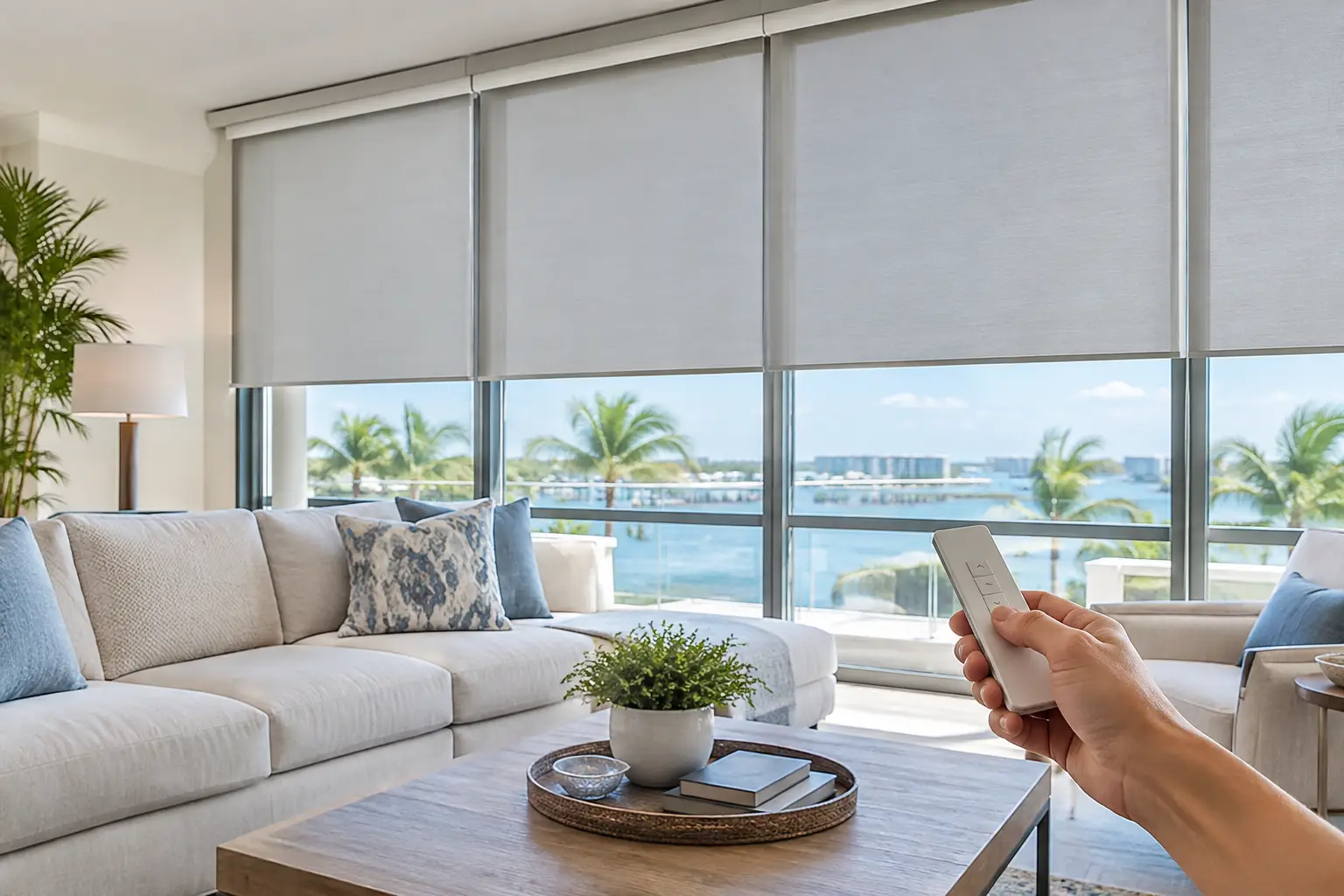
The afternoon sun can turn a beautiful South Florida room into the one room everyone avoids. If you are wondering how to motorize existing blinds, the first question is not which remote to buy. It is whether your current blinds have the construction, condition, and clearance needed for a reliable motorized retrofit.
Motorization can make daily light control easier, protect furnishings from intense UV exposure, and give a finished room a more polished feel. But not every blind can or should be upgraded. A thoughtful assessment prevents a temporary fix from becoming a frustrating one.
Can You Motorize Existing Blinds?
Sometimes, yes. Existing blinds may be motorized with a retrofit kit when their operating system is compatible and the blind itself is in excellent condition. The best candidates tend to be newer, well-made horizontal blinds, roller shades, and certain shades with accessible operating components.
A retrofit motor generally replaces or works with the existing tilt mechanism, lift system, or roller tube. Depending on the product, it may be powered by batteries, a plug-in adapter, or low-voltage wiring. Some options operate with a handheld remote, wall control, app, or smart-home system.
The answer depends on more than the window treatment category. The weight and width of the blind, the headrail design, the age of its hardware, mounting location, and the way it raises and lowers all matter. A blind that still works by cord does not automatically mean it is a good candidate for motorization.
When a Retrofit Makes Sense
Motorizing an existing window treatment is often worthwhile when you already love its style and it is structurally sound. Perhaps the blind coordinates with custom draperies, matches other window coverings in the home, or fits an unusually shaped window. In those situations, retaining the treatment while improving its function can be appealing.
Retrofitting can also work well for hard-to-reach windows. Windows over a soaking tub, behind furniture, above a stair landing, or in a high ceiling area are much easier to manage when light control does not require a step stool or a long wand.
For homeowners who want greater convenience without redesigning an entire room, a compatible motorized upgrade may be the right middle ground. A professional can evaluate whether the finished result will look intentional and operate consistently, rather than simply adding technology to an aging mechanism.
Signs Your Blinds May Be Good Candidates
Look closely at the treatment before planning an upgrade. The blind should raise, lower, and tilt smoothly without sticking, sagging, or requiring extra force. Its headrail should be securely mounted, and its slats, vanes, fabric, or roller tube should be free from noticeable warping or damage.
It also helps if replacement parts are still available for the product. Older blinds may use discontinued components, making a reliable retrofit difficult even when the blind appears to be working. A professional measurement and product inspection can answer these questions before any equipment is ordered.
When Replacement Is the Better Investment
Motorization cannot correct worn cords, bent headrails, stretched fabric, damaged ladders, or a blind that no longer sits level. Adding a motor to a treatment with aging internal components can place additional strain on the system and may shorten its useful life.
Replacement is often the smarter choice for blinds that are more than several years old, especially in rooms with direct sun, humidity, or frequent use. South Florida sunlight is demanding. Materials that have faded, become brittle, or lost their shape may not deliver the appearance or performance you want after a retrofit.
A new custom motorized shade or blind also offers advantages that retrofits may not. You can select a fabric or slat finish suited to the room, improve glare and privacy control, eliminate exposed cords, and choose a motor system designed specifically for the treatment’s size and weight. For wide openings and large banks of windows, a purpose-built motorized system is usually the more dependable path.
How to Motorize Existing Blinds: Start With an Assessment
Before selecting a control option, identify what you have. Note whether the window treatment is a horizontal blind, vertical blind, roller shade, cellular shade, Roman shade, or another style. Then examine how it operates. Does it use a tilt wand, pull cord, beaded chain, continuous loop, or spring mechanism?
Next, consider what you want the motorization to accomplish. Tilting slats for daytime glare control is different from raising a blind fully every morning. Some retrofit systems are designed for one function but not both. A professional can help clarify whether your desired level of control is realistic with the current product.
Measurements matter as well. The width, height, depth, and mounting position affect motor selection and placement. An inside-mounted blind may have limited space within the window opening, while an outside-mounted treatment may need a clean way to conceal power components. These details affect both performance and appearance.
Choose the Right Power Source
Battery-powered motors are popular because they avoid visible wiring and can be a practical choice for existing installations. Battery life varies based on blind size, use frequency, and motor type. They will need periodic charging or battery replacement, so access should be considered for high or difficult windows.
Plug-in power can provide dependable daily operation when an outlet is nearby and the cord can be routed discreetly. For a more integrated result, low-voltage hardwiring may be considered during a renovation or when walls are already open. This option requires proper planning and professional installation.
Solar charging accessories may be appropriate for some shades in sunny locations, although placement, orientation, and the particular motor system determine whether they are suitable. An experienced window treatment specialist can explain the practical trade-offs without asking you to guess what will work at your window.
Decide How You Want to Control the Blinds
A remote control is simple and familiar, making it a strong choice for individual rooms. Wall-mounted controls offer a permanent location near an entry or bedside. App-based controls and smart-home integration can be especially useful for homes with many windows, allowing treatments to be grouped and scheduled.
Schedules are not just a convenience feature. They can help reduce afternoon glare in a west-facing living area, close bedroom shades for privacy at night, or open window coverings in the morning without handling cords or wands. The best system is the one that feels natural for how you use each room.
Keep expectations realistic. Smart controls do not make an incompatible blind compatible, and they do not replace quality installation. The motor, treatment, power source, and control system need to work together as one planned solution.
Why Professional Installation Matters
A motorized window treatment should move quietly, stop at the correct positions, and hang evenly. Achieving that result involves more than mounting a device. The installer must confirm the treatment is properly supported, set motor limits, manage power neatly, test the controls, and make sure the blind clears handles, trim, and nearby furnishings.
Professional guidance is particularly valuable with wide windows, high windows, delicate fabrics, and treatments installed in humid areas. It also helps protect the appearance of the room. A visible charging cable, bulky attachment, or poorly aligned blind can distract from even the most carefully designed space.
For homeowners in Boca Raton and nearby communities, Boca Blinds can assess existing window coverings and help determine whether a retrofit or a new custom motorized treatment will provide the better long-term result. With design guidance and professional installation, the goal is not merely a blind that moves by remote. It is a window treatment that improves how the room looks and lives every day.
A Better Way to Plan Your Upgrade
Begin with the windows that create the most friction in your routine. It may be the sliding doors that need evening privacy, the family room windows that bring in harsh glare, or the bedroom shades that are difficult to reach behind furniture. Addressing those areas first makes motorization feel useful from the first day.
Bring photos of the existing blinds, along with basic window measurements, to a consultation. A specialist can identify the treatment type, evaluate compatibility, and show options that suit your home’s colors, architecture, and daily needs. If replacement is recommended, that is not a setback. It is an opportunity to choose a safer, cleaner, and more reliable system built for the way you want to control light.
The right motorized solution should quietly support your routine, preserve the comfort of your home, and leave you with window treatments you enjoy looking at even when they are not moving.