

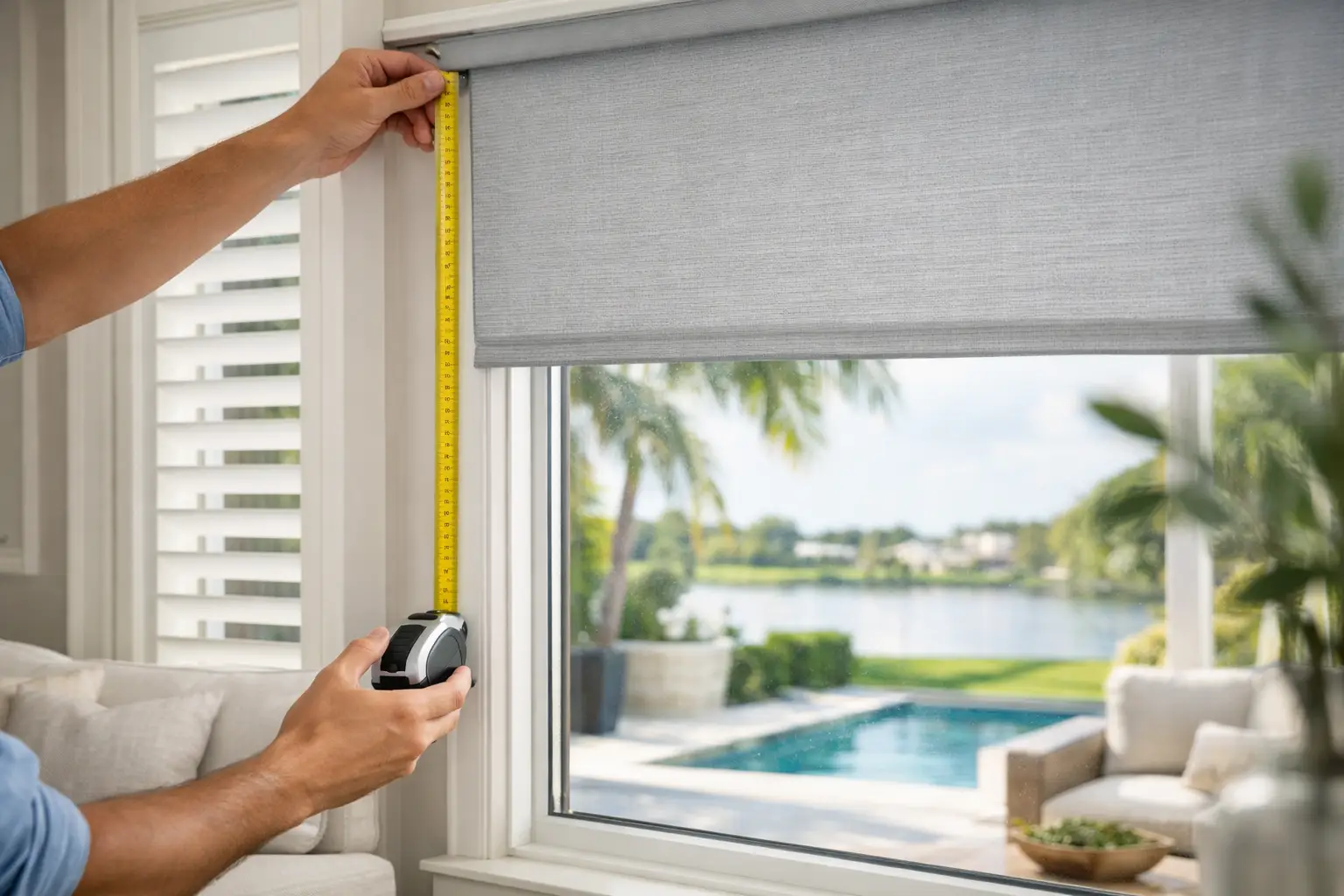
A blind that is off by even half an inch can look wrong every time you walk into the room. It can leave a gap that lets in too much light, sit unevenly, or force an installation that never feels quite finished. That is why knowing how to measure window blinds correctly matters before you order anything custom.
The good news is that measuring is not complicated. The part that trips people up is knowing which dimensions matter for which type of mount, and where exactly to place the tape measure. Once you understand that, the process becomes much more straightforward.
Before You Measure Window Blinds
Start with a steel tape measure rather than a cloth sewing tape. A steel tape stays straight, gives you more accurate readings, and makes it easier to measure the full width and height of the opening. You will also want a pencil or notepad so you can write each measurement down immediately. Relying on memory is where avoidable mistakes happen.
It also helps to decide first whether you want an inside mount or an outside mount. That choice affects everything that follows. Inside mount blinds sit within the window frame and give a clean, tailored look. Outside mount blinds install on or above the trim and can make the window appear larger while offering more coverage for privacy and light control.
If your home gets strong South Florida sun, the mount style can also influence performance. Outside mounts often block more light at the edges, while inside mounts create a more built-in appearance. Neither is automatically better. It depends on the look you want, the depth of the frame, and how much edge light you are willing to accept.
How to Measure Window Blinds for an Inside Mount
Inside mount is the most common choice for a finished, custom look, but it also demands more precision. You are fitting the blind inside the existing frame, so there is less room for error.
Measure the Width in Three Places
To get the width, measure the inside of the window opening at the top, middle, and bottom. Use the narrowest of those three measurements. That is the number you want to record.
This step matters because many window frames are not perfectly square. A window may look even, but slight variations are common, especially in older homes. Measuring in three places helps account for that.
Do not make your own deductions unless the product instructions specifically tell you to do so. For custom blinds, manufacturers usually make the necessary factory adjustments for inside mount installation. If you subtract on your own and the factory also deducts, the blind may end up too narrow.
Measure the Height in Three Places
Next, measure the height inside the opening at the left, center, and right. This time, use the longest measurement. Record that number clearly.
The reason is simple. The blind needs enough length to cover the full opening. If one side is slightly taller and you order based on the shortest height, the result can look skimpy or uneven.
Check the Window Depth
Depth is often overlooked, but it matters, especially for wood blinds, faux wood blinds, cellular shades, and motorized products. Measure from the front edge of the window opening to the glass or any obstruction such as a crank handle.
Every product has a minimum depth requirement for inside mount, and some also have a different depth for a fully recessed look. If the frame is too shallow, the blind may project out from the opening rather than sitting flush. That is not always a dealbreaker, but it is something you want to know before you order.
How to Measure Window Blinds for an Outside Mount
Outside mount gives you more flexibility, which is one reason it works well for challenging windows. It is often the better option when the frame is shallow, the window is slightly out of square, or you want better blackout coverage.
Measure the Desired Width
For outside mount, you are not limited to the exact interior opening. Instead, measure the width you want the blind to cover. A common rule is to add extra width on each side of the window opening so the blind extends beyond the frame.
How much extra depends on the product and your goals. If privacy and light control are the priorities, more overlap is usually better. If the window sits close to a wall, cabinet, or molding, you may have less room to extend. This is one of those areas where exact placement matters as much as raw dimensions.
Measure the Desired Height
Measure from the top point where the headrail will be installed down to where you want the blind to end. Some homeowners mount just above the trim, while others mount several inches higher to create a taller, more dramatic look.
That design choice can change the feel of the room. Hanging higher can visually elongate the window, but only if there is enough wall space and the proportions make sense. In a more compact room, a tighter mount may look cleaner.
Watch for Obstacles
Outside mount blinds need enough flat mounting surface. Before finalizing your measurements, check for door casings, protruding trim, alarm sensors, handles, and nearby architectural features. These details can affect bracket placement and product selection.
Common Measuring Mistakes to Avoid
Most measuring problems come down to assumptions. People assume the window is square, assume all blinds measure the same way, or assume an estimate is close enough. Custom window treatments do not leave much room for that.
One of the most common mistakes is rounding too aggressively. It is best to measure to the nearest one-eighth inch unless the product directions say otherwise. Another is mixing up width and height when writing dimensions down. Always label each one clearly.
There is also the issue of measuring only the visible glass instead of the full opening or coverage area. That may seem logical at first glance, but blinds are mounted by the frame or surrounding wall area, not by the glass alone.
Finally, do not forget that different products have different stack heights, clearances, and hardware requirements. A plantation shutter, solar shade, and faux wood blind may all fit the same opening differently. The measuring method is similar, but the installation realities are not identical.
Special Cases That Change How You Measure Window Blinds
Not every window is a straightforward rectangle. If you are measuring for a bay window, corner window, sliding glass door, French doors, or arched opening, the process may require additional detail. You may need to account for projection, handle clearance, or multiple individual units that work together visually.
Motorized blinds deserve special attention too. They can be an excellent choice for large windows, tall openings, and rooms with strong afternoon sun, but the headrail dimensions and power options may influence the available mounting space.
If the window trim is decorative or uneven, what looks like a simple inside mount can quickly become an outside mount project. That is not a compromise. In many homes, it is the cleaner and more functional solution.
When Professional Measuring Is Worth It
If you are ordering one small blind for a guest room, measuring it yourself may be perfectly reasonable. If you are furnishing a main living area, matching multiple windows, or investing in premium custom treatments, professional measuring can save a great deal of frustration.
That is especially true when aesthetics matter as much as function. In a well-designed room, small inconsistencies stand out. The spacing between windows, the alignment of headrails, and the way treatments sit within the architecture all contribute to the finished look.
An experienced measuring and installation team also catches details homeowners often miss, such as frame depth issues, tile or concrete mounting conditions, and the way sun exposure may affect product choice over time. For many clients, that guidance is just as valuable as the measurements themselves.
A Simple Final Check Before You Order
Before placing an order, review each window one more time. Confirm whether it is inside or outside mount, verify width and height, check depth if applicable, and note any obstructions. If several windows are being measured, label each opening by room so nothing gets confused later.
If two windows look identical, do not assume they are. Measure both. Small differences are common, and custom blinds should be ordered to the actual opening, not to the one beside it.
Knowing how to measure window blinds is the first step toward a better result, but the best finished spaces usually come from pairing accurate numbers with good design judgment. When the fit is right, the treatment looks effortless, and that is exactly how custom blinds should feel.