

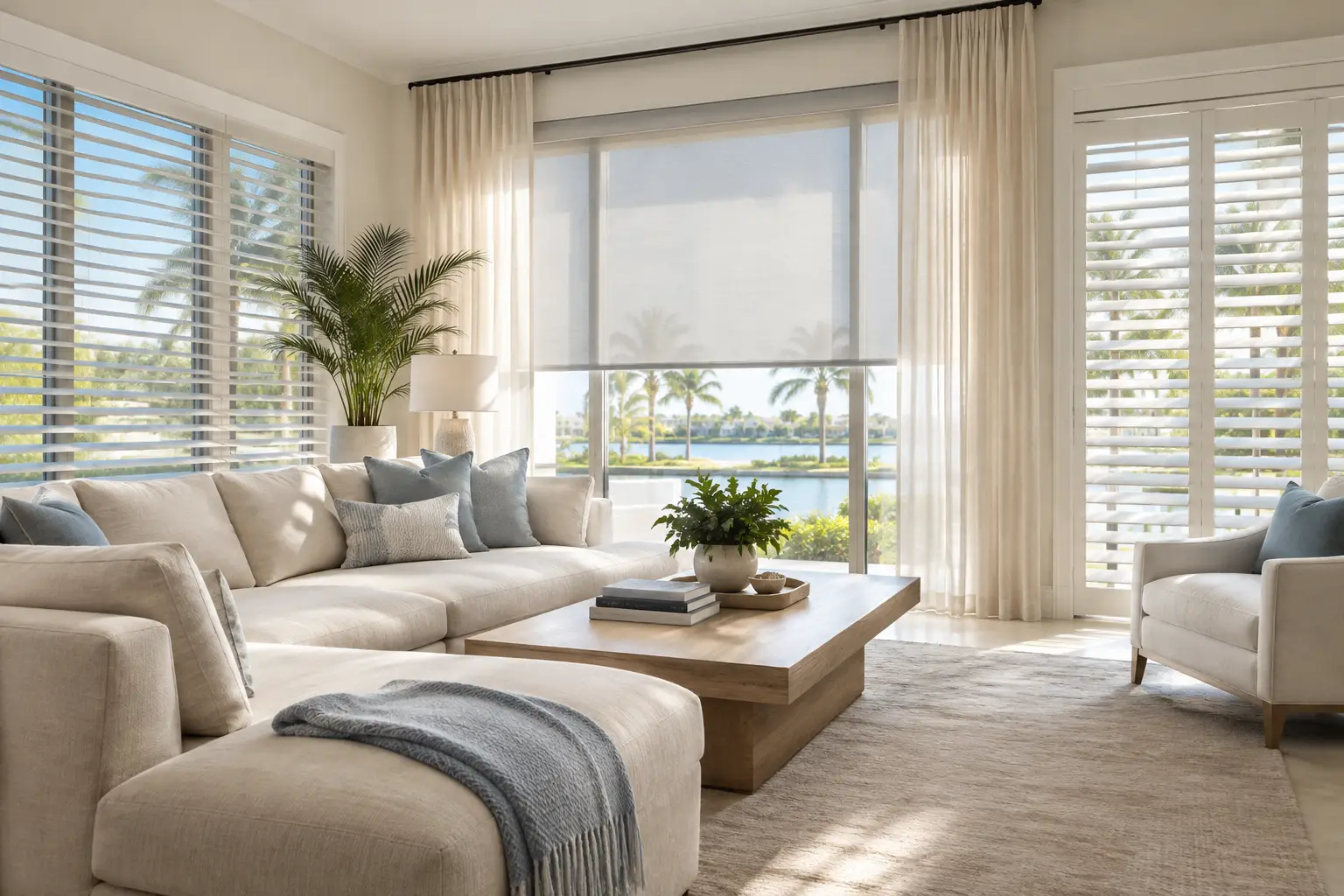
A room can have beautiful furniture, thoughtful artwork, and the right paint color, yet still feel unfinished when the windows are treated as an afterthought. Layered window treatments solve that problem while doing much more: they give you better control over glare, daytime privacy, insulation, and the overall mood of a space. Knowing how to layer window treatments helps you create windows that look tailored rather than overcrowded.
For South Florida homes, layering is particularly useful. Bright sun, wide glass doors, pool views, and the need for privacy often ask one window covering to do several jobs. Combining the right functional treatment with a decorative layer lets each piece do what it does best.
How to Layer Window Treatments With Purpose
The simplest way to think about layering is to assign two roles. The layer closest to the glass handles everyday function, such as privacy, glare reduction, UV protection, or room darkening. The outer layer adds softness, color, texture, and visual scale.
A solar shade paired with drapery panels is a classic example. The shade filters intense sunlight and preserves a view during the day, while the drapery makes the room feel more complete and can be closed for added privacy in the evening. In a bedroom, a room-darkening shade behind full drapery panels offers a similarly polished look with stronger light control.
Not every window needs two full treatments. A woven wood shade with a tailored fabric valance, or plantation shutters framed by stationary side panels, can deliver the same sense of dimension without making the window feel heavy. The right combination depends on the window’s size, how much light it receives, and what the room needs from it.
Start With the Layer That Works Hardest
Before choosing fabric or decorative details, consider what the window must accomplish on a typical day. In a sun-filled living room, glare on screens and fading on furnishings may be the primary concern. A solar shade or a sheer shade can soften harsh light while keeping the space open. In a primary bedroom, privacy and darkness may matter more, making cellular shades, roller shades, or lined drapery a stronger starting point.
For bathrooms and street-facing rooms, privacy should lead the decision. Top-down/bottom-up cellular shades can be especially helpful when you want natural light from above without exposing the room at eye level. For offices, a clean-lined roller or solar shade often provides the focused, professional appearance needed during the day, while panels or a cornice can add warmth in client-facing spaces.
This inner layer should be easy to operate. If the treatment will be raised and lowered throughout the day, motorization can make the layered design more practical, particularly on large windows, sliding glass doors, and hard-to-reach openings. A beautiful layered window is only successful if it fits the way you live.
Choose the Decorative Layer Second
Once function is covered, the outer layer can shape the room’s personality. Drapery panels bring softness to contemporary interiors, create a more formal finish in traditional spaces, and visually connect a window to the furniture, rug, and wall color around it. Sheer panels offer movement and a lighter look, especially when the room already has a functional shade behind them.
Fabric weight matters. Linen-look or sheer fabrics keep a bright coastal or transitional room airy. Heavier fabrics, interlining, or blackout linings create more presence and can improve light blocking when needed. In a smaller room, a bulky fabric combined with a deep shade may crowd the window. A more restrained panel style or a slim roller shade usually maintains better balance.
Stationary panels are a smart choice when the shade handles the daily light control. They stay at the sides of the window and serve a primarily decorative purpose, which makes them especially effective around French doors, wide windows, or plantation shutters. Operational drapery is better when you want the fabric itself to close for privacy or darkness.
Match Layering Style to the Room
Layered treatments should relate to the room, not compete with it. A formal dining room can support fuller drapery, a decorative rod, and a tailored shade. A casual family room may be better served by woven wood shades with simple panels in a relaxed texture. In a clean, modern interior, a recessed roller shade paired with crisp ripple-fold drapery creates an intentional, architectural look.
Consider the scale of the window as well. Tall windows often benefit from drapery mounted higher than the frame, which draws the eye upward and makes ceilings appear taller. Wide windows and sliders look more balanced when panels extend beyond the glass rather than stopping at its edges. This extra width allows the panels to frame the view instead of blocking it when open.
Color is another opportunity to layer without overdoing it. If the room has patterned upholstery or a dramatic rug, choose a quiet shade and solid drapery fabric. If the furnishings are neutral, textured woven shades or subtly patterned panels can add interest. The goal is contrast in material or tone, not visual noise.
Four Combinations That Work Well
Some pairings are consistently effective because their functions and finishes naturally complement each other:
- Solar shades with linen-look drapery panels for bright living areas with a view.
- Cellular shades with lined drapery for bedrooms needing insulation, privacy, and more complete darkness.
- Woven wood shades with soft neutral panels for family rooms and coastal-inspired spaces.
- Plantation shutters with stationary side panels for a structured look that still feels warm and finished.
These combinations are starting points, not rules. For example, shutters may be all a compact bathroom needs, while a large great room may call for shades, drapery, and motorized control to manage several exposures throughout the day.
Get the Mounting and Proportions Right
Layering can look expensive and intentional, or awkward and crowded, based largely on installation details. The treatment nearest the window is often mounted inside the frame when there is enough depth, leaving room for drapery hardware outside the opening. In other cases, both layers are mounted above the window on coordinated hardware. The best approach depends on the depth of the frame, the style of the shade, and whether doors or trim create clearance issues.
Drapery rods should generally be mounted high and wide enough to give the panels a generous frame around the glass. Panels that are too short, too narrow, or hung directly at the top of the window can make even a well-selected fabric look undersized. Finished length also matters: panels can just touch the floor for a clean tailored effect, or lightly break for a softer, more traditional appearance.
Avoid stacking too many treatments on one window. A Roman shade, shutters, a valance, and full drapery may each be attractive on their own, but together they can hide architectural details and make the room feel busy. When in doubt, choose one functional layer and one decorative layer, then let the materials and proportions do the work.
Plan for South Florida Light and Privacy
In Boca Raton, Delray Beach, Parkland, and nearby communities, window treatments often need to respond to strong sun without turning the home into a cave. Solar shades can reduce glare and help protect interiors while allowing a connection to outdoor spaces. Pairing them with drapery gives you the option to soften the room at night, when privacy becomes more important.
For rooms with expansive glass, consider whether every opening needs identical treatment. A consistent fabric or shade collection can unify the space, while the opacity and operation can vary by exposure. A west-facing wall may need more solar control than a shaded window across the room. Custom planning makes those differences look deliberate rather than mismatched.
Professional measuring is valuable with layered designs because rod projection, shade depth, door clearance, and fabric stack-back all affect the finished result. Boca Blinds can help homeowners coordinate each element, from selecting the shade and fabric to determining the right mounting approach and completing professional installation.
The most inviting layered windows never look like they are working too hard. They quietly manage the light, protect privacy, and make the architecture feel more considered – leaving you with a home that is comfortable from morning sun to evening quiet.