

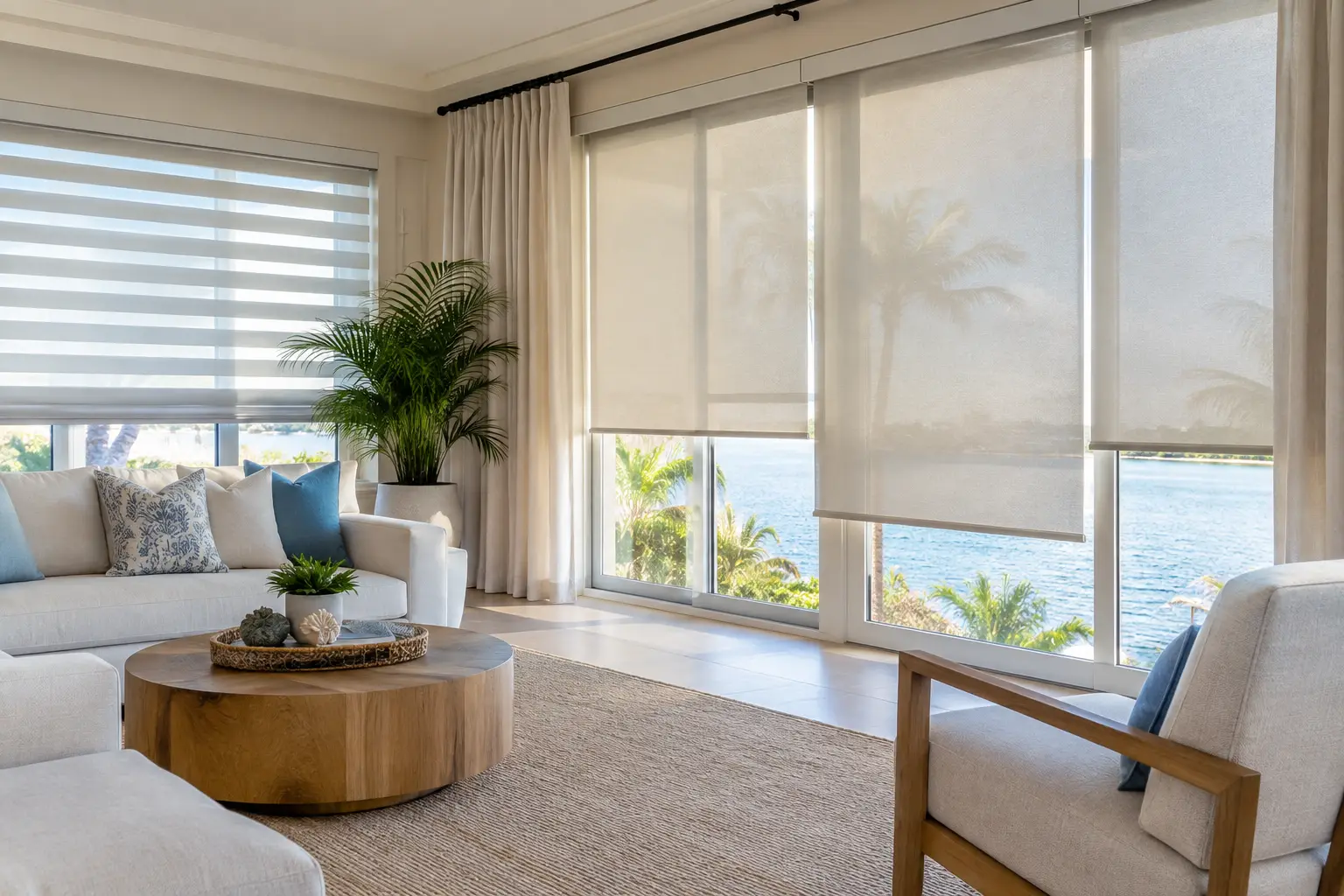
A bright South Florida room can look beautiful at 10 a.m. and become uncomfortably hot, exposed, or glare-filled by midafternoon. Learning how to layer window shades gives you more control over those changing conditions without sacrificing the clean, tailored look of your home. The right combination can soften a room, protect furnishings, improve privacy, and make a large wall of glass feel intentionally designed.
Layering is not simply adding more fabric to a window. It is a considered approach to pairing a functional base layer with a finishing layer that brings warmth, texture, or additional light control. The best choice depends on how the room is used, the direction the windows face, the amount of privacy you need, and the architectural style of the home.
Start With the Job Each Layer Needs to Do
A successful layered treatment begins with the practical layer closest to the glass. This is typically a roller shade, solar shade, cellular shade, or sheer shade. Its main role is to manage sunlight, glare, heat, and daytime privacy while keeping operation easy.
The second layer is often decorative, such as custom drapery panels, side panels, or woven wood shades paired with a liner. This outer layer adds visual depth and can provide stronger privacy or room darkening when needed. In a living room, it may be there primarily for softness and scale. In a bedroom, it may be the layer that creates a more restful, private environment after dark.
Before selecting materials, consider what you want the window treatment to accomplish during the day and at night. A shade that looks ideal in the showroom may not address late-afternoon glare across a television, or the visibility into a bedroom when interior lights are on. Defining those needs first keeps the design focused.
Choose a Shade as Your Foundation
The foundation layer should work hard without overwhelming the room. For many South Florida homes, solar roller shades are a practical starting point. They reduce glare and filter harsh sunlight while preserving a view to the outdoors. Openness level matters here: a more open fabric retains more visibility, while a tighter weave offers greater privacy and light reduction.
Cellular or honeycomb shades are another strong option when insulation, privacy, and a softer appearance are priorities. Their structured design helps manage heat transfer at the window, which can be especially valuable on sun-facing exposures. They are well suited to bedrooms, home offices, and spaces where comfort is as important as appearance.
For a more natural, textured foundation, woven wood shades bring dimension that a smooth roller fabric cannot. They work particularly well in coastal, transitional, and relaxed contemporary interiors. Add a privacy or room-darkening liner when the room needs more than filtered light. Without a liner, woven materials can create a beautiful glow, but they may reveal silhouettes after dark.
Add a Finishing Layer for Depth and Flexibility
Once the base shade is selected, the finishing layer should complement rather than compete with it. Drapery panels are the most versatile pairing because fabric offers nearly endless choices in color, pattern, fullness, and lining. A quiet neutral roller shade behind linen-look drapery, for example, gives a room daytime sun control and a refined, finished frame around the window.
For a polished result, coordinate the visual weight of both layers. A sleek roller shade generally looks best with drapery that has enough fullness to feel intentional, rather than narrow panels that appear incidental. A richly textured woven wood shade can carry more presence on its own, so the accompanying panels may be simpler and more understated.
Color does not need to match exactly. In fact, slight contrast often creates a more custom appearance. You might use a warm white solar shade with taupe or soft blue drapery, or pair a natural woven shade with cream panels that pick up the wall color. The shared element can be undertone, texture, or overall mood rather than an exact color match.
Three dependable layering combinations
A solar shade with custom drapery panels is an excellent choice for great rooms, dining areas, and offices with strong daylight. The shade handles glare and UV exposure during the day, while the panels add scale and softness to expansive windows.
Cellular shades paired with drapery are especially effective in bedrooms. The cellular shade offers privacy and light management, while lined drapery can deepen room darkening and create a more luxurious look.
Woven wood shades with lined side panels suit homes that need organic texture without giving up practical control. This combination feels warm and relaxed, yet the liner and panels can deliver the privacy that natural woven materials alone may not provide.
Plan the Mounting Before You Fall in Love With Fabrics
Layered window treatments depend on correct placement. The base shade is commonly mounted inside the window frame for a clean, integrated appearance, while drapery hardware is installed outside the frame. This approach allows both layers to operate independently and lets the decorative treatment frame the glass rather than cover it.
An outside-mounted shade can be the better solution when a window has a shallow frame, obstructions, or a need for better light blockage. In bedrooms, extending the shade beyond the edges of the glass can reduce the light gaps that are common with inside mounts. The trade-off is a more visible shade profile, so proportion and fabric selection matter.
Drapery rods or tracks should typically extend beyond the window opening. This gives panels a place to stack when open, allowing more daylight and a clearer view. Mounting them higher than the window frame can also make ceilings feel taller, but the exact height should relate to the room’s trim, ceiling line, and architecture. There is no single rule that works for every room.
This is where professional measuring makes a meaningful difference. Large sliders, angled windows, French doors, and wide banks of glass can be challenging to layer neatly. Proper clearances are needed so shades, panels, handles, and doors function without interfering with one another.
Consider Light Control at Different Times of Day
Many homeowners focus on daytime sun and overlook nighttime privacy. During the day, a solar shade may make the room feel comfortably protected while maintaining a view. At night, when interior lights are brighter than outdoors, that same shade may offer limited privacy. A second layer, such as lined drapery, becomes especially valuable in bedrooms, bathrooms, and street-facing rooms.
Room darkening also requires realistic expectations. A room-darkening roller or cellular shade can significantly reduce light, but small gaps around the edges are normal with many installations. If you need the darkest possible result, a layered design with outside-mounted shades, lined drapery, or side channels may be appropriate. The right solution depends on the window shape and how sensitive the space is to light.
For media rooms and offices, glare is often the deciding factor. A solar shade can protect screens and reduce eye strain during the day, while panels remain open as a decorative frame. This gives the room a tailored appearance without requiring heavy drapery to stay closed all afternoon.
Let Motorization Make Both Layers Easier to Use
Layered treatments are most effective when they are used consistently. Motorized shades make that more convenient, particularly on tall windows, wide openings, or hard-to-reach glass. You can lower the solar shades during the brightest part of the day, raise them for an evening view, or coordinate several shades in one room with a single command.
Drapery can also be motorized when the window size, fabric weight, or lifestyle calls for it. For a primary bedroom or formal living space, motorized shades behind motorized drapery provide a refined solution that feels effortless in daily use. It is not necessary for every window, but it can be an excellent investment where convenience and consistent sun management matter most.
How to Layer Window Shades Without Making a Room Feel Heavy
The concern many homeowners have is valid: two treatments can look crowded if every element is dark, dense, or oversized. Keep the foundation layer visually quiet when the decorative layer has texture or pattern. A neutral roller shade behind patterned drapery is usually more balanced than two competing fabrics.
Also consider the amount of wall space around the window. In a compact room, slim roller shades and tailored panels may feel more appropriate than heavy, puddled drapery. In a large room with high ceilings, fuller panels and more substantial hardware can provide the scale the architecture needs.
Layering should make the room feel more composed, not more decorated. The goal is to create options: filtered daylight when you want it, privacy when you need it, and a finished look every day.
For homeowners in Boca Raton and nearby South Florida communities, an in-home consultation can make these decisions much easier. Boca Blinds can help coordinate shades, fabrics, hardware, and professional installation around the way your home is actually used, so each window looks as good in the evening as it does in the afternoon.