

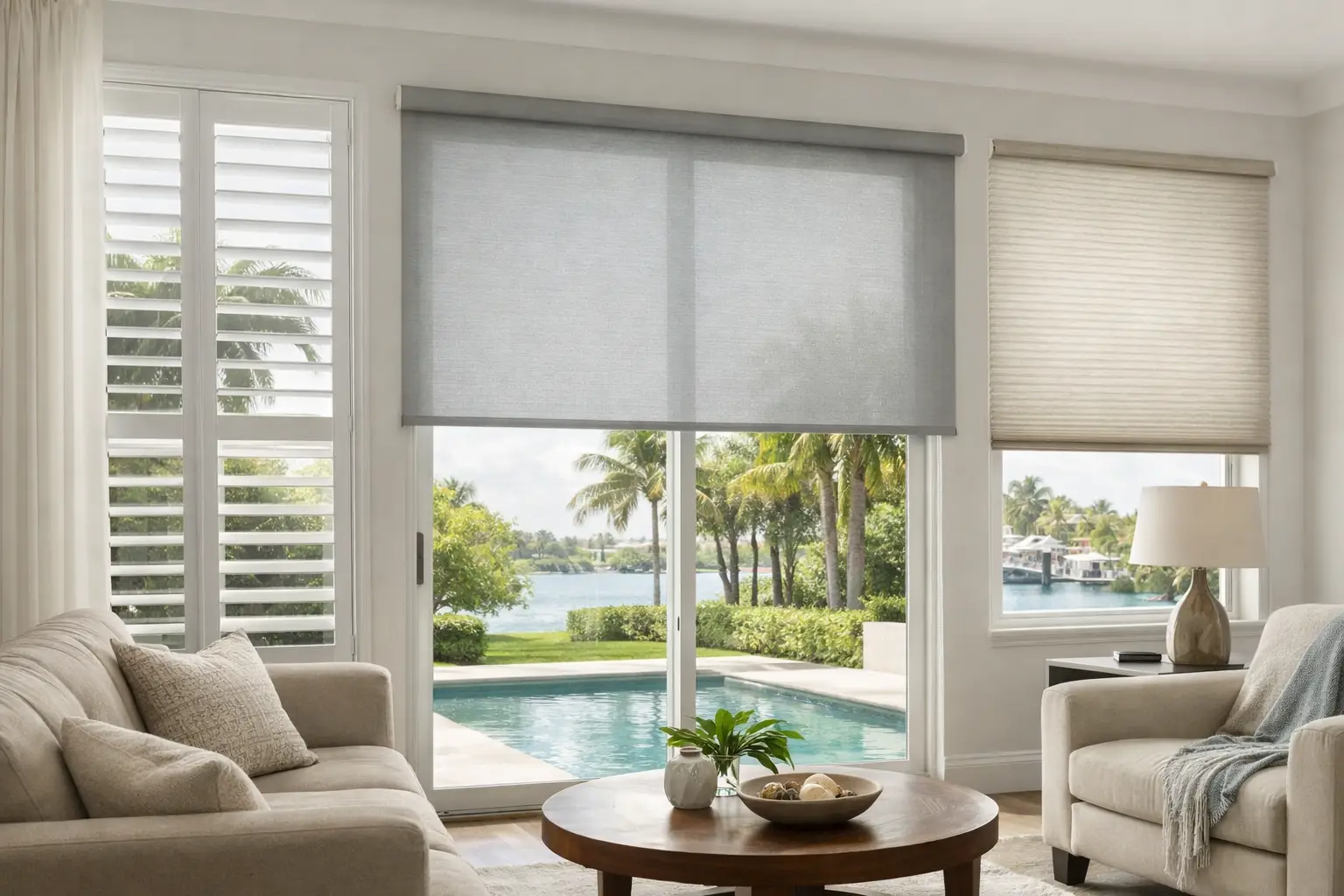
A window can make a room feel bright, open, and inviting. It can also create glare on the TV, fade furniture, reduce privacy, and make a space feel unfinished if the wrong covering is in place. That is why so many homeowners ask how to choose window treatments in a way that balances beauty with daily function.
The right answer is rarely just one product. It depends on how the room is used, how much sun it gets, how much privacy you want, and whether you prefer a crisp tailored look or something softer and more decorative. In South Florida homes especially, sun exposure, heat, and humidity often matter just as much as style.
How to choose window treatments by starting with function
Before looking at colors, fabrics, or brand names, start with the job the treatment needs to do. A bedroom usually needs privacy and light control. A family room may need glare reduction without making the room too dark. A dining room might be more about polish and visual warmth than total coverage.
This is where many people get stuck. They shop by appearance first, then realize later that the product does not perform the way they hoped. A beautiful sheer may soften a room, but it will not give the same privacy as a lined drapery or plantation shutter. A sleek roller shade may look clean and modern, but in a west-facing room you may need a fabric that handles strong afternoon sun more effectively.
If you begin with function, your options narrow in a helpful way. Shades are often a strong choice when you want a clean profile and straightforward operation. Blinds offer adjustable light control through tilting slats. Shutters bring structure, durability, and a more architectural look. Draperies and side panels add softness and can make a room feel more finished, especially when layered with shades or sheers.
Match the product to the room
Every room has its own priorities, and that is usually the clearest path to a smart decision.
Living rooms and family rooms
These spaces often need a mix of natural light, glare control, and style. Solar shades are popular when preserving a view matters, because they filter sunlight without fully closing off the outdoors. If the room gets intense sun, they can help reduce glare and protect interiors. If the goal is a warmer, more decorative look, woven woods or draperies may feel more inviting.
For larger common areas, layering can work especially well. A solar or roller shade handles daytime sun, while drapery panels add visual depth and a finished design element.
Bedrooms
Bedrooms usually call for stronger privacy and better light blockage. Blackout shades or lined draperies are often the most practical choice. If you prefer a tailored look, Roman shades or roller shades can deliver that clean appearance. If you want flexibility, pairing shades with drapery gives you both function and softness.
This is also where motorization can make a real difference. It is not just a luxury feature. In bedrooms with tall windows or multiple openings, motorized treatments make daily use easier and more consistent.
Kitchens and bathrooms
Moisture resistance and easy maintenance matter here. Faux wood blinds and certain shades are often better suited than delicate fabrics. Plantation shutters are another strong option because they are durable, clean-lined, and easy to wipe down.
In bathrooms, privacy is the first concern, but natural light still matters. A treatment that lets in light while obscuring visibility from outside usually works best.
Home offices
The right treatment can improve comfort and productivity. Too much direct light can create glare on screens, while a room that is too dark can feel closed in. Solar shades, light-filtering shades, or blinds that allow for angle adjustment are often effective here. If the office is visible during video calls, appearance also matters more than people expect.
Consider your home style, but do not let style lead everything
A treatment should look like it belongs in the room. That does not mean every space needs a dramatic design statement. In many homes, the best choice is one that supports the architecture and furnishings without competing with them.
Shutters often complement traditional, coastal, and transitional interiors. Woven woods can add texture and a relaxed sophistication. Roller shades fit comfortably in contemporary and minimalist spaces. Draperies can range from formal to casual depending on the fabric, pleat style, and hardware.
Still, style should not override practicality. A delicate fabric treatment in a sun-drenched room may not age as well as a more durable option. A heavily structured product may look impressive, but if it blocks too much light for your lifestyle, you may end up keeping it open all day and not using it as intended.
Light control and privacy are not the same thing
This is one of the most important details to understand when learning how to choose window treatments. Many homeowners assume that if a treatment filters light, it also provides privacy. Sometimes it does, and sometimes it does not.
A sheer or solar shade can reduce glare beautifully during the day, but at night, when interior lights are on, visibility from outside may increase. If privacy is essential in the evening, you may need a secondary layer or a more opaque material.
Likewise, blackout is not always necessary. In some rooms, light filtering is the better choice because it softens daylight without making the space feel closed off. The best solution depends on when the room is used and what kind of comfort you want throughout the day.
Do not overlook energy efficiency and sun protection
In South Florida, window treatments are doing more than decorating. They often help manage heat gain, protect furnishings from UV exposure, and improve comfort near bright windows and sliding glass doors.
Cellular and honeycomb shades are known for their insulating qualities. Solar shades can help cut glare and reduce UV exposure while keeping views more open than many alternatives. Shutters also provide excellent control over light and sun. The right product can help preserve flooring, artwork, upholstery, and wood finishes over time.
This is one area where custom guidance matters. The same treatment may perform very differently depending on window orientation, glass type, and room usage.
Measure fit and operation carefully
Even the best-looking product can disappoint if the fit is off or the operation is inconvenient. Inside mount and outside mount each create a different effect. Inside mount looks clean and tailored, but it depends on enough window depth and a reasonably square opening. Outside mount can make a window appear larger and may improve light blockage.
Operation is just as important. Cordless designs are popular for a cleaner look and easier everyday use. Motorization is worth considering for large windows, hard-to-reach areas, and whole-home convenience. In homes with expansive glass or multiple treatments in one room, smooth operation often becomes a bigger priority than expected.
Custom versus off-the-shelf
Ready-made products can be tempting, but they often fall short on fit, finish, and material quality. That is especially true for unusually sized windows, wide openings, specialty shapes, and rooms where consistency matters from one window to the next.
Custom window treatments are designed for your exact openings and your specific goals. That allows better control over proportions, fabric selection, light management, and overall appearance. It also reduces the guesswork. Instead of trying to force a standard product into a custom-looking space, you get a result that feels intentional.
For many homeowners, the real value is confidence. An experienced consultant can point out trade-offs before you buy, recommend options you may not have considered, and make sure the final installation looks polished.
When professional guidance makes the decision easier
There is no shortage of options, and that is exactly why choosing can feel difficult. A showroom visit or in-home consultation helps narrow the field based on your actual windows, lighting, furnishings, and goals. It is often much easier to compare textures, opacity levels, and operating systems in person than from a screen.
For homeowners in Boca Raton and nearby communities, working with a company that understands local homes, strong sunlight, and long-term performance can save time and avoid costly mistakes. Boca Blinds has been helping clients make these decisions since 1976, with personalized guidance and professional installation that turns a complicated purchase into a much more comfortable one.
The best window treatments do not just cover glass. They make a room more comfortable, more beautiful, and easier to live in every day. If you are weighing your options, start with how you want the space to feel, and let the right combination of function and design guide the rest.