

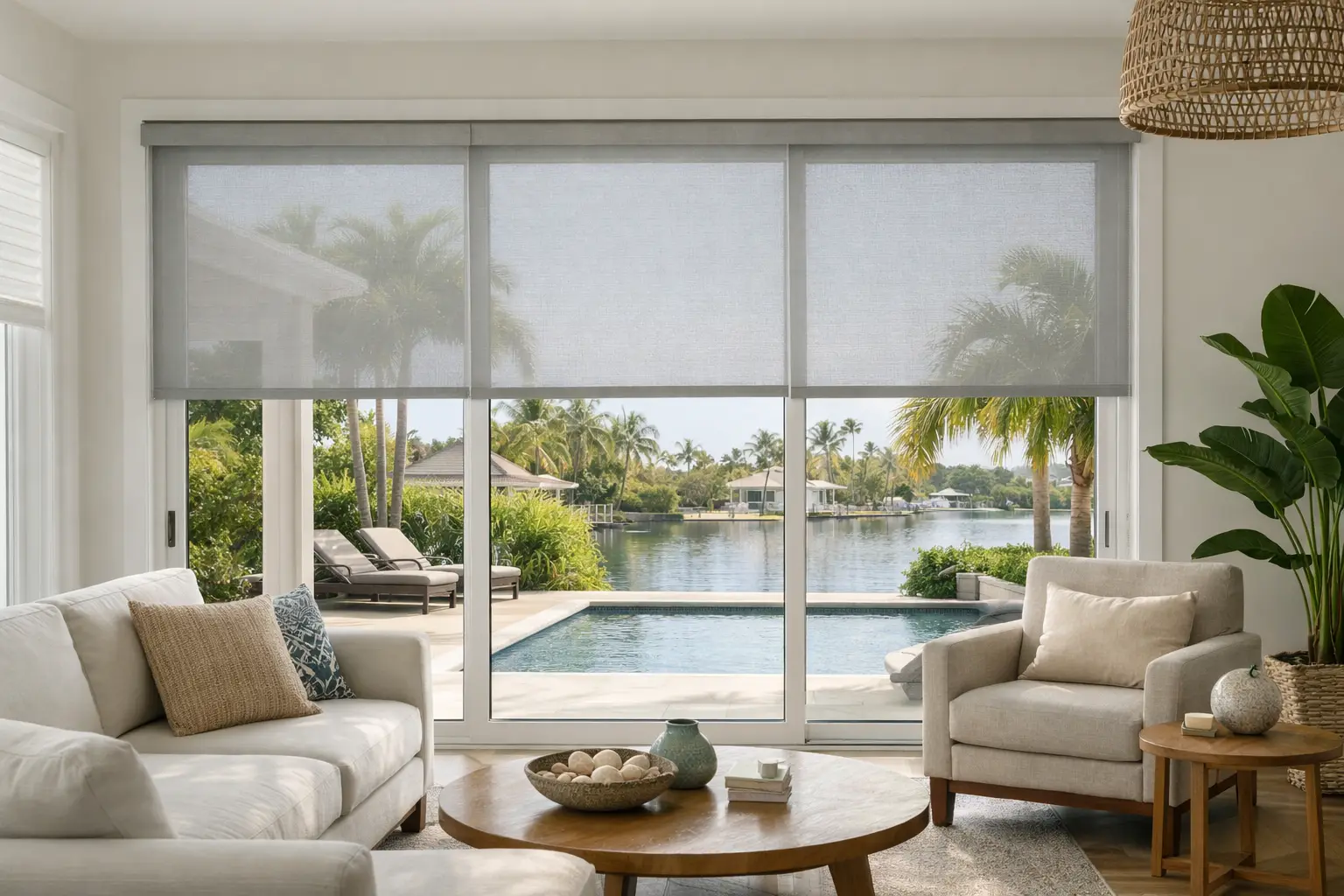
A west-facing great room at 4 p.m. can tell you almost everything you need to know about window treatments. The view may be beautiful, but direct sun can create glare on screens, fade furnishings, and make a favorite seating area feel uncomfortably warm. Knowing how to choose solar shades starts with identifying what the sun is doing in each room, then selecting a fabric and operating system that preserves the light you enjoy while managing the light you do not.
Solar shades are a polished, practical choice for many South Florida homes and offices. Their clean profile works with contemporary interiors, coastal spaces, transitional décor, and rooms where the windows themselves are a focal point. The right shade should feel intentional from both inside and outside the home, not like an afterthought added to solve a glare problem.
How to Choose Solar Shades by Room and Exposure
Start with the room’s purpose rather than the color of the fabric. A solar shade in a television room has a different job than one in a breakfast nook, home office, or bedroom. In living areas, the priority may be reducing afternoon glare without losing a water, garden, or golf-course view. In an office, screen visibility and daytime comfort may come first. Bedrooms often require stronger privacy or a second layer for darker sleep conditions.
Next, consider the direction of the windows. East-facing rooms receive intense morning sun, while west-facing windows can produce stronger afternoon glare and heat. South-facing exposure brings consistent daylight through much of the day. North-facing rooms may need only modest filtering, especially if their main concern is privacy rather than sun control.
This assessment matters because solar shades are designed to filter sunlight, not completely block it. They soften the view of the outdoors and reduce glare while allowing natural light into the room. If complete darkness is the goal, a blackout roller shade, room-darkening treatment, or layered design may be a better fit.
Understand Openness Factor Before Choosing Fabric
The most important solar-shade specification is the openness factor. This percentage describes how tightly the fabric is woven and how much light and outward visibility it allows. A lower openness factor has a tighter weave, delivering more glare control and privacy. A higher openness factor offers a clearer view and a more open feeling, but allows more sunlight through.
A 1% to 3% openness fabric is often well suited to rooms with strong sun exposure, valuable artwork, or a need for more daytime privacy. It still admits soft natural light, but the view will appear more filtered. A 5% fabric is a popular middle ground for living rooms and offices because it balances view preservation with useful glare reduction. A 10% openness fabric can be attractive where maintaining the clearest possible view is the priority, though it may not provide enough control for intense west-facing windows.
There is no universal best percentage. A homeowner with expansive views may gladly accept a little more sunlight for a more open connection to the outdoors. Someone furnishing a media room or working near large windows may prefer the tighter weave. During a professional consultation, viewing fabric samples against the actual glass is especially helpful, because daylight changes how each openness level looks.
Daytime Privacy Is Not Nighttime Privacy
Solar shades offer excellent daytime privacy when it is brighter outside than inside. From outdoors, the shade obscures details within the room while preserving your ability to see out. At night, that relationship reverses. If interior lights are on and it is dark outside, people may be able to see silhouettes or activity through the fabric.
For bedrooms, bathrooms, street-facing rooms, or homes with close neighboring properties, consider pairing solar shades with draperies, side panels, or another privacy-focused treatment. Layering also adds softness and dimension to rooms that need more than the streamlined look of a single roller shade.
Choose Color for Performance as Well as Style
Solar shade fabric color influences both the room’s appearance and the quality of the view. Darker fabrics generally provide a sharper view to the outdoors because they reduce reflected light on the interior side of the shade. They can be an excellent choice for rooms with a strong view or a modern, tailored design direction.
Lighter fabrics make the shade visually recede and can help a space feel bright and airy. They are often a natural fit for coastal and light-toned interiors. However, a pale fabric may create more reflection when looking out during the day, particularly on bright windows. It can still be a beautiful solution, but it is worth considering the trade-off before choosing based on a swatch alone.
Look at the shade from several places in the room: seated on the sofa, standing at the kitchen island, working at a desk, and looking toward the windows from an adjacent area. A fabric that looks perfect close up should also support the way the room is actually used.
Consider Heat Control and UV Protection
Solar shades can help reduce solar heat gain and filter ultraviolet rays that contribute to fading on floors, furnishings, artwork, and cabinetry. Their performance depends on the fabric, openness level, color, window orientation, and the type of glass already installed. They are not a replacement for insulated windows, but they can be a meaningful part of a more comfortable, well-managed interior.
In South Florida, this benefit is often most noticeable in rooms with broad expanses of glass. A carefully selected solar fabric can reduce harsh sun without closing off a room or sacrificing its best feature. For homeowners who want light control with a minimal visual footprint, that balance is a major advantage.
Decide on the Right Operating System
The way a shade operates affects daily satisfaction more than many people expect. A manual chain or cord-loop system can be a dependable solution for accessible windows that are adjusted occasionally. A cordless or wand-operated option may provide a cleaner appearance in family spaces and around children or pets.
Motorized solar shades are especially valuable for tall windows, wide openings, hard-to-reach glass, and rooms with multiple shades that should move together. They allow you to adjust glare as the sun shifts, protect furnishings when you are away, or create different settings for morning, afternoon, and evening. Motorization is also a thoughtful choice for homeowners planning for comfort and convenience over time.
The best system depends on how often you will use the shades. If a window needs adjustment twice a day, easy operation is worth prioritizing. If the shade will mostly remain in one position, a simpler system may be all that is needed.
Pay Attention to Fit, Hardware, and Details
Custom solar shades should fit the architecture of the window, not merely cover the glass. Inside mounts create a clean, integrated appearance when the window frame has adequate depth and is reasonably square. Outside mounts can be a smart solution when an inside mount is not possible or when additional coverage is needed to limit light gaps.
The top treatment matters as well. A fabric-wrapped cassette can provide a more finished appearance and conceal the roller, while an exposed roll offers a modern, minimal look. Hardware finishes, hem bar style, and bracket placement should complement the room rather than compete with it.
For sliding doors and very wide openings, the size and weight of the shade deserve special attention. Larger shades may require particular operating systems or divided sections to ensure smooth performance. This is one reason professional measuring is valuable: small details in width, depth, trim, and door clearance can change the best recommendation.
See Samples in Your Own Light
Solar shade decisions are highly visual, and showroom samples are only the first step. A fabric can look warmer, cooler, more opaque, or more reflective once it is placed against your own windows. Ask to see several openness levels and colors in the room where they will be installed, ideally at the time of day when sun is most challenging.
Boca Blinds has helped homeowners throughout Boca Raton and nearby communities make these choices since 1976. An in-home consultation can clarify the details that are difficult to judge online, from fabric performance and privacy needs to mounting options and coordinated installation.
The most successful solar shades do not simply reduce sunlight. They make a room easier to live in while respecting its view, its furnishings, and its design. When you choose based on the room’s real conditions instead of a single sample or trend, the finished treatment will continue to feel right long after installation day.