

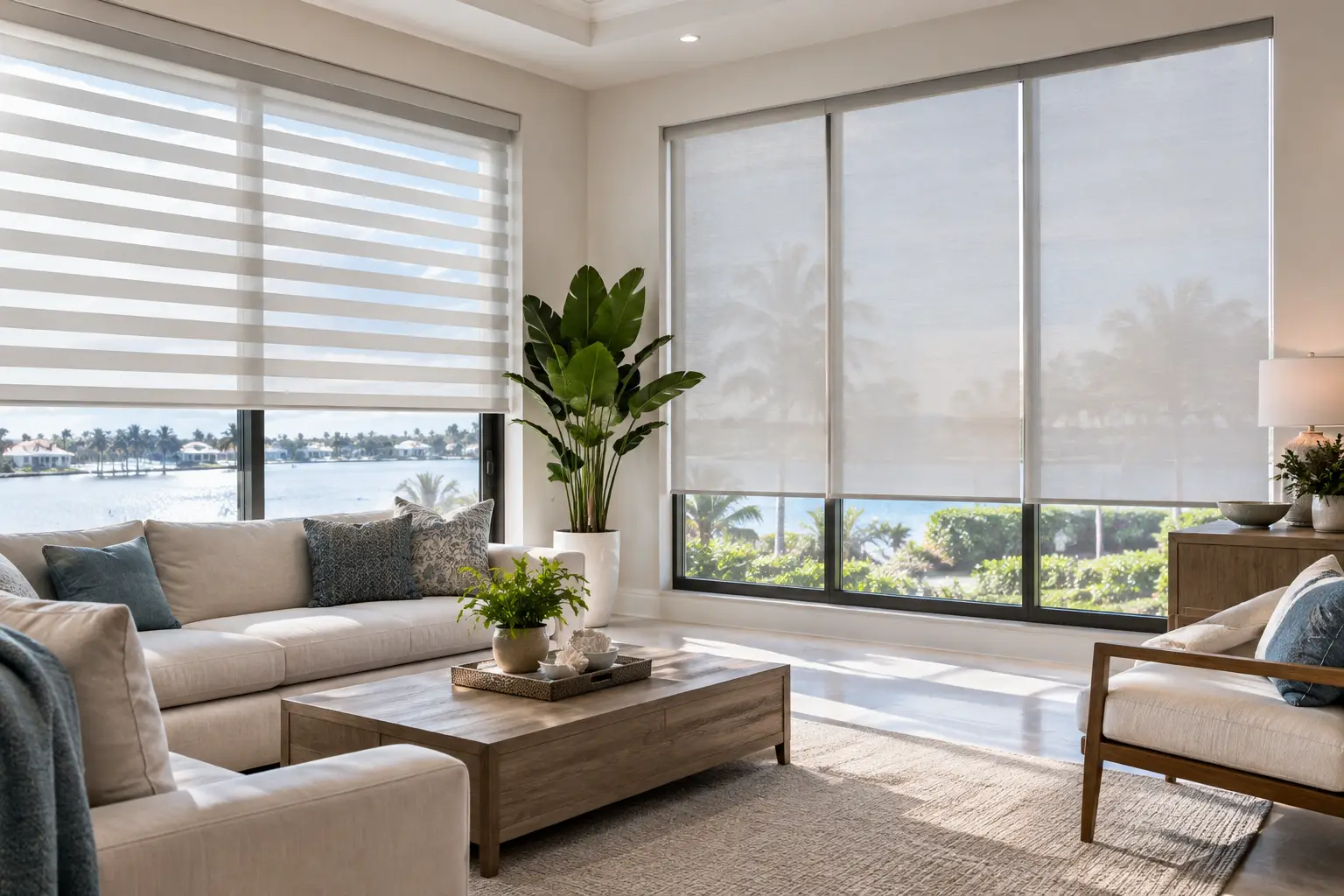
A beautiful room can still feel exposed when the right window treatment is missing. Knowing how to choose privacy shades means looking beyond whether a shade covers the glass. The best choice gives you the level of privacy you want at the times you need it, while preserving natural light, complementing your furnishings, and standing up to South Florida sunshine.
For a street-facing living room, that may mean a shade that softens daytime views without making the space feel closed in. For a bedroom or bathroom, it may mean greater opacity and more complete coverage. Custom privacy shades make these decisions feel intentional rather than like a compromise.
Start With When You Need Privacy Most
Privacy is not the same need in every room. Before selecting a fabric, color, or operating system, consider the view from outside your home and how that view changes from morning to night.
During the day, many solar and light-filtering shades can limit outside visibility while allowing daylight into the room. At night, however, interior lights can make silhouettes visible through more open fabrics. If your home faces a neighbor, a busy street, a golf course, or a shared outdoor area, consider what passersby can see after sunset as well as during the day.
Bedrooms, bathrooms, and first-floor rooms near walkways generally call for stronger privacy. In a formal living room or home office, you may prefer a lighter fabric that maintains a welcoming, open feeling. The right answer depends on the room’s use, the direction of the windows, and the amount of exposure around the home.
How to Choose Privacy Shades by Opacity
Shade opacity determines how much light and visibility a material allows through. It is one of the most useful ways to compare privacy shade options, but it should never be considered in isolation.
Sheer and light-filtering shades
Sheer and light-filtering shades soften harsh sunlight and reduce direct views into a room during the day. They are an attractive choice for spaces where you value daylight, such as a living room, dining room, or office. Their gentle glow can make a room feel larger and more polished than a heavier covering.
The trade-off is nighttime privacy. Light-filtering fabrics offer visual softness, not full seclusion, particularly when indoor lights are on. They often work best in rooms with some distance from neighboring homes or when paired with drapery panels for added evening coverage.
Solar shades
Solar shades are designed to manage glare and UV exposure while retaining a view to the outdoors. Their openness factor affects how clearly you can see through the material and how much privacy it provides. A more open weave preserves more of the view but offers less privacy. A tighter weave improves daytime privacy and light control, though it reduces visibility outward.
For South Florida homes with broad windows, patios, or waterfront views, solar shades can be a practical solution when daytime glare is the main concern. They are especially useful in offices, media spaces, and rooms with strong afternoon sun. Just remember that a solar shade alone may not provide the privacy you need at night.
Room-darkening and blackout shades
Room-darkening shades provide a high level of privacy and noticeably reduce incoming light. Blackout shades offer the greatest coverage, making them well suited to bedrooms, nurseries, media rooms, and any space where sleep or screen viewing matters.
A blackout fabric does not automatically mean total darkness. Light can still enter around the edges of the shade, especially with an inside-mounted treatment. Side channels, carefully measured outside mounts, and layered window treatments can improve coverage when maximum darkness and privacy are priorities.
Consider the Shade Style, Not Just the Fabric
The construction of the shade affects its appearance, insulation, operation, and coverage. A custom consultation is helpful because the most appealing fabric sample may not always be the best-performing style for your windows.
Cellular, or honeycomb, shades are a popular privacy choice because their layered cells offer a clean look while helping insulate the window. They are available in light-filtering and blackout options, making them versatile for bedrooms, offices, and living spaces. They are also a thoughtful choice for homeowners who want softness without the bulk of drapery.
Roller shades have a tailored, contemporary profile and work well with solar, light-filtering, room-darkening, and blackout materials. Their simple operation makes them especially fitting for wide glass doors and larger windows. In a more traditional home, a carefully selected fabric, decorative valance, or layered drapery can give roller shades a warmer, more finished look.
Roman shades bring texture and dimension to the window. Depending on the lining and fabric selected, they can offer anything from filtered light to substantial privacy. Woven woods add natural character, but their texture may allow small gaps of light and visibility. Adding a privacy liner makes them a more practical option for exposed rooms.
Pay Attention to Mounting and Window Coverage
Even a highly opaque shade can leave privacy gaps if it is not mounted and measured properly. This is why fit matters as much as material.
Inside-mounted shades sit within the window frame and create a crisp, built-in appearance. They are ideal when you want to show off decorative trim or need the shade to work around an existing feature. However, small light gaps along the sides are normal with this mounting method.
Outside-mounted shades are installed above and beyond the window opening. They can cover more of the wall area around the glass, reducing side gaps and creating stronger privacy. This approach can also make a smaller window appear larger. It is often a smart choice for bedrooms and street-facing rooms, especially when the window frame is shallow or uneven.
Doors, unusually shaped windows, and expansive sliding glass doors deserve particular attention. The treatment needs to provide coverage without interfering with handles, traffic flow, or the door’s operation. Professional measuring prevents the frustrating gaps and clearance issues that are easy to miss when selecting window coverings from a sample alone.
Balance Privacy With Light, View, and Heat Control
The goal is rarely to block every bit of light throughout the day. Most homeowners want privacy without losing the bright, relaxed feeling that makes a Florida home enjoyable.
Think about the room’s primary job. A kitchen may benefit from a light-filtering shade that reduces glare while keeping the space cheerful. A west-facing family room may need solar shades to protect furnishings and make afternoon hours more comfortable. A bedroom may call for a room-darkening cellular shade with an additional decorative layer for softness and complete evening privacy.
For homes with a view, top-down/bottom-up cellular shades can be particularly useful. They allow light to enter through the upper part of the window while covering the lower section where privacy is most needed. This option is not right for every window, but it can be an elegant answer for rooms that overlook sidewalks, driveways, or neighboring properties.
Color also plays a role. Lighter shades tend to reflect more sunlight and feel airy, while darker colors can provide stronger glare control and add visual depth. The best color should relate to your wall color, flooring, furnishings, and the amount of sunlight in the room rather than simply matching one accent piece.
Choose an Operating System That Fits Your Routine
A privacy shade only works when it is easy to use. If adjusting multiple large windows feels inconvenient, the shades may remain in one position even when the light or privacy needs change.
Cordless operation provides a clean appearance and is a practical choice for homes with children or pets. Motorized shades add convenience for high windows, wide openings, and rooms with several shades that should move together. With scheduled settings, homeowners can lower shades before evening, reduce afternoon glare, or raise them in the morning without adjusting each window individually.
Motorization is also valuable when window treatments are part of the home’s overall design plan. A consistent, coordinated movement across a wall of windows looks refined and makes daily light control easier.
See Samples in Your Own Home Before Deciding
Privacy fabrics can look dramatically different in a showroom than they do against your windows. Natural light, interior lighting, wall color, and the view outside all affect how a shade performs and appears.
During an in-home consultation, hold sample materials at the actual window during different times of day if possible. Look at the fabric from inside the room and from outdoors. Ask how it will perform after dark, how much UV protection it provides, and whether a liner or second layer would improve the result.
Boca Blinds has helped South Florida homeowners select custom window treatments since 1976, with experienced design guidance and professional installation that account for the details a product photo cannot show.
The right privacy shade should let your home feel open when you want light, protected when you want seclusion, and beautifully finished every day. A thoughtful consultation turns that balance into a window treatment designed specifically for the way you live.