

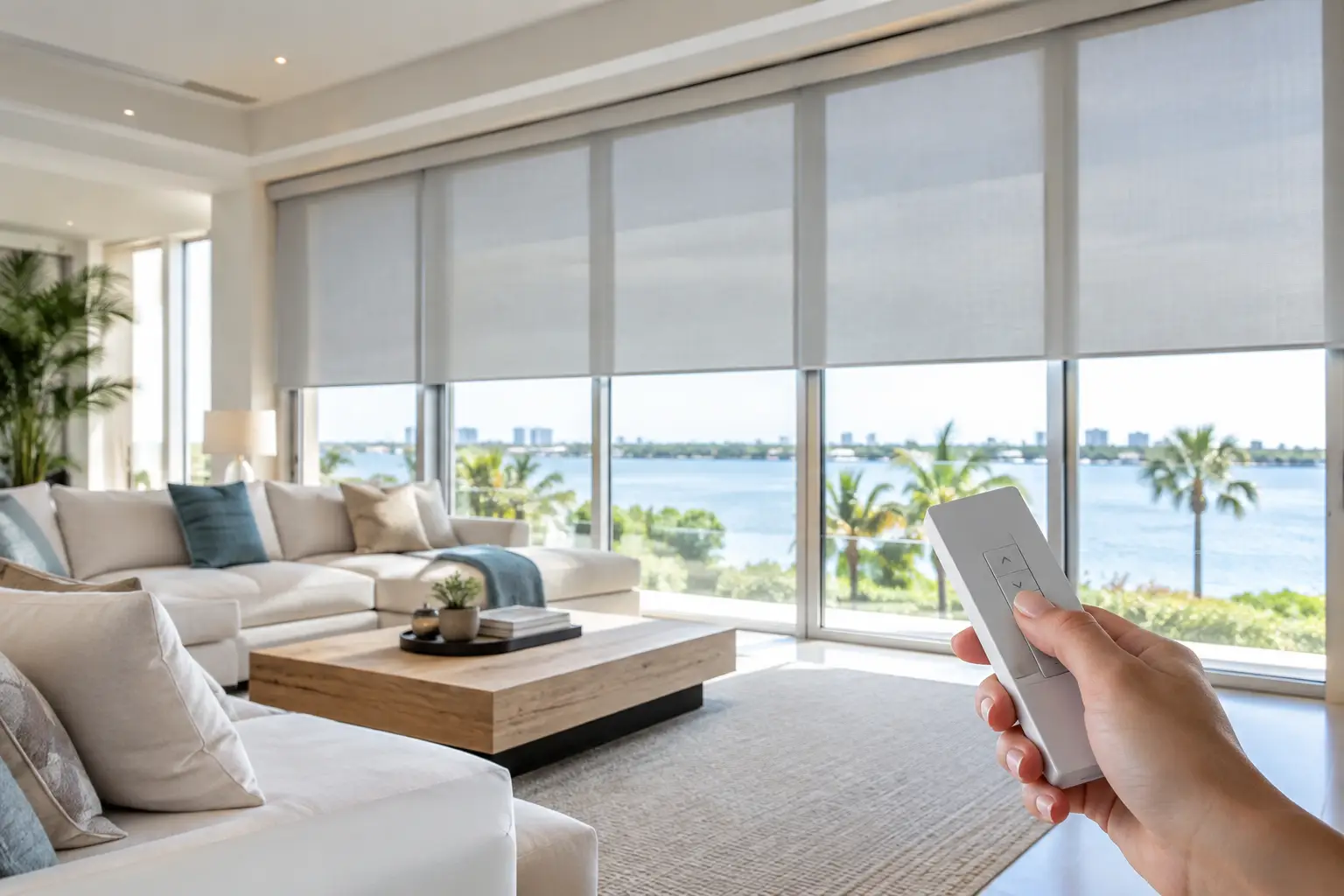
The afternoon sun that pours through a Boca Raton living room can change the feel of the entire space in minutes. Learning how to automate window shades gives you a more elegant response than walking from window to window: shades can lower at the time of day you choose, respond to a scene, or operate with one touch while maintaining the tailored look of a custom treatment.
For South Florida homeowners, automation is about more than convenience. It can reduce glare on screens, protect furnishings from harsh sunlight, add privacy after dark, and make high or hard-to-reach windows far easier to manage. The best approach depends on your windows, your preferred shade style, and how you want the system to fit into daily life.
How to Automate Window Shades: Start With the Right Shade
Most custom shade styles can be motorized, but the fabric, opacity, and operating needs should come before the technology. A beautifully automated shade still needs to solve the practical reason it is on the window.
Roller and solar shades are a popular choice for rooms with wide expanses of glass. Solar fabrics filter glare and soften bright views while preserving some outward visibility during daylight hours. They work especially well in great rooms, offices, and spaces facing intense morning or afternoon sun. For stronger privacy and room darkening, an opaque roller shade or a layered treatment may be more appropriate.
Cellular shades offer another valuable benefit: their honeycomb construction helps create an insulating layer at the window. They are well suited to bedrooms, media rooms, and areas where light control and comfort are priorities. Sheer shades can provide a softer, more decorative effect, gently filtering daylight while allowing the room to retain an open feel.
Consider how the shade will be used at different times. A kitchen may need glare control without losing daylight. A primary bedroom may call for privacy and darker sleeping conditions. In a home office, automation can reduce screen glare before an afternoon meeting begins. This is why an in-home design consultation is helpful – it connects the fabric and control options to the way each room is actually used.
Choose a Power Source That Fits the Window
Automated shades need dependable power. The three most common options are battery power, hardwired power, and solar charging. Each has a place, and the right choice is often determined by the window location and whether the home is being renovated.
Battery-powered shades are an excellent option for finished homes where running new wiring would disturb walls or ceilings. The battery tube or rechargeable system is neatly concealed within the headrail area, keeping the window treatment clean and uncluttered. Battery life varies based on shade size, fabric weight, and how often the shade operates, so it is worth selecting a system that is practical to recharge or service.
Hardwired shades are often preferred during new construction or a major remodel. Because power is brought directly to the window, there is no need to recharge batteries later. This can be particularly appealing for large shade groups, tall windows, or homes where shades will be scheduled frequently throughout the day. Planning is essential: electrical locations should be coordinated before drywall and finish work are complete.
Solar-powered options can help keep compatible battery systems charged using a discreet panel at the window. They can be a smart choice for sunny exposures, though they are not ideal for every setting. Heavily shaded windows, deep overhangs, and certain room-darkening applications may limit the panel’s effectiveness.
Decide How You Want to Control Your Shades
Automation can be as simple or as connected as you prefer. A handheld remote is dependable and easy for guests to use. It can control a single shade, a room, or multiple areas of the home, depending on how it is programmed.
Wall controls create a familiar, polished experience near room entrances or beside the bed. App-based control adds flexibility, allowing you to adjust shades from elsewhere in the home or when you are away. For homeowners using a broader smart-home system, compatible motorized shades may also be included in scheduled scenes and voice-controlled routines.
The most useful automated settings tend to be simple and repeatable. You might raise shades in the kitchen each morning, lower solar shades in a west-facing family room during the brightest part of the afternoon, and close bedroom shades at dusk. A vacation setting can vary operation times to make an unoccupied home appear more lived in.
Avoid adding technology only because it is available. If a room has one small, easily reached window, a basic motorized remote may be all you need. If your home has several large glass openings, tall windows, or a daily pattern of glare and privacy concerns, grouped control and scheduling can make a noticeable difference.
Plan for Light, Privacy, and South Florida Sun
Motorization does not change the performance of the fabric itself. A solar shade can filter intense daylight, but it will not provide the same nighttime privacy as an opaque shade. A room-darkening shade blocks more light, but may reduce the view you enjoy during the day. The goal is to choose the right balance rather than expect one treatment to do every job.
For many South Florida homes, dual shades or coordinated layers offer a thoughtful solution. A solar shade can manage daytime glare while preserving a view, while a second opaque shade can provide privacy in the evening. In bedrooms, a room-darkening shade paired with side panels or drapery can improve light control while adding softness and dimension to the room.
Automation also helps protect interiors from repeated sun exposure. Closing shades during the strongest daylight hours can help reduce direct light on flooring, artwork, upholstery, and wood finishes. However, window shades are not a substitute for hurricane protection or impact-rated windows. They should be selected for light management, privacy, design, and daily comfort.
Why Professional Measurement and Installation Matter
Custom motorized shades involve more than selecting a fabric and pressing a button. Accurate measurements affect how evenly shades operate, how well they cover the glass, and whether multiple shades align across a wall of windows. Mounting conditions, trim depth, window handles, and nearby doors all deserve attention before an order is finalized.
Installation is equally important. Motors, brackets, charging access, and programmed controls should be set up carefully so the finished treatment looks intentional and performs reliably. When several shades operate together, professional programming helps ensure they move in sync and respond correctly to the controls you use most.
An experienced window treatment specialist can also identify issues that are easy to miss during an online purchase, such as unusually wide spans, corner windows, sliding doors, or ceiling-mounted applications. For homeowners in Boca Raton, Delray Beach, Parkland, and surrounding communities, a local consultation makes it easier to see fabrics, compare opacity levels, and receive guidance based on the actual light in your home.
A Better Way to Begin
Start by choosing one room where automation would make an immediate difference: perhaps the living room with afternoon glare, the bedroom where privacy matters most, or the windows that are simply too high to reach comfortably. From there, a custom plan can be expanded room by room, with consistent fabrics and controls throughout the home.
Boca Blinds has helped homeowners select and install custom window treatments since 1976. A professional consultation can bring together the details that matter – the shade style, fabric, power method, control preferences, and installation requirements – so your finished windows look as refined as they function. The most satisfying automated shade system is not the one with the most features; it is the one that quietly makes your home more comfortable every day.