

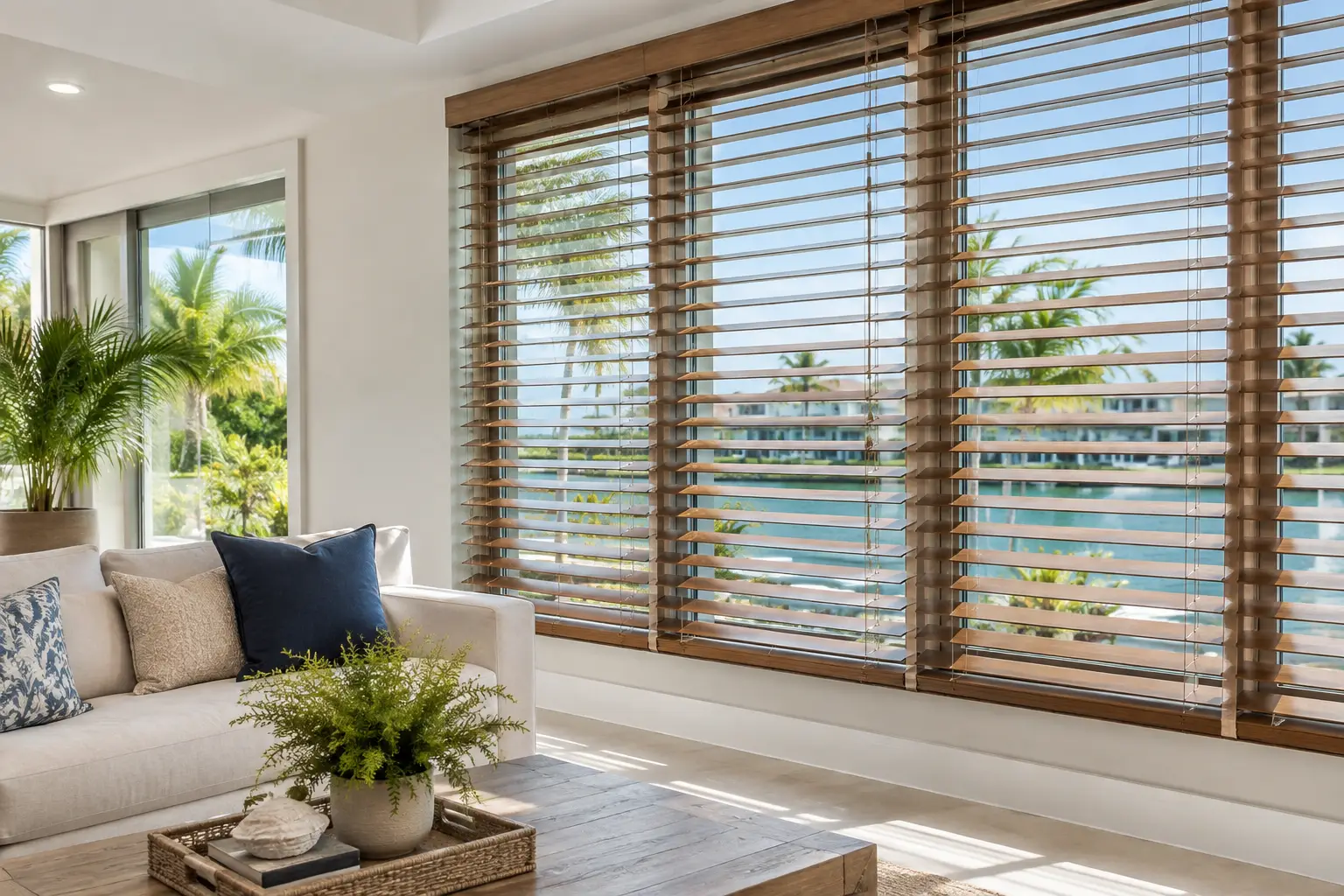
A window treatment can look perfect in a showroom and still be wrong for the way a South Florida home lives. Humidity, bright afternoon sun, active family spaces, and rooms that open onto patios all ask more of a blind than a beautiful finish. This faux wood blinds review looks at where these blinds shine, where they require thoughtful selection, and why custom fitting makes such a visible difference.
Faux wood blinds are designed to deliver the tailored, horizontal-slat look homeowners appreciate from painted wood blinds while using durable composite or PVC-based materials. For many homes in Boca Raton, Delray Beach, Parkland, and surrounding communities, that combination of classic style and moisture resistance makes them a practical choice for more than one room.
Faux Wood Blinds Review: The Strongest Benefits
The defining advantage is durability in humid environments. Unlike natural wood, faux wood is far less likely to absorb moisture, warp, crack, or fade unevenly when used in bathrooms, kitchens, laundry rooms, or near frequently opened exterior doors. That matters in coastal South Florida, where indoor humidity and intense sunlight can challenge many furnishings over time.
They are also exceptionally easy to maintain. A regular dusting, soft microfiber cloth, or lightly damp cloth is usually enough to keep slats looking clean. For households with children, pets, or a busy kitchen, this low-maintenance quality can be as valuable as the appearance. There is no need to treat faux wood like a delicate decorative surface.
Light control is another reason faux wood blinds remain a favorite. Tilt the slats upward or downward to soften daylight, reduce glare on televisions and screens, or create privacy while allowing some natural light into the room. Fully raised, the blind clears the window for a more open view. Fully lowered, it provides a clean, structured look that feels at home in both traditional and contemporary interiors.
The visual appeal is broader than many people expect. Quality faux wood blinds are available in crisp whites, warm neutrals, and wood-inspired finishes that coordinate with trim, cabinetry, flooring, and furniture. Wider slats can create a more substantial, shutter-like presence, while a carefully selected color can make the treatment feel integrated rather than added on at the end of a project.
Where Faux Wood Blinds Have Trade-Offs
A fair faux wood blinds review should account for limitations, too. Faux wood is generally heavier than natural wood. On very large windows, that extra weight can affect how the blind raises and how much support the mounting area requires. A professionally measured and installed blind helps ensure the headrail, brackets, and lift system are appropriate for the window’s dimensions.
Because the slats overlap, standard horizontal blinds do not create a completely dark room. They can significantly reduce incoming light, but small lines of light remain around and between slats. For bedrooms where near-blackout darkness is the priority, a room-darkening shade or a layered treatment may be a better fit. The right answer depends on whether you value adjustable daylight or the greatest possible darkness.
Faux wood also has a distinct look and feel. Well-made options are polished and convincing, but they do not have the grain variation or lighter weight of real wood. In a formal living room with fine wood furnishings, genuine wood blinds or shutters may better suit the design intent. In a bathroom, kitchen, casual living area, office, or sun-filled family room, faux wood often provides the more sensible balance of beauty and everyday performance.
Best Rooms for Faux Wood Blinds
Moisture-prone rooms are the clearest match. Kitchens benefit from a surface that can be wiped clean after cooking. Bathrooms gain privacy without requiring a material that may react to damp conditions. Laundry rooms and pool-adjacent spaces also benefit from a blind built to handle a more demanding environment.
They also work beautifully in bedrooms, home offices, and living spaces where flexible light control is desired. A homeowner can angle the slats to protect furnishings from direct sun while keeping the room connected to the outdoors. In an office, that adjustability can help control glare at a desk without closing off the room completely.
For windows facing strong west or south exposure, however, the conversation should go beyond the blind alone. Faux wood blinds manage direct light well, but solar shades, cellular shades, or a layered solution may offer different benefits for heat management and view preservation. An experienced consultation considers the direction of the window, the room’s use, and the amount of privacy needed at different times of day.
What Separates a Custom Blind From a Basic Blind
The material is only part of the decision. A blind that is measured precisely for the window, mounted level, and finished with coordinated details will look more intentional and operate more reliably. Small issues such as shallow window depth, uneven trim, a protruding handle, or an out-of-square opening can affect whether an inside mount or outside mount is the better choice.
Slat size deserves attention as well. Larger slats often create a cleaner, more architectural appearance and offer a broader view when tilted open. Smaller slats can suit narrower windows or more traditional interiors. The headrail style, wand or cord control, and privacy needs should all be considered before ordering rather than treated as minor decisions afterward.
For homes with young children or pets, control selection is especially important. Cordless and motorized options can reduce visible cords and give the window a cleaner appearance. Motorization can be particularly useful for tall windows, hard-to-reach locations, or rooms where several blinds need to be adjusted regularly. It is a convenience feature, but it can also make light management easier to use consistently.
Installation Matters More Than Most Homeowners Expect
Blinds may appear straightforward, yet installation affects both appearance and function. A headrail that is even slightly out of level can make slats hang poorly. Brackets placed incorrectly may interfere with the lift mechanism. On wide or tall windows, proper support is essential to prevent strain over time.
Professional installation also helps address the details that are easy to overlook during a do-it-yourself purchase. The installer can verify clearances around handles, locks, molding, and nearby doors. They can also confirm that the chosen blind has the right proportions for the window and that each treatment operates smoothly before the project is complete.
This is especially valuable in homes with varied window shapes and sizes. A single room may include a large picture window, narrow side windows, sliding glass doors, and transoms that should feel coordinated without being forced into identical treatments. Personal design guidance helps create that continuity while respecting the function of each opening.
Is Faux Wood the Right Choice for Your Home?
Choose faux wood blinds when you want a clean, substantial window treatment that stands up well to humidity, offers adjustable privacy and daylight, and complements a wide range of interiors. They are an especially strong option when durability and easy care are high on the list.
Consider another treatment when maximum darkness, an unobstructed view, unusually large window coverage, or the authentic character of natural wood is the primary goal. There is no single best window covering for every room. The best choice is the one that supports how the room is used while enhancing the finishes you have chosen for the home.
For homeowners who want to see how colors, slat sizes, and control options will work in their own space, Boca Blinds brings decades of local experience to the selection and installation process. A thoughtful in-home consultation can turn a practical blind choice into a finished look that feels made for the room.