

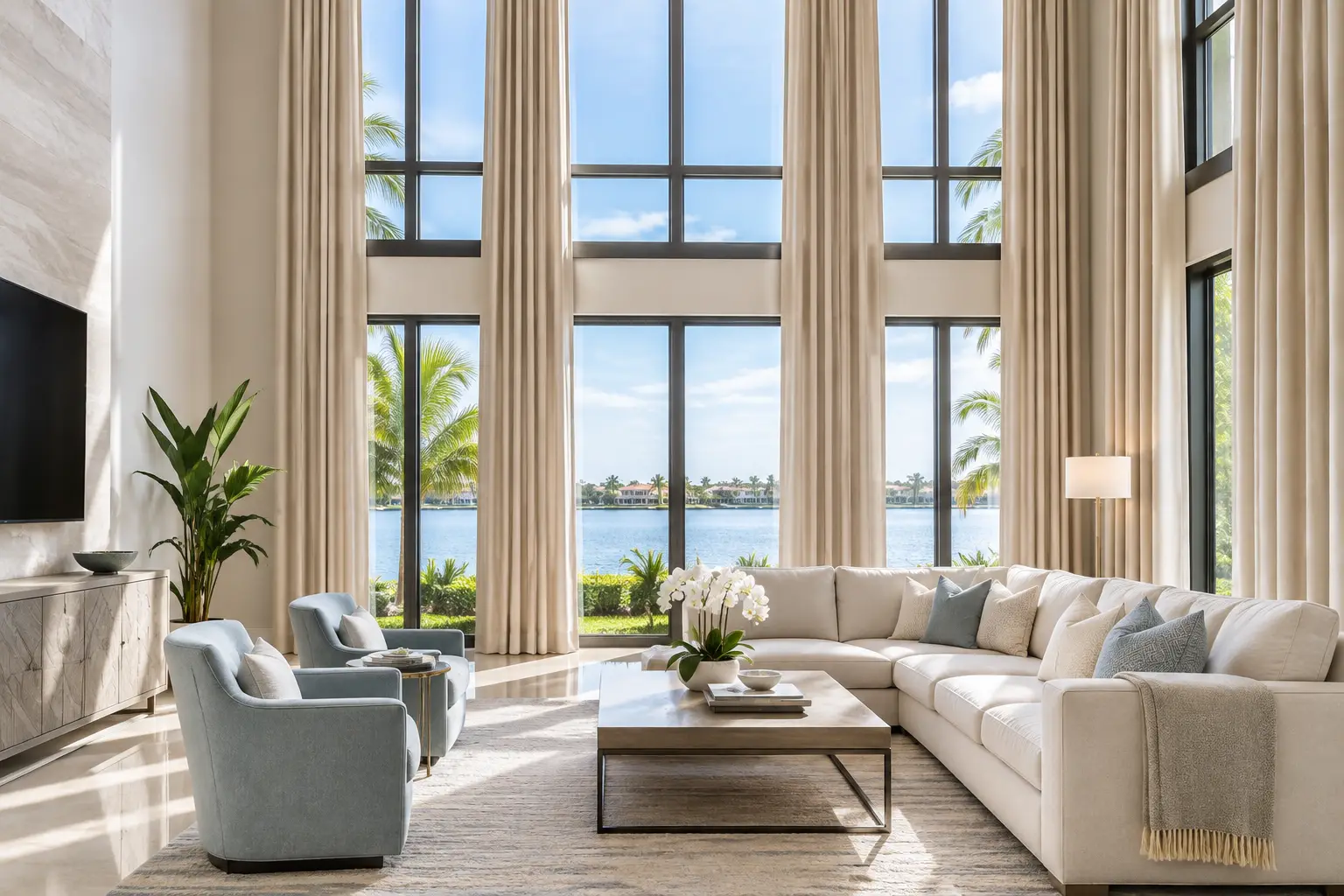
A tall window can be the feature that makes a room feel extraordinary – or the detail that leaves it feeling unfinished. The right draperies for tall windows bring proportion, softness, privacy, and light control to glass that might otherwise feel too exposed. They can also make a soaring ceiling feel intentional rather than cavernous.
For South Florida homeowners, the decision goes beyond choosing a fabric that looks good. Tall windows often welcome intense sun, afternoon glare, and heat, especially in rooms with wide exposures or outdoor views. A well-designed drapery treatment should respect the architecture while making the room more comfortable to live in every day.
Start With the Window’s Role in the Room
Tall windows do not all need the same treatment. A two-story living room, a bedroom with high transom windows, a stairwell, and a wall of glass in a great room each present different design and functional needs. Before selecting fabric or hardware, consider what the window must do for the space.
In a formal living area, draperies may be primarily decorative, framing a view and adding color, texture, or softness. In a bedroom, privacy and room darkening may take priority. In a family room with strong western exposure, sun management becomes more important. The most successful design begins with that purpose, not with a fabric swatch alone.
Scale matters, too. On a tall wall, undersized panels or a short rod can make the window look awkwardly cut off. Full-length draperies installed with the proper height and width create a continuous visual line that complements the height of the room.
Hang Draperies High and Wide
One of the most effective choices for tall windows is also one of the simplest: mount the hardware high enough to emphasize the room’s vertical scale. In many homes, the rod is placed close to the ceiling or just below the crown molding, rather than directly above the window frame.
This approach makes standard-height windows appear taller and gives genuinely tall windows a more finished presence. It also allows the panels to fall in long, clean lines, which is particularly appealing in coastal, contemporary, transitional, and traditional interiors.
The rod should typically extend beyond each side of the window. When draperies are opened, the fabric can stack beside the glass rather than covering a portion of the view. This is valuable for South Florida homes where natural light, landscaping, water views, or a connection to the patio are part of the appeal.
Exact placement depends on ceiling height, molding, window shape, and available wall space. A professional measure helps prevent common issues such as brackets that sit too close to the ceiling, panels that crowd doors, or hardware that cannot properly support the fabric’s weight.
Get the Length Right
For most tall-window installations, draperies should reach the floor. Panels that stop several inches above the floor can look unintentionally short, particularly on a large wall. A tailored “just touching” finish is a popular choice for clean-lined homes, while a slight break can add a more traditional, relaxed look.
Puddling fabric on the floor can be beautiful in a formal setting, but it is not always practical. It collects dust, can interfere with regular cleaning, and may not suit homes with pets, young children, or frequently opened doors. The best length is the one that matches both the home’s style and the way the room is used.
Choose Fabric for Light, Privacy, and Presence
Fabric has an outsized effect on tall draperies because there is simply more of it in view. A light linen-look fabric can soften a bright room without blocking the daylight that makes it inviting. A heavier woven material brings depth and insulation. Velvet and other richly textured fabrics can make a dramatic statement, although they may feel too formal or visually heavy for some airy South Florida interiors.
Sheer draperies are a strong option when privacy is needed during the day but the view and natural light should remain visible. They filter harsh sun, reduce glare, and create movement at a large window. However, sheers alone do not provide much nighttime privacy.
Lined draperies provide a more substantial look and can help protect the face fabric from the strong Florida sun. Depending on the lining selected, they can also improve privacy, reduce light transmission, and offer better temperature control near the glass. For bedrooms, media rooms, or rooms with early morning sun, room-darkening or blackout lining may be worth considering.
Keep in mind that blackout fabric does not automatically mean a completely dark room. Light can still enter around the sides and top of the treatment. If maximum light control is the goal, a layered design often performs better.
Layer Draperies With Shades for Better Control
Draperies are often most effective when paired with a functional shade. This combination gives a tall window a finished, luxurious appearance while allowing the homeowner to manage sunlight and privacy with greater precision.
For example, a solar shade can reduce glare and UV exposure during the day while preserving much of the outward view. Stationary decorative drapery panels can frame the window, adding softness without needing to close every afternoon. In bedrooms, a room-darkening shade behind draperies can offer better privacy and sleep-friendly light control than either option alone.
Cellular shades can be especially useful where energy efficiency is a concern, while roller shades offer a clean, minimal profile that works well behind fabric panels. The right pairing depends on how much light control is needed and whether the draperies will be operational or primarily decorative.
This layered approach is also helpful for expansive walls of glass. Rather than asking heavy draperies to handle every need, the shade manages the sun and the draperies provide the finishing layer that makes the room feel complete.
Select Fullness That Suits the Fabric
A tall drapery panel needs enough fullness to look generous when closed. Flat fabric across a large window can look sparse and may not provide the visual richness homeowners expect from custom window treatments.
Fullness is affected by the fabric weight, header style, and whether the panels will open and close regularly. Light, airy materials generally need more fullness than heavier fabrics. Ripplefold draperies create smooth, even waves and are a favorite for modern interiors and wide spans of glass. Pinch pleats provide a more classic, tailored look and work beautifully in formal rooms. Grommet-top panels may suit a casual setting, but their visible hardware and limited stacking can be less ideal for very tall or high-end installations.
The hardware should never be an afterthought. Long spans may require multiple support brackets, and very tall panels can be heavy. Properly specified rods, tracks, brackets, and carriers help the treatment operate smoothly and prevent sagging over time.
Consider Motorization for Height and Everyday Use
When draperies extend far above reach or cover a wide expanse of glass, manual operation can become inconvenient. Motorized draperies and shades make it easy to adjust the room throughout the day without pulling on fabric or using a wand that disrupts the design.
Motorization is especially practical for two-story windows, hard-to-reach clerestory openings, and rooms where sunlight shifts dramatically from morning to afternoon. It can also support a more consistent routine: open the treatments for daylight, close them when privacy is needed, or lower shades before direct sun heats the room.
Not every tall window requires motorization. Decorative side panels that remain in place may not need it. But for operational draperies, especially on large or elevated windows, it can be a meaningful upgrade in convenience and protection for the fabric and hardware.
Let the Architecture Lead the Design
Tall windows frequently come with architectural details that should be acknowledged rather than hidden. Arched tops, angled ceilings, French doors, corner windows, and large sliders all influence how a drapery treatment should be designed.
For an arched window, draperies can be installed above the arch to highlight the full height, or positioned to preserve the shape when the architecture itself is the focal point. For a sliding glass door, panels need adequate stacking room and hardware that allows easy passage. For windows with unusually deep trim or nearby furniture, the projection of the rod becomes an important measurement.
Color deserves the same consideration. Draperies can blend into the wall color for a quiet, architectural effect, or provide contrast that grounds a large room. Neutral fabrics remain versatile, but texture can keep them from looking plain. A woven, embroidered, or subtly patterned fabric often brings more character than a flat solid color while still working with changing furnishings.
Why Custom Measurement Makes a Difference
Tall windows expose small mistakes. A panel that is even slightly too short, a rod that is not level, or a fabric that does not stack correctly becomes more noticeable at this scale. Custom draperies are measured for the actual opening, ceiling, floor, trim, and intended hardware – not simply ordered according to a standard size.
Experienced design guidance is valuable because the visual choices and technical details are connected. The fabric affects the fullness. The fullness affects the rod size and support needs. The rod placement affects the apparent height of the room. Professional installation brings those decisions together so the finished treatment looks polished and functions as intended.
Boca Blinds has helped homeowners throughout Boca Raton and nearby South Florida communities select custom window treatments since 1976. An in-home consultation can clarify which fabric, lining, shade pairing, and operating system will suit your windows and the way you live.
Tall windows deserve more than panels chosen to fill empty space. With thoughtful proportions, beautiful materials, and expert installation, they can become one of the strongest design elements in your home.