

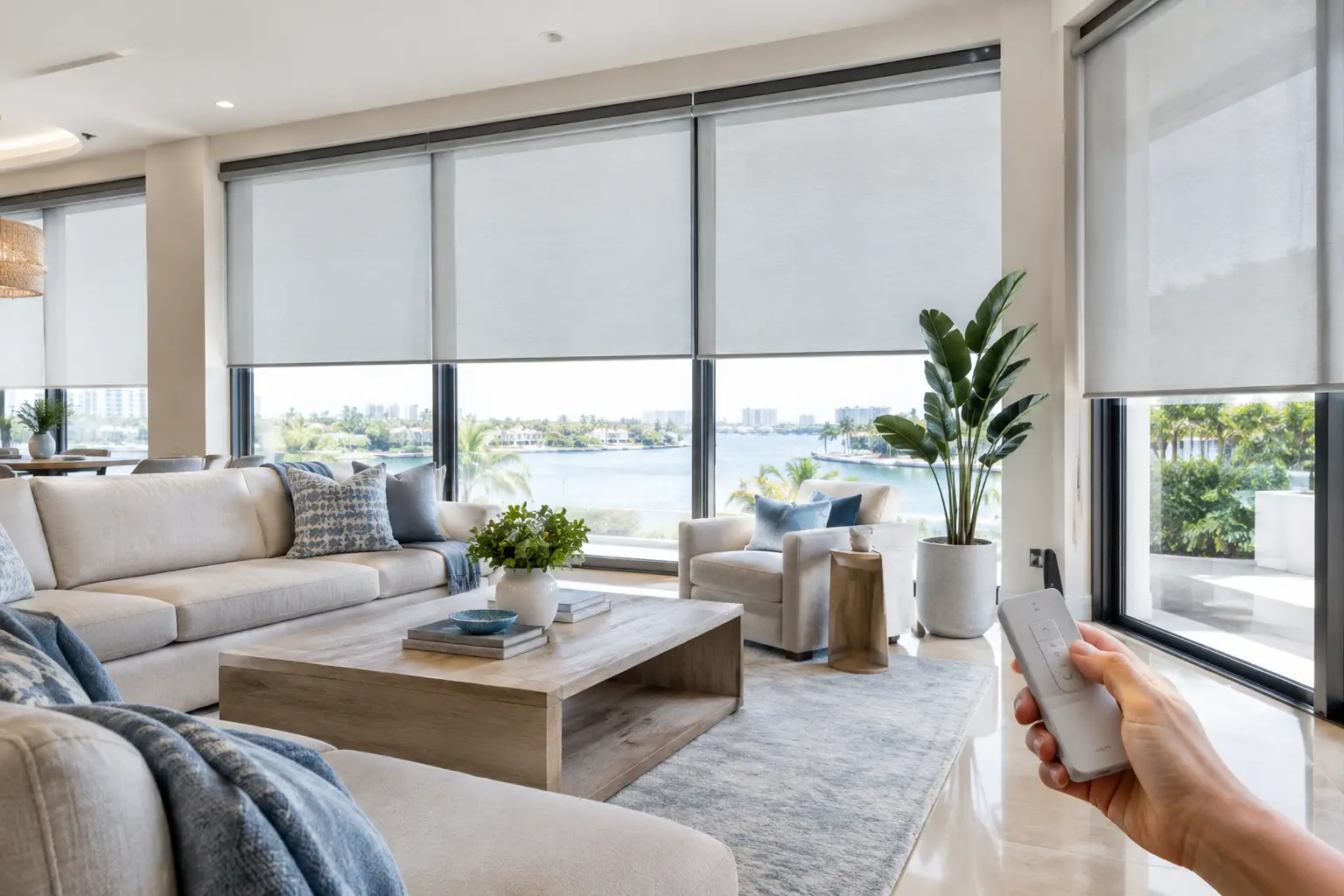
A wall of west-facing windows can turn a beautiful South Florida room into a daily battle with glare, heat, and hard-to-reach controls. Motorization solves that problem with a button, remote, app, or programmed schedule. But homeowners often ask one practical question before choosing it: do motorized blinds need wiring?
Not always. Motorized blinds and shades can be powered by rechargeable batteries, replaceable batteries, a nearby outlet, low-voltage wiring, or solar charging accessories. The right choice depends on the window location, the size and weight of the treatment, how often it will operate, and whether you are planning during construction or upgrading an established home.
At Boca Blinds, the goal is not simply to add a motor. It is to recommend a power option that fits the way your home looks, functions, and will be used for years to come.
Do Motorized Blinds Need Wiring in Every Home?
No. Battery-powered motorized window treatments are designed specifically for homes where running wires would be inconvenient or disruptive. They are a popular choice for existing homes because the motor and battery components are typically concealed within or behind the headrail, cassette, or shade hardware.
That means you can add motorized roller shades, cellular shades, sheer shades, blinds, or drapery without opening walls in many situations. A professional installer can position the treatment cleanly and ensure the controls operate as intended, while preserving the finished appearance of the window.
Hardwired systems are another excellent option, particularly for new construction, major renovations, or rooms with several automated window coverings. In this setup, low-voltage wiring supplies continuous power to each motor. There are no batteries to charge or replace, and the window treatments can be integrated into a broader home control plan when desired.
Plug-in power falls between those two options. If an outlet is located close to the window and the cord can be routed discreetly, it may provide dependable continuous power without the planning involved in a hardwired installation. It is often best suited to select locations, since visible cords can detract from an otherwise tailored treatment.
The Main Motorized Blind Power Options
Rechargeable or replaceable battery power
Battery power is often the most flexible answer for completed homes. The installation is typically less invasive, making it especially appealing when you want to preserve freshly painted walls, fine finishes, or a clean custom interior.
Many modern battery systems are rechargeable, while some use replaceable battery wands. Battery life varies based on the size of the shade, fabric weight, frequency of use, motor type, and whether the treatment is exposed to intense sun. A shade opened and closed twice daily will need attention sooner than one operated only occasionally.
For a standard bedroom, living area, or office window, battery-powered motorization can be an elegant and practical choice. It is also useful for windows without convenient outlets, such as high transoms, sidelights, or windows over a soaking tub.
The trade-off is maintenance. Even a well-designed rechargeable system needs periodic charging. For many homeowners, that is a small consideration compared with the convenience of cordless operation and the ease of installation. For difficult-to-reach windows, however, it is worth planning ahead so recharging remains manageable.
Solar charging accessories
Solar charging can extend the convenience of a rechargeable battery system. A small solar panel is placed where it receives daylight, helping maintain the battery charge over time. This option can be particularly helpful on sunny South Florida exposures, where the same light that creates glare can help support your automated shades.
It is not right for every window. The panel needs suitable access to daylight, and its placement should be considered carefully so it does not interfere with the finished appearance of the treatment. Still, for certain windows, solar charging can reduce the need for manual recharging and make battery-powered motorization even more hands-off.
Plug-in motorized blinds
Plug-in motorization uses a power adapter connected to a nearby outlet. Because the motor receives continuous power, it eliminates battery maintenance without requiring electrical wiring within the wall.
This can work well behind furniture, near built-in cabinetry, or in rooms where an outlet is already positioned close to the window. The key consideration is cord management. A professional consultation can determine whether the cord can be concealed or routed in a way that maintains the polished look of your room.
Hardwired motorized blinds and shades
Hardwired power is often the premium long-term choice for a whole-home project, a large room with multiple shades, or windows that are especially high or difficult to access. The motors receive ongoing low-voltage power, so there is no charging routine and no need for an outlet at each window.
This option is easiest to plan before drywall is installed or while walls are already open for renovation. An experienced window-treatment professional can work with your design team and qualified electrician to identify motor locations, control needs, and wire paths before the final finishes are in place.
Hardwiring is not automatically necessary just because a treatment is large or frequently used. Modern battery motors can handle many applications beautifully. But for a bank of shades in a great room, automated drapery on tall windows, or a residence where every treatment is intended to operate on schedules, hardwired power deserves serious consideration.
When Hardwiring Makes the Most Sense
Hardwired motorization is most valuable when convenience, access, and long-term planning matter more than installation simplicity. It is a strong fit for new homes in Boca Raton, Parkland, and nearby communities, where electrical planning can be coordinated before move-in.
It also makes sense for rooms with several window treatments operating together. A homeowner may want all shades lowered in the afternoon to reduce glare and help protect furnishings, then raised in the evening to restore views. Continuous power supports those routines without adding battery management across numerous windows.
Consider hardwiring when window coverings will be mounted high above the floor, behind substantial furniture, or in locations where reaching the battery would be inconvenient. It can also be the better choice for commercial offices, where consistent daily operation and a clean, professional appearance are priorities.
What Else Affects the Installation?
Power is only one part of a successful motorized window treatment. The product itself matters. A lightweight roller shade requires different planning than layered drapery, wide woven wood shades, or a large cellular shade. Window width, mounting surface, fabric selection, and the weight of the finished treatment all influence which motor and power source are appropriate.
Control preferences matter, too. Some homeowners prefer a simple handheld remote. Others want wall controls, app access, voice control, scheduled operation, or grouped scenes for an entire room. These features do not always require hardwiring, but they should be discussed early so the system feels intuitive rather than overcomplicated.
South Florida conditions add another layer of value. Motorized solar shades can help manage harsh afternoon light while preserving an outward view. Blackout shades can make bedrooms more comfortable for sleeping. In rooms with large glass expanses, automated schedules can support privacy and light control even when no one is home.
How to Choose the Right Power Source
Start with the room, not the technology. Ask how often the treatment will be used, whether the window is easy to reach, and whether the home is under construction or already finished. Then consider the visual standard you expect. A custom treatment should look intentional from every angle, with no unnecessary cords, awkward access points, or control clutter.
Battery power is usually the practical choice for a single room or a completed home where minimal disruption is important. Plug-in power can be useful when an outlet is conveniently located and can be concealed. Hardwired power is ideal when you are renovating, building, automating many windows, or want the least ongoing maintenance.
A design consultation is valuable because the best answer may vary from room to room. Your bedroom blackout shades may be battery powered, while a tall great-room wall of solar shades may be hardwired. Matching the solution to each space often creates a better result than forcing one power method throughout the house.
The right motorized blinds should make daily life feel easier while complementing the architecture and style of your home. Whether your project calls for batteries, solar support, plug-in power, or hardwiring, thoughtful planning and professional installation help ensure the finished treatment is as reliable as it is beautiful.