

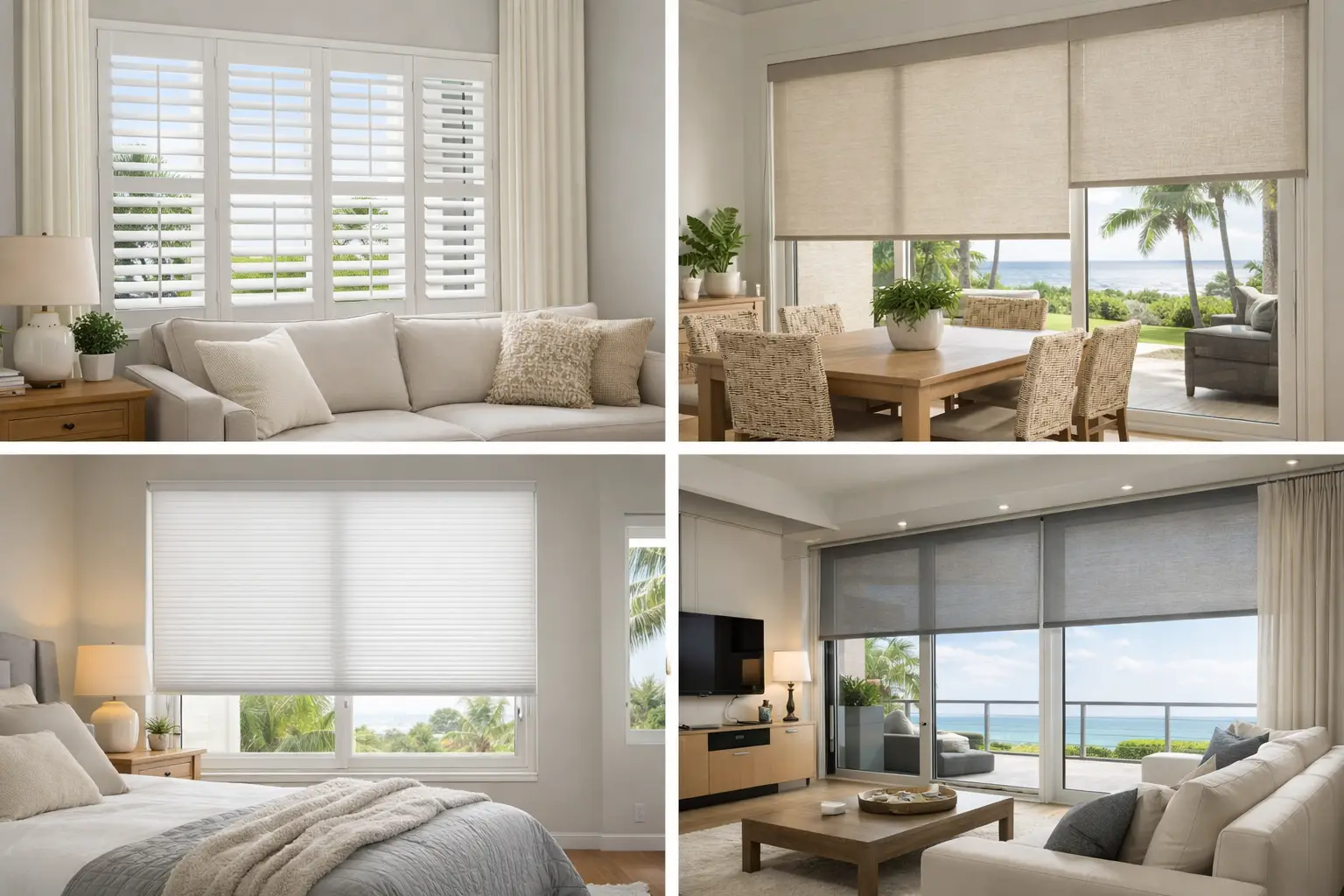
A window treatment can make a room feel finished, but it also has to work hard. In South Florida homes especially, the right choice manages sunlight, protects interiors, adds privacy, and supports the style of the space. This custom window treatments guide is designed to help you sort through the options with more confidence, so your selections look right and perform well for years.
Custom matters because windows are rarely as simple as they seem. The same house can have large sliders in one room, arched windows in another, and bedroom windows that need full privacy by night but soft daylight by morning. Off-the-shelf products may cover glass, but they often miss on fit, proportion, durability, or operation. A custom approach gives you more control over appearance, function, and long-term value.
Why a custom window treatments guide matters
Most homeowners begin with color or style, and that makes sense. You see the fabric, the slat size, the fold, and imagine how it will look with your furniture and wall color. But window treatments are a practical design decision as much as a decorative one.
Sun exposure is one of the biggest factors. A bright west-facing room may need glare reduction and UV protection more than anything else. A front-facing living room may call for privacy without making the space feel closed in. Bedrooms usually need stronger light control, while kitchens and breakfast areas often benefit from something easy to clean and simple to operate.
That is why the best choice is rarely about what is most popular. It depends on the room, the window, and how you live in the space.
Start with the job the treatment needs to do
Before comparing products, define the primary goal. If you want a cleaner, more tailored look, roller shades or plantation shutters may be the right direction. If softness and decorative impact matter most, draperies or sheers can change the entire feel of a room. If insulation and energy efficiency are part of the conversation, cellular shades deserve attention.
Many homes need more than one benefit at the same time. You may want filtered natural light during the day, privacy in the evening, and a polished design statement all day long. In that case, layering can be worth considering. A woven shade with side panels, or a solar shade paired with drapery, often delivers a more complete result than a single product alone.
This is also where motorization starts to make sense. Hard-to-reach windows, large openings, media rooms, and whole-home convenience are all good reasons to consider it. It is not just about technology for its own sake. It can improve daily use and help preserve consistency across multiple rooms.
The main product categories and where they fit best
Shades
Shades are one of the most versatile categories because they can be sleek, soft, casual, or highly functional depending on the style. Roller shades are a favorite for clean lines and easy operation. They work especially well in contemporary spaces, offices, and rooms where you want a low-profile look.
Solar shades are ideal when glare is the problem but you do not want to lose the view. In sunny areas, they help reduce harsh light and UV exposure while keeping the room open and modern. The trade-off is nighttime privacy. During the day, they perform beautifully. At night, depending on lighting conditions, you may want an added layer.
Cellular and honeycomb shades are often chosen for comfort and efficiency. Their structure helps insulate the window, which can make rooms feel more stable and comfortable. They are a smart option for bedrooms, family rooms, and any area where softness and performance need to work together.
Woven woods bring texture and warmth. They suit coastal, transitional, and relaxed interiors particularly well. They are visually rich, but because natural materials allow some variation in weave and light filtering, they are not always the answer when complete blackout or strict privacy is required.
Blinds
Blinds remain a practical and attractive solution for many spaces. Faux wood blinds are especially useful in humid environments because they offer the appearance of painted wood with easier maintenance and dependable durability. They fit comfortably in kitchens, bathrooms, laundry rooms, and everyday living areas.
Blinds also give you straightforward control over light direction. You can tilt slats to soften brightness without fully raising the treatment. That said, blinds tend to create a more structured visual effect than shades or drapery, so they may feel better suited to some rooms than others.
Shutters
Plantation shutters are often considered a long-term architectural upgrade as much as a window treatment. They add definition, order, and lasting appeal to a home. They are especially strong in living rooms, bedrooms, and front-facing spaces where curb appeal and interior polish both matter.
Shutters are durable and timeless, but they are also a more committed visual choice. Their presence is stronger than a slim roller shade or soft drape panel. For many homeowners, that is exactly the point. For others, a lighter treatment may feel more flexible.
Draperies and sheers
Draperies add softness, scale, and a finished designer look. They can make ceilings feel taller, widen the visual impact of a window, and bring in color, pattern, or texture. They are also useful for layering over shades or blinds when you want more privacy, better light control, or a more complete decorative result.
Sheers are excellent for rooms that need gentle filtered light. They create an elegant atmosphere without making the room feel heavy. In homes where daylight is part of the appeal, sheers can be one of the most satisfying choices.
How to choose by room
Living room and family room
These spaces usually need flexibility. You want natural light, but not glare on floors, art, or television screens. Solar shades, roller shades, woven woods, and shutters all work well here depending on the style of the room. If the space feels too hard or bare, adding drapery panels can soften the overall look.
Bedroom
Privacy and light control lead the decision. Blackout shades, lined draperies, and certain shutter configurations are common choices. If you like daylight in the morning but still want privacy, layered treatments can give you more control than a single product.
Kitchen and bath
Moisture resistance and easy care matter most. Faux wood blinds, shutters, and simple shades are often the strongest options. Fabric-heavy treatments can work in some kitchens, but they need to match the demands of the space.
Home office
A polished office needs glare control without making the room feel dark. Solar shades are especially useful here, and clean-lined roller shades are another strong option. If the office is visible from other main living spaces, the design should feel integrated with the rest of the home.
Fit, installation, and the details that change the result
The difference between a decent outcome and a beautiful one often comes down to details. Inside mount versus outside mount, the stack height of a shade, the return on drapery panels, and the scale of a blind slat all affect the final look.
Professional measuring matters because even a small miscalculation can create light gaps, awkward proportions, or operational issues. This becomes even more important with specialty shapes, corner windows, sliding glass doors, and motorized products. A good design consultation does more than show samples. It helps you see how the treatment will actually function in your room.
For homeowners in Boca Raton and nearby communities, this is where working with an established local specialist can save time and avoid expensive guesswork. Boca Blinds has been serving South Florida since 1976, and that kind of experience is valuable when you are balancing style, sun management, and custom fit.
A few trade-offs worth knowing before you buy
Every product has strengths and limitations. Shutters offer lasting structure and strong visual appeal, but they are not the softest look. Solar shades preserve views and cut glare, but they are not the best standalone choice for nighttime privacy. Draperies add richness and finish, but they need enough wall space and thoughtful hardware placement to hang properly.
That does not mean one option is better than another. It means the right selection comes from matching the product to the room and your priorities. Sometimes the best answer is a single clean treatment. Sometimes it is a layered combination that solves several needs at once.
A well-chosen window treatment should feel easy once it is in place. It should suit the architecture, support the way you use the room, and make the home feel more complete every day. If you begin with function, narrow by style, and pay attention to fit, you will make a choice that looks just as good a year from now as it does on installation day.