

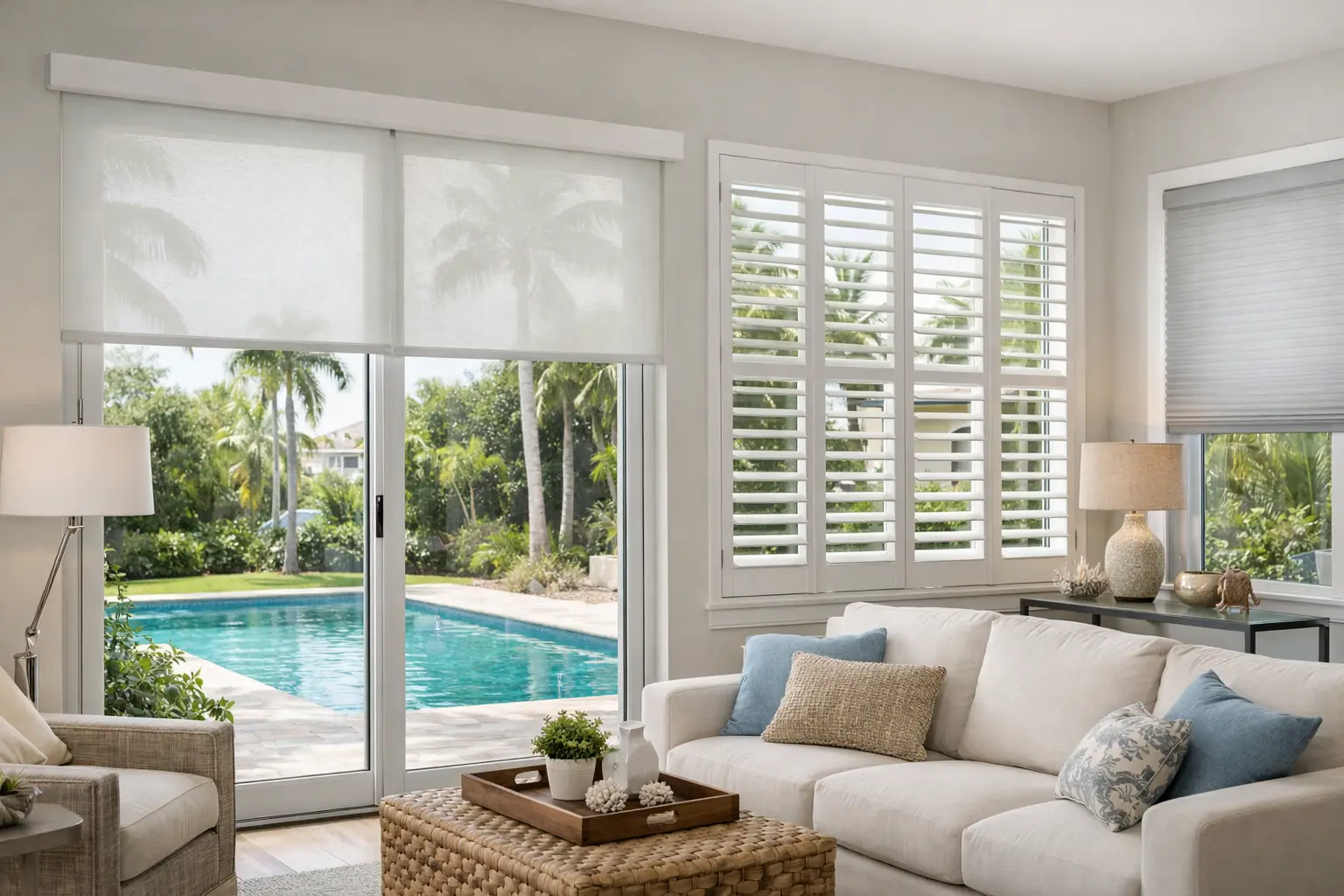
The afternoon light in Delray Beach can make a room feel bright and inviting – until it creates glare across the television, fades a favorite rug, or makes a west-facing sitting area uncomfortable. Custom shades Delray Beach homeowners select are designed for that balance: preserving natural light and a beautiful view while giving the home greater comfort, privacy, and control.
Window treatments are not a one-size-fits-all purchase, particularly in South Florida. The right shade should suit the window’s size and orientation, the room’s purpose, the home’s architecture, and the way the household lives each day. A professional consultation helps turn those details into a finished treatment that looks intentional and performs well.
Why Custom Shades Matter in Delray Beach
Ready-made shades may seem convenient, but they often leave visible gaps, fit unevenly, or fail to address the particular light conditions of a room. Custom shades are measured for each window and can be tailored with fabric, opacity, lift system, mounting style, and finishing details that support the overall design.
That precise fit is especially valuable on wide sliding glass doors, oversized windows, arched openings, and the expansive glass common in coastal and golf community homes. A properly selected shade can soften an open-plan living space without making it feel closed off. In a bedroom, it can create the darker, more private environment that many homeowners want. In a home office, it can reduce screen glare while retaining a clean, professional appearance.
Sun management is another practical consideration. Strong Florida sunlight can affect flooring, furnishings, artwork, and interior finishes over time. Shades can help filter UV exposure and diffuse harsh light, but the level of protection depends on the material and openness selected. This is where experienced guidance matters: a fabric that is ideal for preserving a view may not provide the room-darkening effect needed in a nursery or primary bedroom.
Choosing Custom Shades for Delray Beach Light
The best shade is not always the one with the most features. It is the one that solves the needs of the specific room without competing with its design. During a home consultation, it helps to consider when sunlight enters, whether privacy is needed during the day or evening, and how much visibility to the outdoors should remain.
Roller and solar shades for clean lines
Roller shades offer a refined, uncluttered look that works beautifully in contemporary homes, offices, and rooms with architectural windows. Available in a broad range of colors and textures, they can blend quietly into the surroundings or add a tailored accent at the window.
Solar shades are a particularly smart option for rooms with a view. Their specialized fabrics reduce glare and filter sunlight while allowing a measured degree of outward visibility. Openness matters here. A more open weave generally preserves more of the view but offers less privacy and less light reduction; a tighter weave provides stronger sun control while making the view softer. There is no universal right choice – it depends on the exposure and the homeowner’s priorities.
Cellular shades for comfort and efficiency
Cellular shades, also called honeycomb shades, are valued for their crisp appearance and insulating construction. Their cellular pockets help create an added barrier at the glass, which can support a more comfortable interior near sunny windows.
They are well suited to bedrooms, family rooms, and spaces where softness and efficiency are equally important. Light-filtering fabrics create a warm glow, while room-darkening options offer more substantial light control. For homeowners who want privacy without losing daylight, top-down/bottom-up operation can be an excellent consideration. It allows light to enter from above while covering the lower portion of the window.
Woven woods and natural textures
Woven wood shades bring warmth and dimension to interiors that need a more relaxed, organic finish. Their natural textures complement coastal, transitional, and casual elegant spaces, especially when paired with wood furnishings, linen upholstery, or neutral palettes.
Because woven materials have natural variations, they create a different effect than a smooth fabric shade. Some provide filtered light with a beautiful textured glow, while others may benefit from a privacy or room-darkening liner. A liner changes both the shade’s function and its appearance, so seeing the material in the home’s own light is an important part of the selection process.
Roman-style shades and layered treatments
For rooms that call for more decorative presence, Roman-style shades offer the softness of drapery with the practical function of a shade. They can introduce color, pattern, or a tailored fabric detail without overwhelming the room.
Layering is often worthwhile in primary bedrooms, formal living areas, and spaces with significant glass. A shade may manage daytime light and privacy, while side panels or draperies add fullness, improve coverage, and create a more finished design. The trade-off is a more involved installation and a stronger visual statement, which may not suit every minimalist interior.
Privacy, Light Control, and the Right Opacity
Selecting opacity is one of the most important decisions in a custom shade project. A sheer or lightly filtering fabric can diffuse bright light beautifully, but it is not intended to provide complete nighttime privacy. Conversely, room-darkening materials offer more coverage but may reduce the open, airy feel many Delray Beach homeowners enjoy.
Bedrooms often benefit from room-darkening shades, especially where early sun or exterior lighting is a concern. Living rooms and kitchens may be better served by light-filtering or solar fabrics that maintain a connection to the outdoors. Bathrooms require particular attention to privacy, and homes close to neighboring properties may need a different solution than those overlooking a golf course, waterway, or private yard.
The mounting method also affects coverage. An inside mount can look sleek and architectural, while an outside mount may cover more of the window frame and help reduce light gaps. Neither approach is automatically better. The window depth, trim, desired look, and need for darkness should guide the decision.
Motorized Shades Add Everyday Convenience
Motorization is a practical upgrade for hard-to-reach windows, tall great-room glass, and areas with several shades operating together. With the touch of a button or a programmed schedule, homeowners can adjust light levels without interrupting the room’s activity.
It is also useful for protecting interiors during the strongest hours of sunlight. Shades can be raised to welcome morning light, lowered when afternoon glare arrives, and adjusted again for evening privacy. For families, retirees, and professionals who value convenience, motorization brings a polished function to a feature that is used every day.
The best time to plan motorization is before measurements and installation. Power access, shade size, control preferences, and the number of windows all influence the right system. Discussing those details early helps create an installation that feels considered rather than added on later.
The Value of Professional Measuring and Installation
Beautiful shade fabric alone does not guarantee a beautiful finished result. Windows can be slightly out of square, molding can limit mounting options, and large openings may require careful coordination for aligned treatments. Accurate measurements and knowledgeable installation protect the appearance and operation of the finished shades.
Boca Blinds has served South Florida homeowners and office clients since 1976 with personalized design guidance, custom products, and professional installation. The process begins with understanding how each space is used, then narrowing the choices to treatments that suit the home’s style and practical needs. Seeing samples in the actual room is valuable because sunlight, wall color, furnishings, and surrounding views can change how a fabric reads.
A well-planned project also considers the details that are easy to overlook: whether handles interfere with the shade, how treatments will align across connected windows, where controls should be placed, and how the shade will look from outside the home. Those decisions are part of creating window treatments that feel built for the space.
A Better Starting Point for Your Windows
If your windows bring in more heat, glare, or exposure than you would like, start by identifying what you want to preserve. It may be a water view, the soft morning light in a kitchen, the comfort of an afternoon reading corner, or the privacy of a primary bedroom. From there, an experienced in-home consultation can help you choose custom shades that make the room feel more comfortable, more polished, and more like home.