

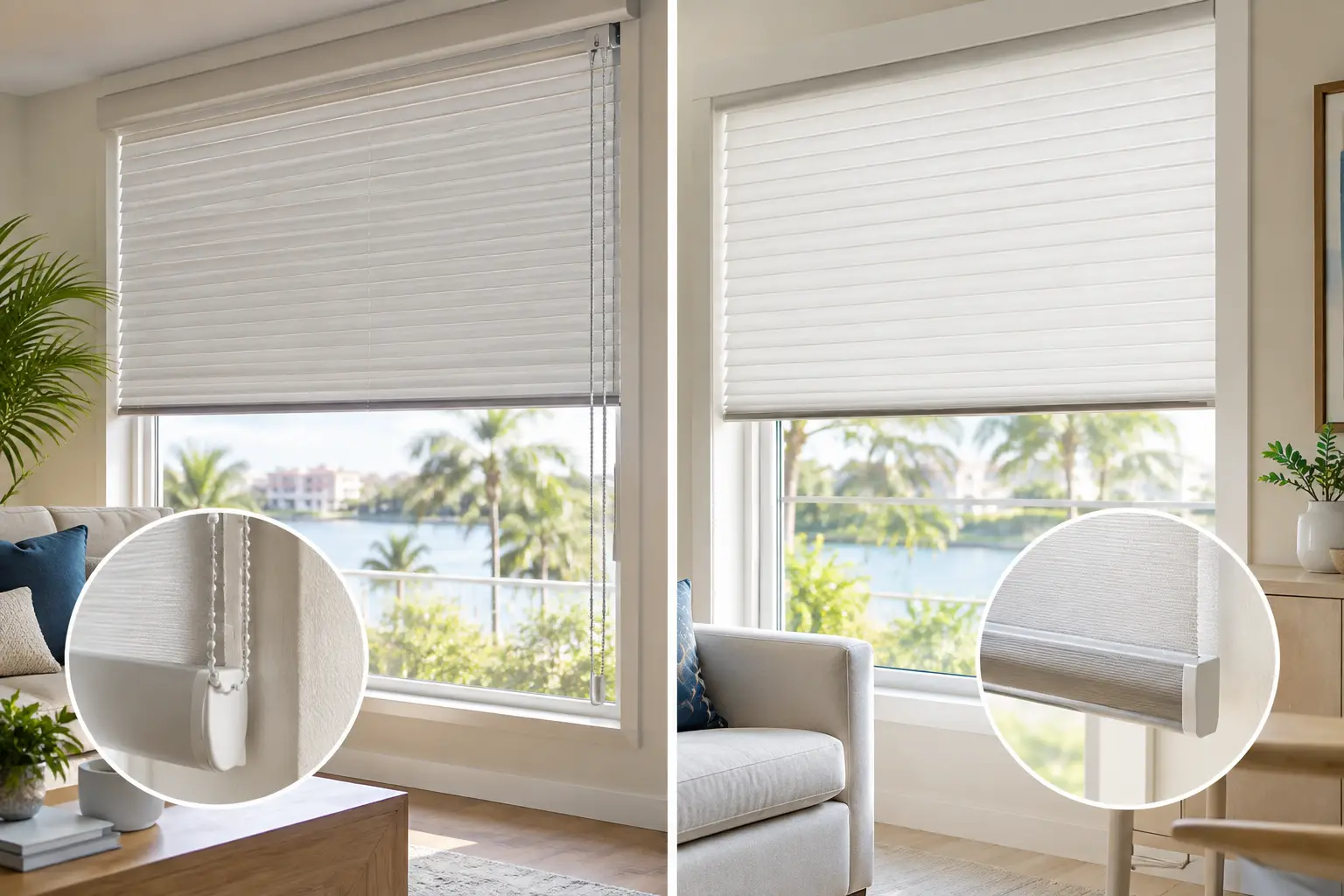
A window treatment can look perfect in a showroom and feel completely different after a week of daily use. When comparing corded vs cordless window blinds, the best choice comes down to more than appearance. Safety, window size, room function, privacy needs, and how often you adjust the blinds all deserve a place in the decision.
For many South Florida homes, blinds also have an important job beyond decoration. They help manage intense sunlight, reduce glare on televisions and computer screens, and create daytime privacy without closing a room off from natural light. The operating system you choose affects how easily those benefits fit into your routine.
Corded vs Cordless Window Blinds: The Core Difference
Corded blinds use a visible pull cord to raise and lower the blind. Depending on the style, cords may also control tilt, allowing you to angle slats for filtered light and privacy. This familiar design remains available in select window treatment styles and can be a practical choice in the right setting.
Cordless blinds are raised and lowered by gently lifting or pulling the bottom rail. The internal lift system holds the treatment at the desired height, creating a cleaner appearance with no dangling pull cord. Cordless operation is especially common with cellular shades, roller shades, Roman shades, and many horizontal blind options.
Neither choice is automatically right for every window. A compact guest room window, a large living room opening, and a hard-to-reach office window may each call for a different solution. The goal is to select a system that looks refined and feels comfortable to operate every day.
Safety Is Often the Deciding Factor
For homes with young children or visiting grandchildren, cordless window treatments are generally the preferred option. Exposed cords can create an avoidable hazard, while cordless systems remove that concern from the room’s design.
This is particularly meaningful in nurseries, playrooms, bedrooms, and family rooms, where children may spend time near windows. A cordless blind also contributes to a more orderly look, which is valuable in polished interiors where every detail matters.
Corded blinds can still be appropriate in adult-only spaces, certain office environments, or windows where the operating mechanism needs to meet a particular functional requirement. However, safety should be part of every selection conversation. If a corded treatment is under consideration, proper hardware and professional installation are essential for keeping cords secure and positioned correctly.
The Look of the Window Matters
Cordless blinds and shades offer a noticeably cleaner profile. Without a pull cord hanging to one side, the window treatment appears more tailored, especially against wide expanses of glass, sliding doors, and carefully designed trim. This minimal look works beautifully with contemporary interiors, coastal-inspired homes, and spaces where the view is the focal point.
Corded blinds have a more traditional visual character. In the right style, that is not a drawback. Wood or faux wood blinds, for example, can complement classic furnishings and bring structure to a room. Yet the cord remains a visible component, so it should be considered as part of the overall design rather than treated as an afterthought.
Color, material, and mounting location matter just as much as the lift style. A custom-measured blind installed inside the window frame creates a different effect from one mounted above the frame to make a window feel taller or more substantial. Professional guidance is useful here because small proportional decisions can change the finished result.
Daily Convenience and Light Control
If you adjust your blinds several times a day, cordless operation can feel especially intuitive. A quick lift lets you open a shade for morning light, lower it for afternoon privacy, or set it at a comfortable level for a television room. The absence of cords makes the action simple and keeps the window area visually calm.
That said, the ease of cordless operation depends on the product, window height, and installation. On a tall window, reaching the bottom rail may be inconvenient for some homeowners. A handle, extension tool, or motorized option may be a better fit than either a standard corded or cordless lift system.
For horizontal blinds, tilt function deserves equal attention. Tilting slats upward can soften incoming light while preserving a sense of openness. Tilting them downward can increase privacy and reduce direct glare. In sunny South Florida rooms, this level of control is often as valuable as the ability to raise the blind completely.
When Corded Blinds Can Make Sense
Corded blinds may be worth considering for large, heavy, or unusually sized treatments where the chosen product line supports a corded lift system well. The cord provides a familiar, direct method of operation and can be useful when precise positioning is important.
They can also be practical in commercial settings where staff members need an immediately recognizable operating method. In offices, conference rooms, and work areas, the right treatment often balances glare reduction with screen visibility and a professional appearance.
The key is not to choose corded blinds simply because they are familiar. Consider who uses the room, how often the window treatment will move, and whether the visible cord suits the finished design.
When Cordless Blinds Are the Better Fit
Cordless blinds are an excellent option for bedrooms, living rooms, kitchens, and other spaces where a clean appearance and family-friendly operation are priorities. They are especially appealing on smaller to medium-sized windows that are easy to reach.
They also pair naturally with soft, modern window treatments. Cellular shades can provide a streamlined look while helping with insulation. Roller and solar shades can manage glare while maintaining an open feel. Woven wood shades add warmth and texture without introducing visible cords that interrupt the material’s natural character.
For homeowners updating several rooms at once, cordless operation can create useful consistency. The home feels more coordinated when the treatments share the same clean operating style, even if each room uses a different fabric, opacity, or product category.
Consider South Florida Sun, Privacy, and Window Placement
The corded versus cordless decision should never overshadow the performance of the material itself. A west-facing family room may need strong glare control in the afternoon. A front bedroom may need better privacy. A waterfront or golf-course view may call for a treatment that filters harsh light while preserving the view beyond the glass.
Solar shades are often a thoughtful choice for view-oriented rooms, while room-darkening or blackout-capable treatments can be better suited to bedrooms. Cellular shades can add insulation benefits, and faux wood blinds offer a durable, crisp look in many active areas of the home. Each can be available with operating choices that should be matched to the room.
Humidity and sunlight should also inform material selection. South Florida’s climate can be demanding, particularly near patios, pools, and large sun-facing windows. A custom consultation helps identify a treatment that complements the décor while standing up to its environment.
Do Not Forget Motorization
For high windows, expansive glass walls, or homes where convenience is the main priority, motorized window coverings deserve consideration. Motorization eliminates hanging cords and does not require reaching the bottom rail. With the touch of a button, homeowners can raise, lower, or adjust compatible treatments with greater ease.
This option is particularly helpful for hard-to-reach windows above stairways, behind furniture, or in rooms with vaulted ceilings. It can also make a daily sun-management routine more practical, whether that means reducing afternoon glare or closing treatments for evening privacy.
Motorization is not necessary for every window. A simple cordless shade may be the ideal answer for an accessible bedroom or kitchen window. But when windows are tall, wide, or used constantly, it is worth comparing the long-term convenience.
Choose the System Around Your Life
The best window treatment is one you enjoy using, not one that requires compromise every day. Bring photos of the room, note the direction the windows face, and think honestly about who will operate the blinds. Those details will guide better decisions than choosing based on a sample alone.
Since 1976, Boca Blinds has helped homeowners and office clients make those decisions with custom product guidance and professional installation. A free in-home consultation can clarify how corded, cordless, and motorized options will look and function on your actual windows, so the final choice feels as good in daily life as it looks from across the room.