

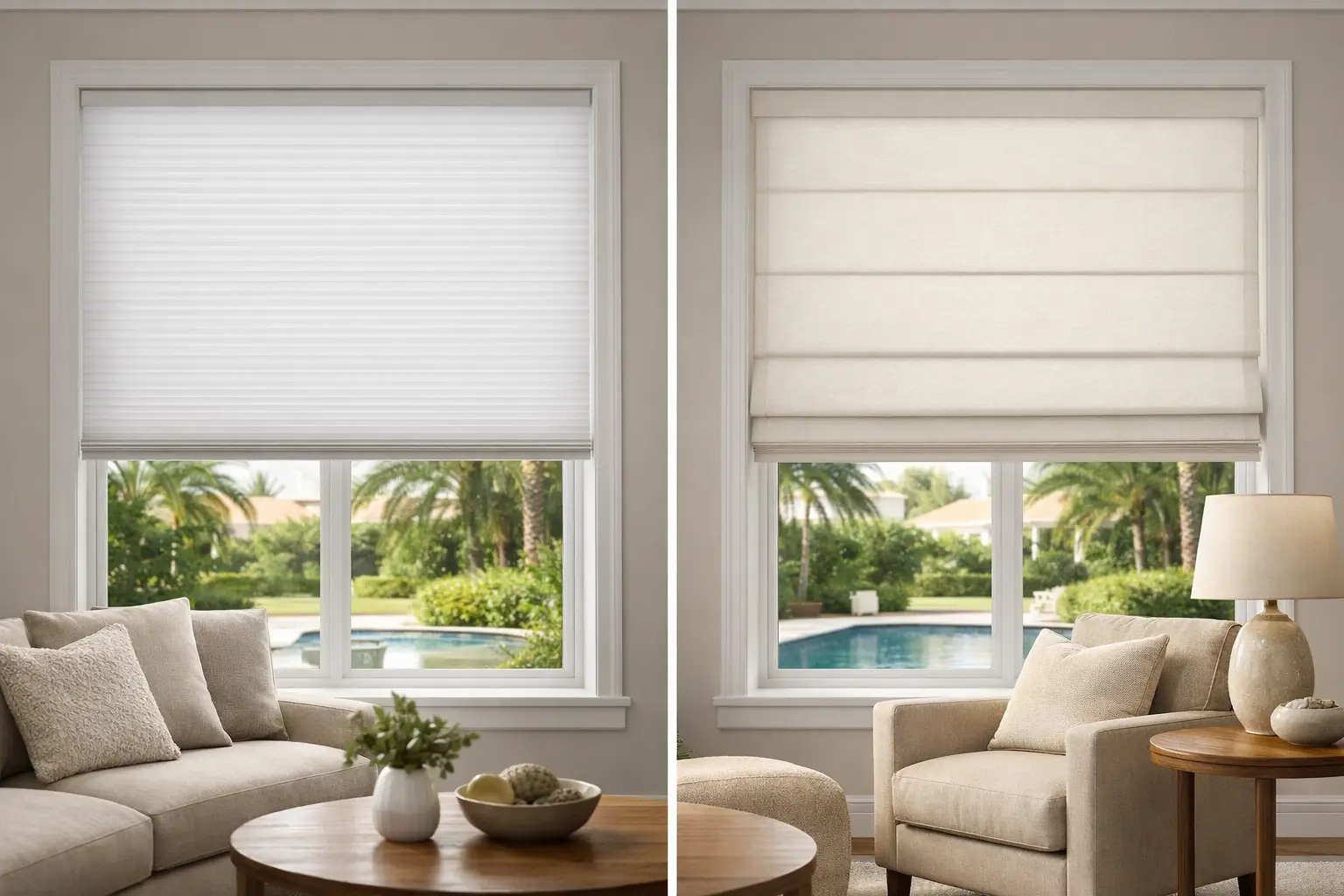
A west-facing Boca Raton window can make a beautiful room feel bright, hot, and difficult to use by midafternoon. That is why the choice between cellular shades vs roman shades is more than a decorating decision. Both offer privacy and a tailored custom look, but they solve sun, comfort, and style concerns in distinctly different ways.
Cellular shades are built for performance, using a honeycomb-shaped structure that creates air pockets between the window and the room. Roman shades are built for softness and presence, bringing fabric, texture, and a more decorative finish to the window. The right answer depends on what the room needs most – whether that is insulation, glare control, elegant fabric detail, or a thoughtful balance of all three.
Cellular Shades vs Roman Shades at a Glance
Cellular shades, often called honeycomb shades, have crisp, horizontal pleats that expand when lowered and stack compactly when raised. Their cells trap air, helping reduce heat transfer through the glass. They can be made in light-filtering, room-darkening, or blackout fabrics and are available in a range of neutral colors and subtle textures.
Roman shades are soft fabric shades that fold into horizontal panels when raised. Depending on the fabric and fold style, they can look relaxed and casual, clean and tailored, or richly traditional. They make a stronger decorative statement than cellular shades and can coordinate beautifully with upholstery, draperies, wall colors, and other finishes.
Neither style is automatically better. A cellular shade may be the smarter choice for a sunny bedroom or office where comfort and glare matter every day. A Roman shade may be the natural choice for a dining room, living room, or primary suite where fabric warmth is central to the design.
Where Cellular Shades Stand Out
The defining advantage of cellular shades is their insulating construction. Windows are a common source of solar heat gain, particularly in South Florida homes with wide glass doors, high windows, and sun-facing exposures. The pockets within a cellular shade create an insulating layer that can make rooms feel more comfortable and help reduce the strain caused by intense sunlight.
They are also exceptionally versatile for light control. Light-filtering cellular fabrics soften harsh daylight while still allowing a room to feel open. Room-darkening and blackout options are useful for bedrooms, media rooms, nurseries, and any space where outside light interrupts rest or screen time. Keep in mind that even a blackout shade may allow small amounts of light around the edges, depending on the installation and window shape.
Cellular shades have a clean profile that suits contemporary, transitional, and understated interiors. Because they stack neatly, they are especially effective when preserving the view is important. On a sliding glass door or a large expanse of windows, a properly selected cellular shade can provide privacy when needed without visually crowding the glass.
There are a few trade-offs. Cellular shades offer texture and color choices, but they do not have the broad decorative range of a true fabric Roman shade. Their pleated appearance is intentional and refined, yet it may feel too minimal for a room that calls for pattern, softness, or a custom upholstered look. Their cells can also collect dust over time, so occasional gentle vacuuming with a brush attachment is helpful.
Best Rooms for Cellular Shades
Cellular shades are often a strong fit for bedrooms, home offices, bathrooms, sunlit family rooms, and windows exposed to persistent afternoon sun. They also work well in offices where reducing monitor glare and maintaining a polished, uncluttered appearance are priorities.
For households that want convenient daily operation, cellular shades are well suited to motorization. A motorized shade can be adjusted at scheduled times, raised to welcome morning light, or lowered before the strongest afternoon sun reaches the room. This is particularly practical for tall, hard-to-reach, or frequently used windows.
Why Roman Shades Change the Feel of a Room
Roman shades bring a layer of fabric design that cellular shades cannot fully replicate. They can introduce linen-like texture, a subtle woven pattern, a warm neutral tone, or a more expressive color that connects the window treatment to the rest of the room. In spaces with clean walls and simple furnishings, Roman shades often supply the finishing detail that makes the room feel complete.
Their visual flexibility is a major reason homeowners choose them. A flat Roman shade has a streamlined, tailored look. A softly folded or relaxed style adds dimension and traditional character. Lined fabrics can add body and privacy, while carefully selected light-filtering fabrics create a gentle glow without exposing the room to direct views from outside.
Roman shades also lend themselves to layered window designs. They may be paired with stationary drapery panels for a more formal setting, or used alone for a lighter, more edited look. This makes them particularly appealing in living rooms, dining rooms, breakfast areas, primary bedrooms, and other spaces where the treatment should contribute as much to the design as the furniture or artwork.
The trade-off is that Roman shades do not deliver the same insulating performance as cellular shades. Fabric, lining, and fit can certainly help manage light and privacy, but they do not create the same built-in air pockets. When heat control is the leading concern, the material selection and installation details deserve careful attention.
Best Rooms for Roman Shades
Roman shades are especially effective where visual warmth matters. Consider them for a dining room that needs a polished finishing touch, a bedroom that calls for soft texture, or a living area with architectural windows that deserve a more decorative treatment.
They can also be an excellent option for a home office when the goal is a professional, residential feel rather than a purely functional window covering. Selecting the right opacity is essential: a sheer fabric may be beautiful but offer limited privacy at night, while a lined shade can provide a more protected, substantial effect.
Light Control, Privacy, and Sun Management
For many South Florida homeowners, the practical decision comes down to how each shade handles intense daylight. Cellular shades generally provide more straightforward control because they are offered in clearly defined light-filtering and blackout options. They can soften glare while protecting floors, furniture, and artwork from direct sun exposure.
Roman shades can also manage light effectively, but the result depends more heavily on fabric choice. A pale, unlined linen-look fabric creates an airy atmosphere but will not block sunlight like a room-darkening cellular shade. A lined Roman shade in a denser fabric can offer more privacy and better light reduction, while still retaining a decorative look.
Privacy is another place where the room’s use matters. For a street-facing bedroom or bathroom, prioritize opacity over appearance alone. For a living room with a landscaped view, a light-filtering option may be enough during the day, with additional coverage considered for nighttime privacy. A professional in-home consultation is useful because fabric samples can look very different against your actual windows and changing daylight.
Selecting the Right Shade for Your Home
Start with the window’s job. If the window brings in heat, glare, or difficult-to-control sun, cellular shades deserve serious consideration. If the window needs a decorative focal point or a softer fabric element, Roman shades may be the stronger design choice.
Then consider how often the shade will move. Frequently adjusted shades should be easy to operate and sized appropriately for the window. Motorization can make both styles more convenient, especially in rooms with multiple windows or high ceilings. Finally, look at the surrounding finishes. Cellular shades tend to blend in; Roman shades can intentionally stand out.
A custom-fit treatment matters with either option. Precise measuring supports smoother operation, better coverage, and a more finished appearance. At Boca Blinds, experienced design and installation support helps homeowners compare real fabric, opacity, color, and operating choices in the room where the shades will live.
The most satisfying choice is usually the one that respects both the architecture and daily routine. Let the sunlight, privacy needs, and character of the room lead the decision, then choose the shade that makes the space more comfortable to enjoy every day.