

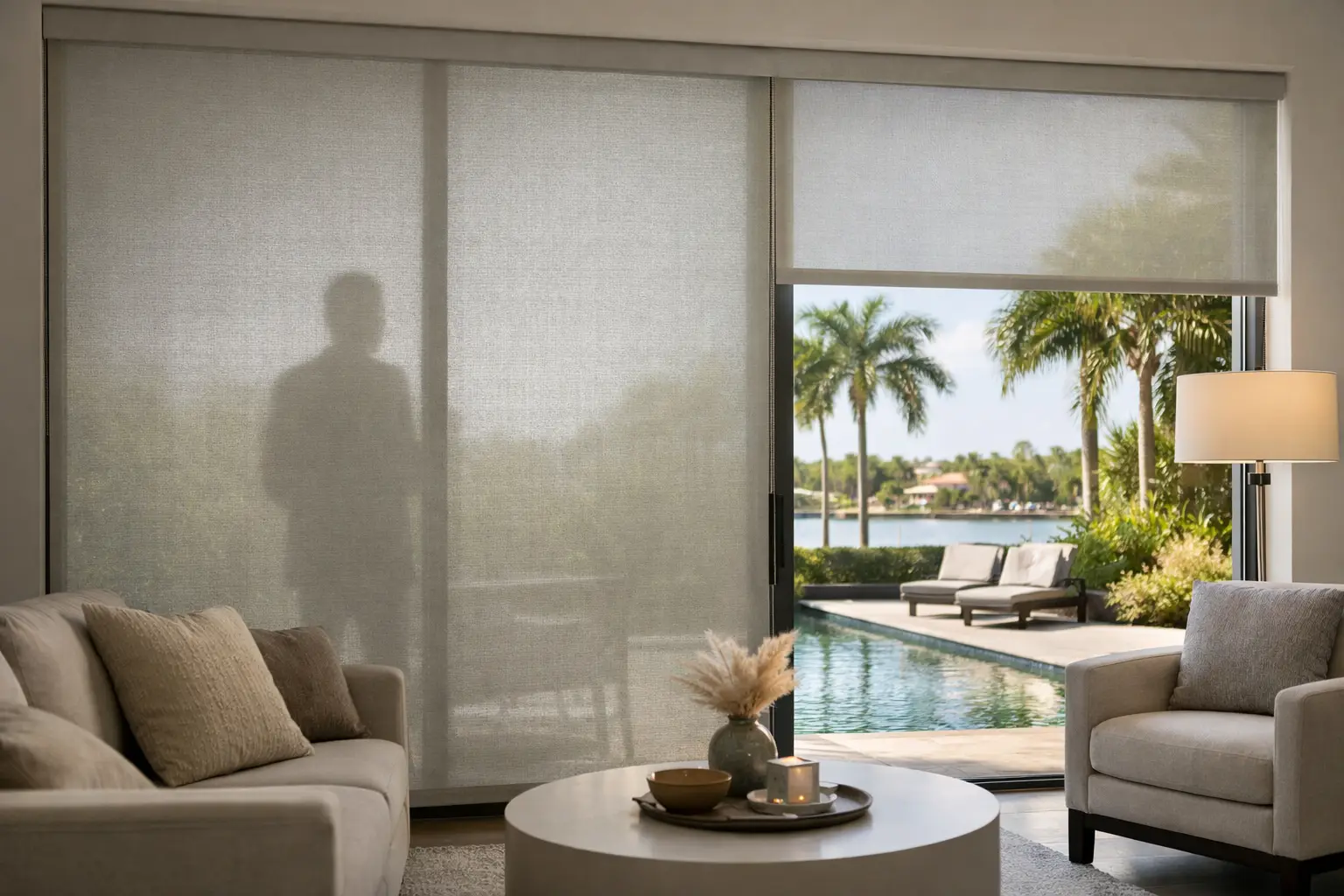
A wall of glass can make a South Florida home feel bright, open, and connected to the view. It can also leave a living room, bedroom, or home office feeling more exposed than expected. So, can solar shades provide privacy? Yes, particularly during the day, but the degree of privacy depends on the fabric, the direction of light, and what happens after sunset.
Solar shades are often chosen for their clean appearance and excellent glare control. They filter intense sunlight while preserving a view outward, which makes them a natural fit for waterfront homes, street-facing rooms, and offices with large windows. Privacy is part of the equation, but it needs to be planned rather than assumed.
Can Solar Shades Provide Privacy During the Day?
During daylight hours, solar shades can provide very effective privacy when the outdoors is brighter than the room inside. The fabric reduces visibility into your home while allowing you to see through it to the landscape, pool area, or street beyond. From outside, the shade typically reads as a subtle screen rather than a clear view into the room.
This one-way effect is why solar shades work especially well in common areas. A family room overlooking a busy sidewalk, a kitchen with afternoon sun, or a home office facing neighboring properties can feel comfortable without closing off the room. You retain natural light and outside visibility while softening the feeling of being on display.
The result is not the same as a solid blackout shade or closed plantation shutters. Shapes, movement, and interior lighting may still be somewhat visible at close range, especially with a more open fabric. Think of a solar shade as a refined light-filtering screen, not an absolute visual barrier.
The Openness Factor Makes the Difference
Every solar shade fabric has an openness factor, expressed as a percentage. It refers to the amount of open space woven into the material. A lower percentage has a tighter weave; a higher percentage has a more open weave and a clearer view through the shade.
A 1% or 3% openness fabric offers greater daytime privacy and stronger glare reduction. It is often a smart choice for rooms that face close neighbors, a golf course path, or a street where people regularly pass by. The outward view will be softer, but the room gains a more protected feel.
A 5% openness fabric offers a balanced approach that many homeowners enjoy in living areas. It admits more daylight and maintains a sharper view, while still limiting daytime visibility from outdoors. Fabrics with higher openness can be appealing when the view is the priority, but they offer less privacy and less protection from intense South Florida sun.
The right choice depends on how close the window is to nearby homes, walkways, or patios. A designer can also account for the view direction, the window size, and whether you need light control on one elevation more than another.
Fabric Color Affects Visibility Too
Color changes how solar shades perform. Darker fabrics generally provide a clearer view outward because they reduce reflected light on the interior-facing side of the shade. They can create a crisp, tailored look and are popular when preserving a view is important.
Lighter fabrics reflect more sunlight and may help a room feel brighter and cooler, but the view through them can appear less defined. They can still offer useful daytime privacy, particularly in tighter openness levels. The best color is not simply light or dark. It should complement the room, manage the sun exposure, and deliver the amount of visual connection you want.
Why Nighttime Privacy Is Different
At night, the lighting relationship reverses. When lamps and interior lights are on, your room becomes brighter than the outdoors. That can make a solar shade more transparent from outside, especially if someone is relatively close to the window.
For this reason, solar shades alone are usually not the best choice for bedrooms, bathrooms, or any space where complete nighttime privacy is essential. They remain valuable for reducing glare and daytime visibility, but they should be paired with another window treatment if after-dark privacy is a priority.
Layering is often the most attractive solution. A solar shade can handle daytime sun, preserve the view, and create a streamlined foundation. Drapery panels can then be drawn in the evening for privacy and added softness. In other rooms, a secondary shade or a room-darkening treatment may be a better fit. The right combination depends on the architecture and how the room is used.
Where Solar Shades Work Best
Solar shades are particularly well suited to spaces where daylight, glare reduction, and an uncluttered appearance matter as much as privacy. They are a strong option for great rooms, kitchens, dining areas, sunrooms, and offices. Motorized solar shades are especially useful on tall windows, wide glass walls, and hard-to-reach areas, allowing the shades to adjust throughout the day as the sun moves.
In an office setting, solar shades can reduce computer-screen glare without making the space feel closed in. For a home with expansive sliding glass doors, they can filter harsh afternoon light while maintaining the view and giving occupants more daytime separation from the outdoors.
They require more careful consideration in street-level bedrooms, homes with closely spaced neighboring windows, and rooms with frequent nighttime use. In those situations, a layered design provides more dependable privacy without sacrificing the benefits of solar fabric.
Details That Improve Privacy and Appearance
Privacy is also affected by how the shades are measured and installed. A custom-fitted shade that covers the glass appropriately and operates smoothly will look more finished than a loosely sized treatment. Depending on the window, an outside mount may provide broader coverage beyond the glass, while an inside mount offers a more built-in appearance.
Side gaps are normal with many roller-style treatments and may matter more on windows that face close neighbors. Fascia options, valances, and carefully selected mounting details can create a polished result while helping the shade integrate with the room’s architecture.
For large openings, consider how individual shade panels will align when lowered. Dividing a wide wall of glass into several coordinated shades may make daily operation easier and give you more flexibility over privacy and sun control. Professional measuring is valuable here because small decisions in placement can have a noticeable effect on both function and appearance.
Choosing Solar Shades for a South Florida Home
South Florida sunlight is beautiful, but it is also intense for much of the year. The ideal solar shade should do more than look good against the window. It should account for heat, glare, UV exposure, view preservation, and the level of privacy needed in that specific room.
Start by considering when you use the space. If you spend most daylight hours in a room with a desirable view, a 3% or 5% solar fabric may be an excellent choice. If the window faces a nearby property or receives strong direct sun, a tighter weave may be more appropriate. If privacy after dark is nonnegotiable, plan for a companion treatment from the beginning rather than trying to make one shade do every job.
Boca Blinds helps homeowners compare fabrics, openness levels, colors, and operating options in the actual light of their homes. With custom recommendations and professional installation, the finished treatment can feel intentional from every angle – inside during the day and outside after sunset.
A well-chosen solar shade lets you enjoy the light that makes your home special while keeping control of when the outside world gets a view in.