

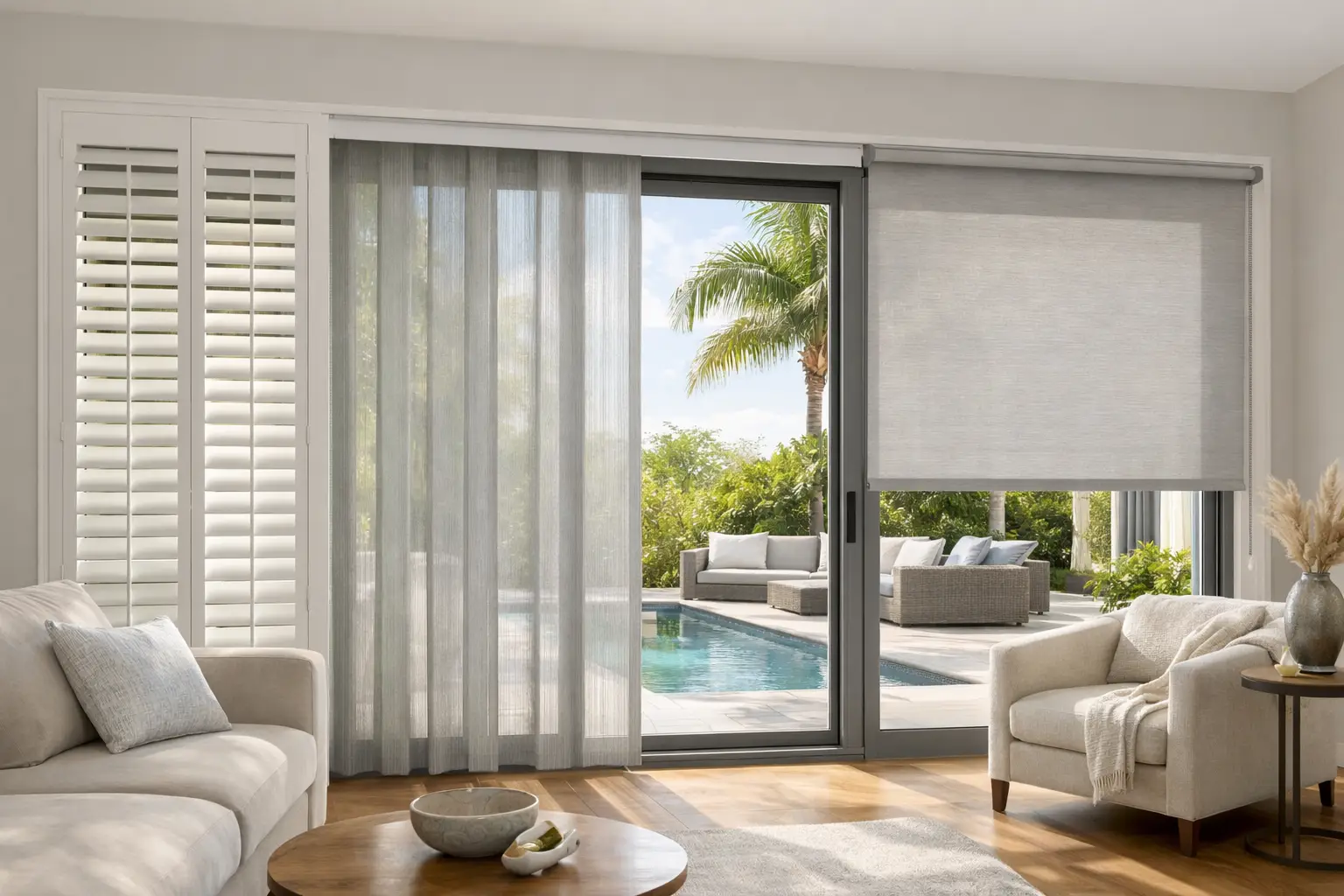
A sliding glass door can make a room feel open and bright right up until the afternoon glare hits, the privacy disappears, or a bulky treatment starts catching every time the door moves. That is why choosing the best window treatments for sliders is less about picking something attractive off a sample board and more about finding the right balance of function, scale, and style.
Sliders are different from standard windows. They are used constantly, they sit close to walkways and furniture, and they often bring in the strongest sun in the house. A treatment that looks beautiful but stacks awkwardly, drags on the floor, or blocks the door handle will quickly become a daily frustration. The best choice is usually the one that fits your routine as well as your décor.
What makes the best window treatments for sliders?
For sliding doors, the first question is not color or pattern. It is how the treatment will operate. Since the door already moves side to side, window treatments that glide horizontally often feel the most natural. Vertical solutions tend to work especially well because they preserve access and can open in a way that mirrors the door.
That said, horizontal shades can also be excellent when they are designed for wide openings. The key is scale. A product that works nicely on a bedroom window may not be the right answer for an expansive patio door in a main living space.
You also want to think about light control throughout the day. In South Florida homes, sun exposure is not a minor detail. Strong sunlight can create glare on screens, fade flooring and furniture, and raise indoor temperatures. Privacy matters too, especially for doors facing a pool area, neighboring yard, or street-side patio.
Vertical shades are often the most practical choice
If a homeowner asks for the most straightforward answer, vertical shades usually rise to the top. They are built for wide openings, they move in the same direction as the door, and they can be adjusted for privacy without fully blocking the view.
Today’s vertical options are far more refined than the stiff vinyl versions many people remember. Fabric verticals, textured panels, and contemporary sheer styles offer a softer, more tailored look. They suit casual family rooms, formal living spaces, and offices alike.
Another advantage is stack. When open, vertical shades can gather neatly to one side, which helps preserve the outdoor view. That matters in homes where the sliding door is a major visual feature. If you have a garden, pool deck, or water view, you do not want the treatment to dominate the opening when it is not in use.
The trade-off is aesthetic preference. Some homeowners want a warmer, more decorative look than a traditional vertical treatment provides. In those cases, drapery, sliding panels, or woven-texture options may be a better fit.
Sliding panel systems for a clean, modern look
Sliding panels are one of the best window treatments for sliders when the goal is a broad, architectural look. Large fabric panels glide on a track and stack tightly when open, creating a clean appearance that works especially well in contemporary homes.
These systems are ideal for wide patio doors because the panel scale feels proportional. Instead of many narrow vanes, you get a few larger sections, which can make the wall feel calmer and more intentional. They are available in light-filtering and room-darkening fabrics, so you can tailor the amount of privacy and sun control.
The main consideration is space planning. Because the panels stack to the side, you want to be sure there is enough wall area for them to park without interfering with furniture, art, or traffic flow. In the right room, though, they offer a polished custom look that feels substantial without being heavy.
Draperies bring softness and flexibility
Custom draperies remain a strong choice for sliding glass doors, especially in living rooms, dining spaces, and primary suites where softness matters. They frame the opening beautifully, add color and texture, and can make a large wall feel finished.
Functionally, draperies can work very well on sliders when they are properly designed. The width, fullness, hardware, and floor clearance all matter. A custom fit prevents common issues like dragging hems, skimpy coverage, or panels that never fully clear the opening.
Draperies are also versatile. Sheer drapery can soften intense daylight while preserving a bright, airy feeling. Lined drapery adds privacy and better light control. In some homes, a layered approach works best, such as decorative side panels paired with a more functional shade behind them.
The downside is that draperies require enough room to stack and enough thought to fabric selection. In a busy family room near a patio, delicate fabrics may not be practical. In a high-humidity coastal setting, material choice matters even more.
Shades for sliders can work beautifully with the right design
Some homeowners prefer shades because they like a simpler profile than drapery or want a coordinated look with nearby windows. Shades can be excellent on sliders, but not every style is equally convenient for frequent use.
Cellular shades are a smart option when energy efficiency and light control are priorities. They help soften heat gain and can give a very clean, tailored appearance. For sliding doors, vertically oriented cellular systems are often more practical than standard up-and-down designs because they are easier to operate across a wide span.
Roller shades can also be effective, especially in rooms where glare reduction is a top concern. Solar fabrics are popular in bright spaces because they filter sunlight and preserve the outside view better than blackout materials. In media rooms, offices, or west-facing living areas, that can make a noticeable difference.
The trade-off with many shade styles is access. A treatment that must be raised fully every time someone uses the door may become inconvenient. For doors opened often throughout the day, side-gliding systems usually feel more user-friendly.
Are shutters the best window treatments for sliders?
Shutters are a favorite for many windows, but sliding doors require a more specialized approach. Plantation shutters can be used on sliders through bypass or bi-fold configurations, and when done properly, they create a beautiful, structured look.
For homeowners who love the timeless appearance of shutters, this can be an attractive solution. They offer strong privacy, excellent light management, and a finished look that complements many South Florida interiors.
Still, shutters are not automatically the best fit for every sliding door. They need adequate clearance, careful measuring, and a layout that works with the door’s traffic pattern. In tighter spaces or rooms where the soft look of fabric is preferred, shades or draperies may be more comfortable choices.
Motorization makes a noticeable difference
For large sliders, motorization is not just a luxury feature. It can make everyday use easier, especially when the treatment is wide, mounted high, or used constantly. With motorized shades or panel systems, opening and closing becomes consistent and effortless.
This matters in homes with tall ceilings, expansive glass, or multiple sliders in one room. It also helps protect the treatment itself because smooth motorized operation reduces tugging and uneven wear. For homeowners who want convenience without sacrificing style, motorization is often worth considering early in the selection process rather than treating it as an add-on.
How to choose the right option for your room
The best choice depends on how the room is used. In a formal sitting area, draperies may offer the right finish. In a bright family room with constant backyard traffic, vertical shades or sliding panels may be more practical. In an office, solar shades might solve glare without making the room feel closed off.
Think about four things at once: how often the door is used, how much privacy you need, how intense the sunlight is, and what style feels right with the rest of the home. That combination usually points you in the right direction faster than looking at product categories in isolation.
Professional measuring also matters more on sliders than many homeowners expect. Wide openings highlight every small mistake. A treatment that is slightly off in width, stack, or hardware placement can affect both appearance and operation. That is where experienced guidance adds real value.
Since 1976, Boca Blinds has helped homeowners choose custom treatments that look right, operate smoothly, and hold up to everyday use. For sliding doors in particular, that one-on-one design and installation support can save a great deal of guesswork.
The right treatment should do more than cover glass. It should make the room more comfortable, work with your daily routine, and feel like it belongs there every time you open the door.