

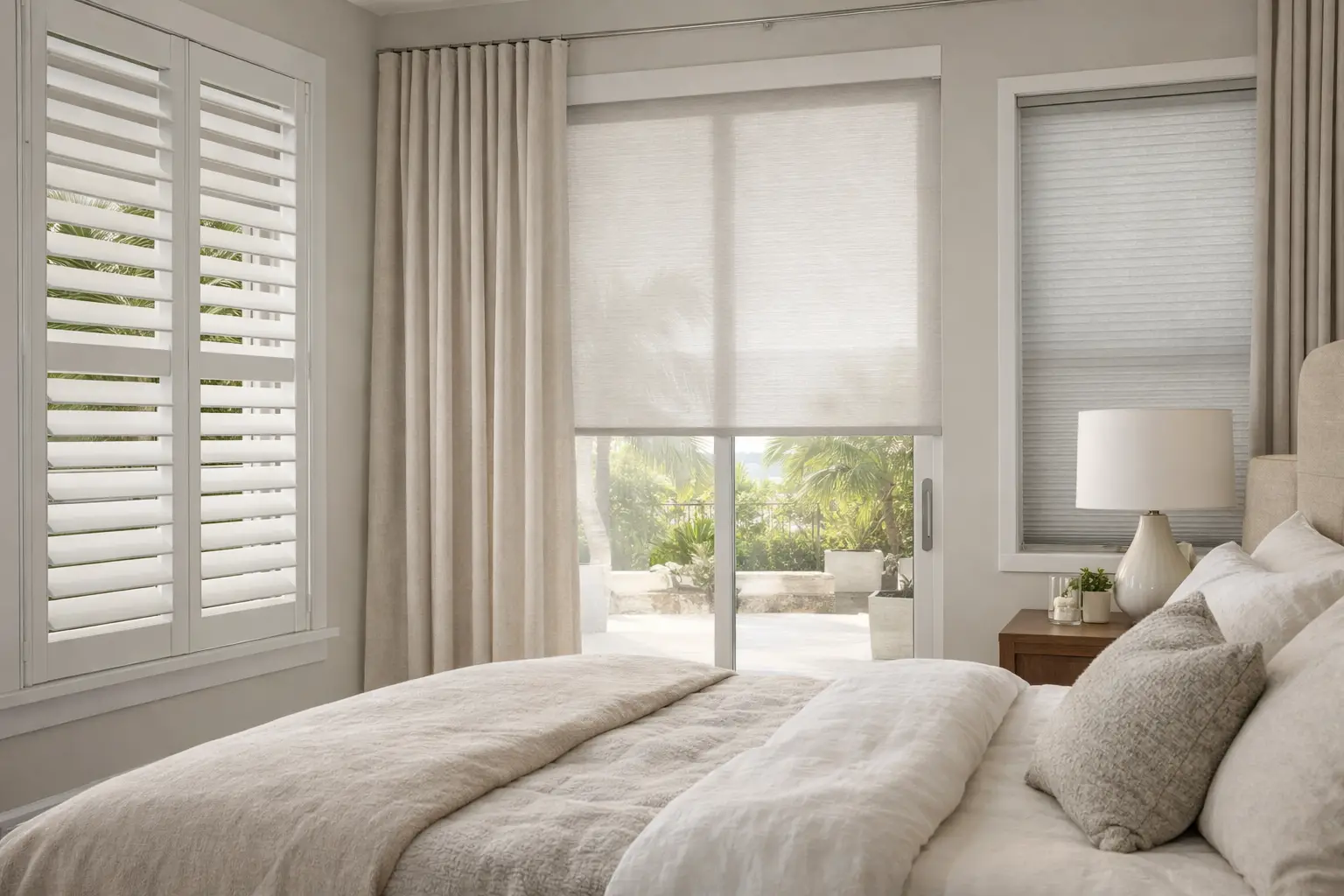
A bedroom can have beautiful furniture, calming colors, and a well-made bed, yet still feel wrong at sunrise if light spills around the windows or neighbors can see inside after dark. The best window treatments for bedrooms solve those everyday comfort issues while becoming a purposeful part of the room’s design. For South Florida homes, they also need to manage intense sun, protect furnishings, and stand up to the expectations of a polished, comfortable home.
The right answer is rarely just one product for every room. A primary bedroom may call for stronger light control and a tailored finish, while a guest room may benefit from a softer, simple treatment. Your window size, exposure, privacy needs, and existing decor all shape the best choice.
What Bedrooms Need From Window Treatments
Bedroom window coverings do more than decorate the glass. They affect how easily you fall asleep, how comfortable the room feels in the afternoon, and whether the space feels private when lights are on at night.
Light control is often the first consideration. A room facing east can receive sharp early-morning sunlight, while west-facing windows may hold heat and glare late into the day. Room-darkening materials can substantially reduce incoming light, but they are not always the same as blackout treatments. Blackout options are designed for the strongest possible light blockage, though some light may still appear at the edges of the treatment depending on the mounting style and window shape.
Privacy matters just as much, especially for bedrooms facing a street, pool area, neighboring home, or balcony. A treatment should give you privacy when you want it without forcing the room to remain dark all day. Adjustable slats, top-down/bottom-up shade configurations, and layered designs can offer that flexibility.
Finally, consider how the window covering contributes to the room’s atmosphere. Bedrooms benefit from materials and colors that feel intentional and restful, whether that means crisp white shutters, textured woven woods, graceful draperies, or clean-lined shades.
Best Window Treatments for Bedrooms by Priority
Blackout and room-darkening shades for sleep
For homeowners who are sensitive to light, blackout shades are among the most practical bedroom choices. They are especially helpful in nurseries, rooms used by shift workers, guest bedrooms, and spaces where exterior lighting or early sun interrupts sleep.
Roller shades offer a streamlined look and can be made with room-darkening or blackout fabrics. Their clean profile works well in contemporary bedrooms, and they can disappear neatly when raised. Cellular shades are another strong choice. Their honeycomb construction adds insulation at the window, helping reduce heat transfer while providing a soft, tailored appearance.
The trade-off is that a single blackout shade may allow a thin halo of light around its sides. For a more enclosed effect, consider an outside-mounted shade that overlaps the window opening or pair the shade with side panels or drapery. A design professional can recommend the mounting approach that best suits the window and desired level of darkness.
Plantation shutters for lasting structure and privacy
Plantation shutters bring architectural presence to a bedroom. Their adjustable louvers make it easy to direct sunlight upward, preserve privacy, and still allow air and filtered daylight into the room. They are a natural fit for coastal, transitional, traditional, and many contemporary South Florida interiors.
For bedrooms, shutters work particularly well when homeowners want a clean, finished look without fabric panels. They are also easy to operate and offer a sense of permanence that can add value to a thoughtfully updated home. Faux wood shutters are a practical choice in humid environments because they offer a refined painted-wood appearance with dependable performance.
Shutters do not create the complete darkness of a dedicated blackout shade, since light can filter between louvers. They are often the best option for homeowners who value adjustable privacy and classic style over total room darkness. In a primary suite, shutters can also be layered with draperies for more control and a more luxurious visual effect.
Draperies for softness, coverage, and custom style
Custom draperies can make a bedroom feel finished in a way few other treatments can. They add softness around hard window lines, introduce color or texture, and can be lined to improve light control and privacy. Full-length panels are particularly effective in rooms with tall windows, sliders, or doors leading to a patio or balcony.
A blackout lining can make drapery a strong choice for sleep-focused bedrooms. The fabric, pleat style, hardware, and fullness can all be selected to complement the room rather than overpower it. Neutral linen-look fabrics create an airy, relaxed setting, while richer materials can add formality and warmth.
Draperies require more visual space than shades or shutters, so they may not be ideal for a narrow room with furniture placed close to the window. They also benefit from professional measuring and installation. Proper placement above and beyond the window frame can make ceilings feel taller and provide better coverage when the panels are closed.
Layered treatments for the most flexibility
Layering is often the best solution when a bedroom needs both daytime beauty and nighttime darkness. A cellular or roller shade can handle daily privacy and sun control, while decorative drapery panels add softness and improve edge coverage. Shutters paired with draperies create a similarly elevated look, combining adjustable louvers with fabric warmth.
This approach is worth considering in primary bedrooms where the window wall is a major design feature. It allows the room to feel open during the day, private at night, and visually complete in every season. The key is choosing materials that work together rather than competing for attention.
Choose for the Window, Not Just the Room
Two bedrooms in the same house may need entirely different treatments. A large picture window overlooking a backyard may call for a shade that preserves the view while managing glare. A bedroom facing a close neighbor may need a top-down/bottom-up cellular shade, allowing daylight through the upper part of the window while keeping the lower area covered.
Sliding glass doors and French doors need careful planning. Vertical drapery panels can be an elegant solution for wide openings, while certain shades and shutters can be configured to maintain access and easy operation. Windows with unusual arches, angles, or deep trim may also benefit from a custom recommendation rather than a one-size-fits-all product.
Before selecting color or fabric, think about how the room is actually used. Do you read in bed during the day? Does a child nap there? Is the bedroom vacant part of the year but exposed to strong afternoon sun? These details determine whether light filtering, room darkening, insulation, privacy, or motorization should lead the decision.
Motorization Makes Bedroom Comfort Easier
Motorized window treatments are especially useful in bedrooms with tall windows, hard-to-reach locations, or multiple coverings that need to operate together. With a remote, wall control, or compatible smart-home controls, you can lower shades before bed and raise them gradually in the morning without crossing the room.
Convenience is only part of the appeal. Motorization encourages consistent use of the treatment, helping manage heat and sun exposure during the day. It is also a clean option for homes seeking fewer visible cords, particularly in children’s rooms.
Not every bedroom needs motorization. A standard manually operated shade or shutter remains an excellent choice for accessible windows and straightforward daily routines. But for a primary suite, a large bank of windows, or a carefully planned smart home, motorized shades can add a level of comfort that quickly feels essential.
Materials and Colors That Work in South Florida Bedrooms
South Florida light is beautiful, but it can be demanding. Choose quality materials designed to handle regular exposure to sunlight, and consider fabrics or finishes that help protect floors, artwork, and upholstery from fading. Solar shades can reduce glare while preserving an outward view, although they generally do not offer the nighttime privacy or darkness most bedrooms require on their own. They are often better as part of a layered design.
Color deserves equal attention. White, ivory, warm gray, and soft natural tones tend to create a calm foundation and coordinate easily with changing bedding or furniture. Woven wood shades bring organic texture, while tailored fabrics can introduce a subtle pattern without making the room busy. In a bedroom, the window treatment should support relaxation, not become a distraction.
Why Custom Measuring and Installation Matter
A bedroom treatment has to look good when it is open, closed, and viewed from outside the room. Precise measuring affects light gaps, privacy, operation, and the proportion of the finished design. Installation also matters with heavy draperies, wide shutters, motorized products, and windows that are not perfectly square.
Boca Blinds has helped South Florida homeowners make these decisions since 1976, with personalized design guidance and professional installation that takes the guesswork out of a highly visible investment. Seeing materials in the home and considering the window’s orientation, trim, furnishings, and daily use leads to a result that feels custom for a reason.
The best bedroom window treatment is the one that lets you wake up to the light you want, close out the light you do not, and enjoy a room that feels private, comfortable, and unmistakably yours.