

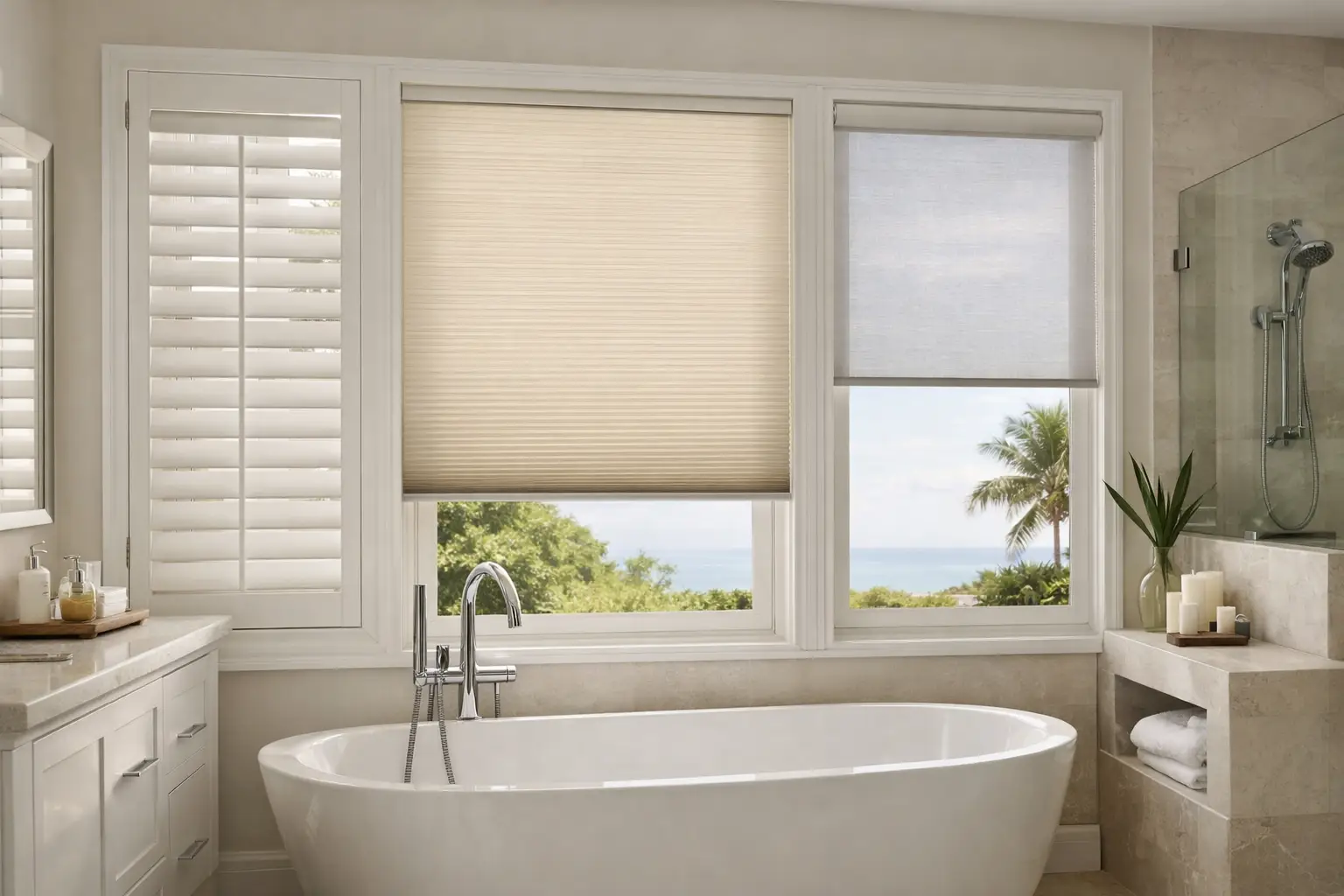
Steam from a morning shower, bright South Florida sun, and the need for complete privacy make bathroom windows different from every other window in the home. The best window shades for bathrooms are not simply attractive. They need to handle moisture gracefully, fit the window precisely, and provide the right level of daytime and nighttime privacy.
For many homeowners, the right choice comes down to the room itself. A spacious primary bath with a large window may call for a refined shade that softens intense light, while a compact guest bath may need a simple, durable treatment that can be raised quickly for ventilation. The materials, opacity, and operating system all matter.
What Bathroom Window Shades Must Handle
A bathroom is a high-humidity environment, even when it has a strong exhaust fan. Window treatments near showers, tubs, or frequently opened windows can be exposed to condensation and splashes. Materials that absorb moisture easily may wrinkle, retain odors, or develop mildew over time.
Privacy is equally essential. A treatment can look opaque during the day yet become more transparent at night when interior lights are on. This is especially relevant for street-facing bathrooms and windows overlooking nearby homes. Before selecting a fabric or weave, consider how it performs under both daylight and evening conditions.
Light control also deserves careful attention. Natural light can make a bathroom feel open and inviting, but unfiltered sun can create glare at the vanity, heat up the room, and fade finishes. In Boca Raton and surrounding communities, a bathroom window treatment should be selected with both daily comfort and long-term sun exposure in mind.
The Best Window Shades for Bathrooms by Need
Roller shades for clean, practical performance
Roller shades are among the most dependable bathroom choices because their simple design has few places for dust and moisture to collect. When made with a moisture-resistant performance fabric or vinyl-based material, they are easy to maintain and well suited to humid spaces.
They also complement a wide range of interiors, from crisp coastal bathrooms to more traditional designs. A roller shade can be specified in a light-filtering material for softened daylight or an opaque material for stronger privacy. For bathrooms that require privacy after dark, an opaque option is generally the more confident choice.
The trade-off is that standard roller shades offer a more tailored, minimal look than a layered or decorative fabric treatment. That simplicity is often exactly what a bathroom needs, particularly around tile, stone, and detailed cabinetry.
Solar shades for filtered light and daytime privacy
Solar shades are designed to manage glare and sunlight while preserving a degree of outward visibility. They can be an excellent solution for a bathroom with a pleasant garden, pool, or water view, especially when direct sun makes the room uncomfortable.
Their openness factor matters. A tighter weave provides more privacy and stronger sun control, while a more open weave preserves a clearer view. Even a tightly woven solar shade should not be treated as a complete nighttime privacy solution. When lights are on indoors, silhouettes may be visible from outside.
Solar shades work best in bathrooms where the window is not directly exposed to neighbors or where another privacy layer is available. They are particularly valuable when glare at a vanity mirror is the larger concern.
Cellular shades for softness and insulation
Cellular, also called honeycomb, shades bring a softer architectural look to bathroom windows. Their structured cells help reduce heat transfer, which can be useful on sunny exposures, and they are available in varying opacities for light filtering or room darkening.
However, fabric cellular shades are best reserved for bathrooms with good ventilation and windows located away from direct shower spray. The cellular construction can hold moisture longer than a smooth roller material, making consistent ventilation and regular care more important. In a well-managed powder room or a larger bath with an exhaust fan and separation from the shower, they can be a beautiful choice.
Top-down/bottom-up operation is especially useful here. It allows natural light to enter from the top of the window while maintaining privacy across the lower portion, where it is most often needed.
Faux wood blinds for adjustable privacy
For homeowners who want more control over direction of light, faux wood blinds are a strong bathroom option. Unlike natural wood, quality faux wood materials are designed to tolerate humidity without the same risk of warping or cracking. Tilting the slats lets you direct sunlight away from the vanity while keeping the room bright.
Faux wood blinds offer a substantial, familiar appearance that works well with painted cabinetry, white tile, and warm neutral finishes. They do require more routine dusting than a smooth shade, since each slat can collect moisture and dust. Still, their durability and precise light adjustment make them a practical favorite for many bathroom layouts.
Plantation shutters for a built-in finish
Composite or moisture-resistant plantation shutters are not shades in the traditional sense, but they are often one of the best bathroom window-covering solutions. Their tailored, built-in appearance adds architectural value, and adjustable louvers offer excellent control over privacy and daylight.
For bathrooms, material selection is critical. A moisture-resistant composite shutter is typically a better fit than natural wood near humidity and water. Shutters are especially effective on wide windows, specialty shapes, and bathrooms where a permanent, polished treatment is preferred over a soft fabric look.
Choose Opacity Based on the Window’s Exposure
The question is not simply whether you need privacy. It is how much privacy you need, when you need it, and from what angle. A high clerestory window may only need glare control. A ground-level window near a walkway usually requires an opaque treatment or adjustable louvers that close fully.
Light-filtering shades are ideal when the window faces a private side yard and the goal is to soften daylight. Room-darkening or opaque shades are better for a bathroom with direct sightlines from neighboring homes. If you enjoy daylight but need flexibility, a top-down/bottom-up cellular shade or adjustable faux wood blind can provide a more tailored answer than a single fixed-opacity treatment.
Remember to assess the view from outdoors at night. This small step prevents one of the most common bathroom window-treatment disappointments.
Details That Make a Bathroom Shade Work Better
Professional measuring matters more in a bathroom than many homeowners expect. Windows near tile, marble, mirrors, and trim often have limited mounting space. An inside-mounted shade can look clean and unobtrusive, but it requires a properly sized, square opening. An outside mount may provide better privacy coverage when the window frame is narrow or uneven.
Cordless operation keeps the look clean and is particularly convenient in smaller bathrooms. Motorized shades can be a thoughtful option for hard-to-reach windows over a soaking tub, behind a vanity, or high on a wall. They also make it easy to adjust light throughout the day without interrupting a morning routine.
Color should support both the bathroom and the light coming through it. White, soft gray, sand, and warm neutrals tend to create a calm, enduring look. A darker shade can provide useful contrast, but it may feel heavier in a small room. Material samples are valuable because a fabric that looks subtle in a showroom can appear very different against bright tile in full afternoon sun.
Materials to Approach Carefully
Natural woven woods, untreated wood blinds, and richly layered fabric treatments can be beautiful elsewhere in the home, but they are usually not the first choice for a busy full bathroom. Humidity can affect natural materials, and detailed fabrics may require more care than the room allows.
That does not mean every bathroom needs a strictly utilitarian treatment. A powder room without a shower has fewer moisture concerns and can accommodate more decorative options. The key is matching the product to the actual conditions of the room rather than choosing solely by appearance.
A well-chosen bathroom shade should feel effortless: private when it needs to be, bright when you want it to be, and suited to the finishes you have invested in. An experienced in-home consultation from Boca Blinds can help you compare materials, opacity levels, and mounting options against your actual window and daily routine, so the finished treatment looks as good years from now as it does on installation day.