

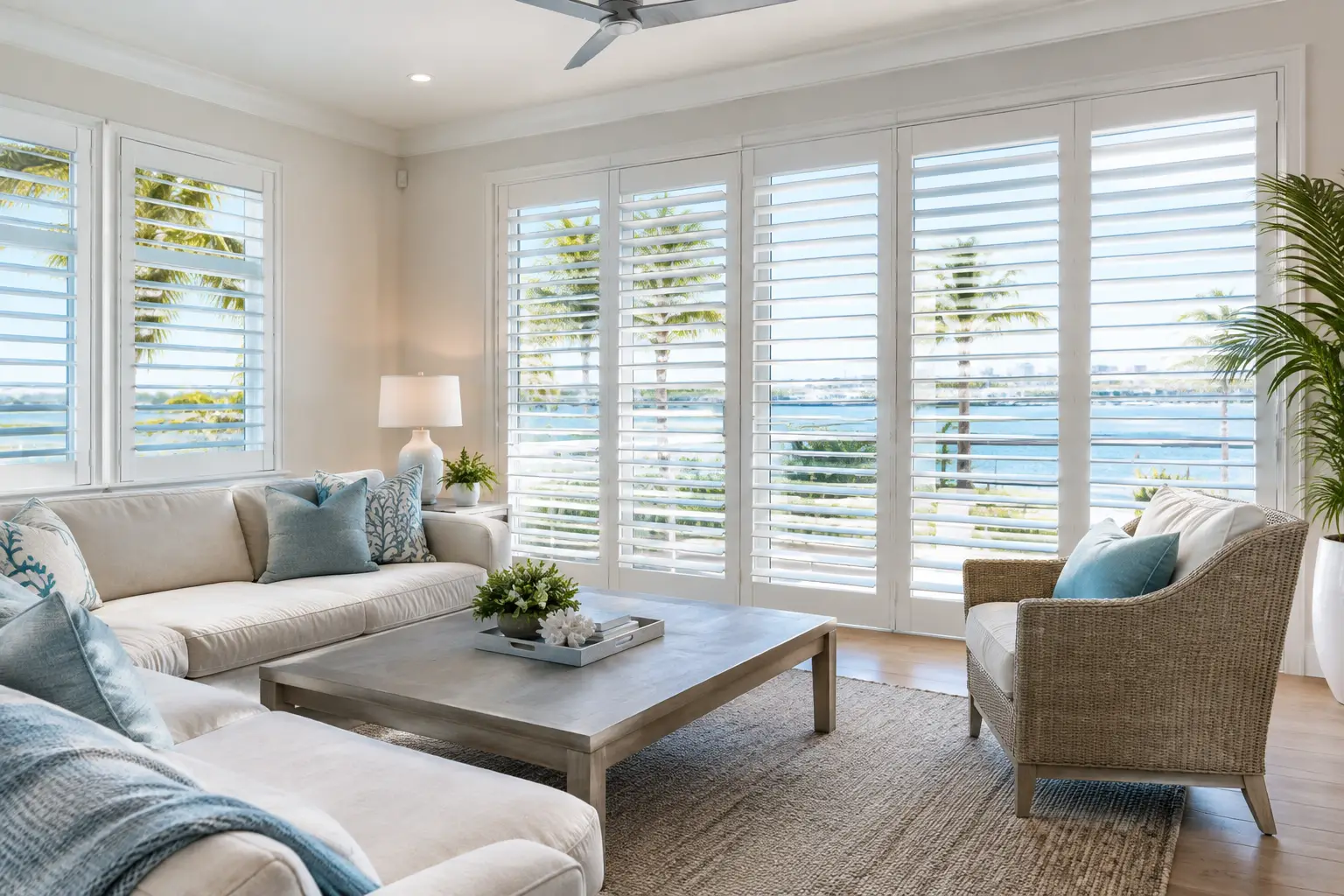
By midafternoon, a beautiful South Florida room can feel very different from the way it did at breakfast. Sun pours through glass, glare catches the television, furnishings receive direct exposure, and privacy can disappear as exterior lights come on. The best South Florida shutters address those daily realities while giving a home a polished, permanent finish.
For many homeowners, interior plantation shutters are the right answer because they offer more than one function. Their adjustable louvers let you direct daylight rather than simply block it, while the solid frame creates a tailored architectural look. The right choice, however, depends on the room, the window, the material, and the level of service behind the installation.
What Makes the Best South Florida Shutters Different
A shutter that looks impressive in a showroom must also perform well in a bright, humid climate. South Florida homes need window treatments that can stand up to intense sun, warm interior conditions, and the constant need to balance light with privacy. Custom shutters are built to the dimensions and features of each window, which makes a visible difference on wide openings, specialty shapes, French doors, and windows with deep trim.
The best results also come from thoughtful proportions. Louver size affects both the look of the shutter and the view when it is open. Larger louvers can create a cleaner, more contemporary appearance and allow a more open sightline. Smaller louvers may better suit a traditional room or a window with divided panes. Neither is automatically better. The home’s architecture, ceiling height, window scale, and furnishings should guide the decision.
A properly measured shutter should sit squarely within the opening, operate smoothly, and leave room for handles, locks, and door movement. These details are easy to overlook when shopping from a sample, but they are central to a finished installation that feels intentional rather than added on.
Interior shutters are not hurricane protection
In South Florida, the word “shutters” can mean two very different products. Plantation shutters are interior window coverings designed for light control, privacy, and style. They are not a replacement for approved hurricane protection. Homeowners should maintain the storm-protection measures appropriate for their property while choosing interior shutters for the comfort and design benefits they bring every day.
Choose a Material That Fits the Room
Material selection has a major effect on appearance, maintenance, and long-term value. The most suitable option is not always the same throughout the house.
Wood shutters for warmth and character
Wood shutters bring natural depth and refined detail to formal living spaces, bedrooms, studies, and other rooms where a classic finish matters. They can be an excellent choice when coordinating with existing millwork, cabinetry, or traditional furnishings. Wood also offers a lighter-weight option for certain larger applications.
Because sun exposure and moisture vary from room to room, an experienced consultation is especially valuable before selecting wood. A carefully chosen finish and appropriate placement help preserve the beauty that makes wood so appealing.
Composite or faux wood shutters for everyday durability
For many South Florida homes, composite or faux wood shutters are a practical favorite. They provide the crisp, substantial appearance homeowners want from plantation shutters while offering dependable performance in spaces exposed to humidity and frequent use. Kitchens, bathrooms, laundry rooms, pool-adjacent areas, and sunny family rooms are common places to consider them.
Their smooth surfaces are also straightforward to maintain. A light dusting or gentle wipe-down is generally enough to keep them looking fresh. For households that want a consistent shutter look across several rooms without treating every room exactly the same, a combination of materials can be worth discussing.
Light Control Is the Real Luxury
Closed shutters provide privacy and reduce direct light, but their strongest feature is their flexibility. Louvers can be tilted to direct daylight upward, helping brighten a room without placing the full force of the sun at eye level. This is particularly useful in living rooms, home offices, and media rooms where glare is a recurring frustration.
In bedrooms, shutters can create a more private, restful environment while still allowing the room to feel airy during the day. In dining areas and entryways, they can soften strong light without hiding the window entirely. The goal is not to darken a South Florida home. It is to make its abundant daylight more comfortable and usable.
Light control also helps protect interiors. Direct sunlight can be hard on flooring, artwork, upholstery, and wood finishes over time. No interior treatment eliminates every effect of sun exposure, but adjustable shutters add a layer of control that is both practical and attractive.
The Best South Florida Shutters Should Suit Each Window
A uniform treatment throughout the home can be elegant, but uniform does not have to mean identical. A bedroom bay window, a set of patio doors, and a tall entry window each have different functional needs.
For standard windows, full-height shutters create a clean, timeless appearance. For tall windows where privacy is needed at street level but upper daylight is welcome, a divided configuration can allow the top and bottom sections to operate independently. This option is often called a café-style or split design, depending on the configuration. It gives homeowners more control without adding a second treatment.
French doors and sliding glass doors require particularly careful planning. The shutter panels must accommodate door handles and open without interfering with traffic flow. In some cases, another custom window covering may be a better choice for a large moving glass opening. A knowledgeable designer should explain those trade-offs honestly rather than force one product into every situation.
Design Details That Keep Shutters Timeless
White and soft neutral shutters remain popular because they work with changing paint colors, furniture, and décor. They can make dark rooms feel brighter and give windows a finished, built-in quality. Yet a white shutter is not the only appropriate choice. Warm tones can complement traditional homes, wood furnishings, and richly colored interiors.
Frame style matters as much as color. A more detailed frame can reinforce classic architecture, while a streamlined frame can suit a coastal or contemporary interior. The tilt mechanism also changes the visual effect. A traditional front tilt bar has familiar charm, while hidden tilt options offer a cleaner, more minimal face.
This is where samples and in-home guidance matter. Color and texture can look different against a home’s walls, flooring, and changing natural light than they do in a showroom. Viewing options in the actual room reduces second-guessing before the order is placed.
Why Professional Measurement and Installation Matter
Shutters are a custom architectural treatment, not an off-the-shelf accessory. Even windows that appear identical can differ slightly in width, depth, or squareness. Accurate measurement determines whether panels align, louvers close properly, and the finished frame looks balanced against the trim.
Professional installation also protects the investment. The installer must account for mounting surfaces, clearance requirements, window cranks, door hardware, and the natural irregularities found in many homes. When the work is done well, shutters feel like they have always belonged there.
Boca Blinds has helped South Florida homeowners select and install custom window treatments since 1976. A personal consultation makes it easier to compare materials, louver sizes, frame details, and operating options in the context of your own rooms. It also provides a clear path from design decision to professional installation.
A Better Way to Select Your Shutters
Start with the problem you want to solve in each room. Is the priority afternoon glare, privacy near a neighboring home, a more finished interior, or protection for furnishings from direct sun? Then consider how often the window is used and whether the area experiences extra moisture or heat.
Bring those priorities to a design consultation, along with photos or ideas for the room. The strongest shutter choice is the one that complements the home, operates easily, and continues to look right after furniture and paint colors evolve. With the right material, custom fit, and experienced installation, shutters can make everyday light feel like one of the best features of your home.