

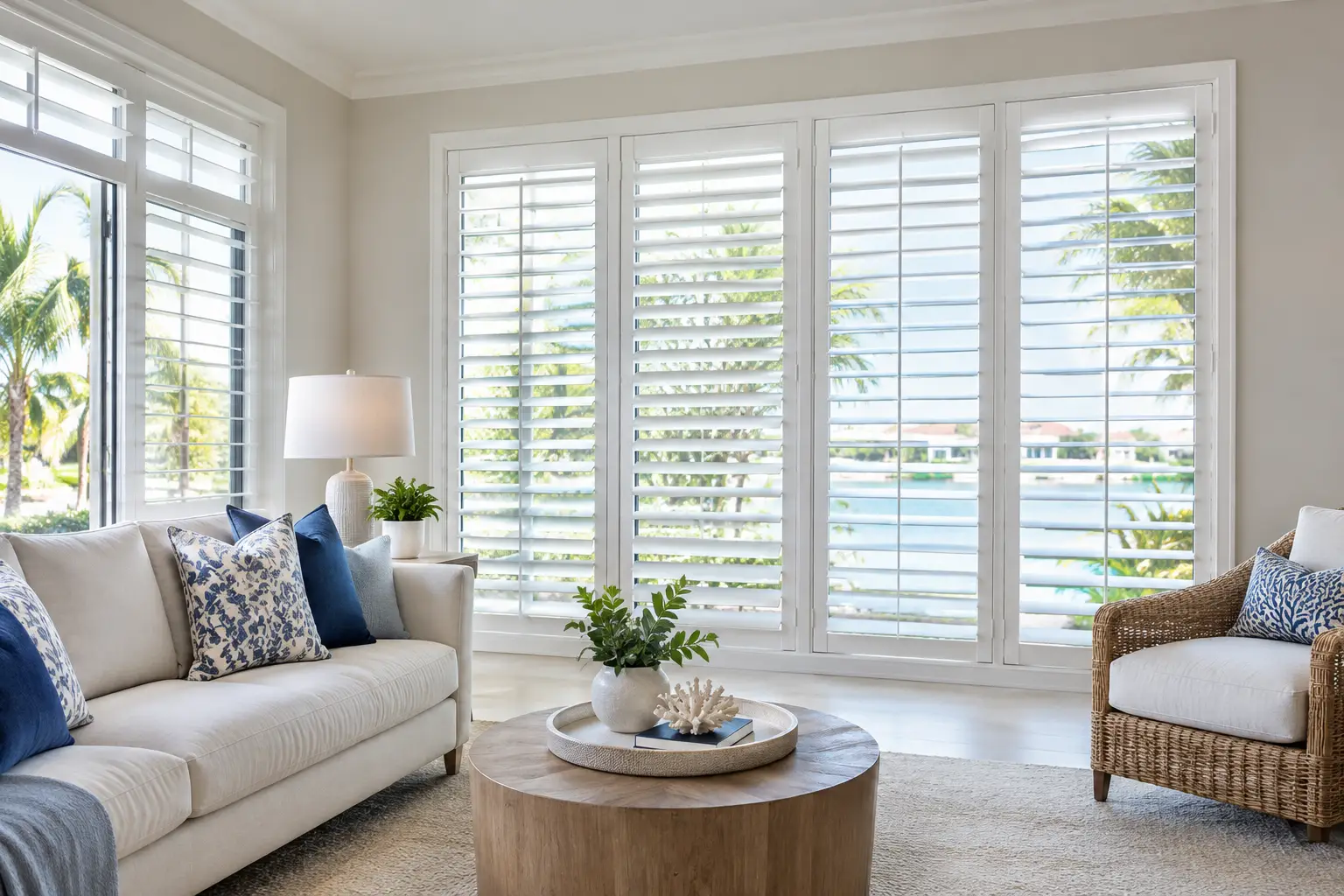
A beautiful shutter can lose its appeal quickly when bathroom steam, coastal air, and year-round humidity begin to affect its finish or operation. In South Florida, choosing the best shutters for humid climates is not simply a design decision. It is a practical investment in privacy, light control, and lasting beauty.
The right shutters should complement your furnishings while standing up to the conditions inside and outside your home. That means looking beyond color and louver size to consider material, room placement, window exposure, and professional installation. For many Boca Raton-area homeowners, the most dependable answer is a custom-made composite or vinyl shutter designed specifically for moisture-prone spaces.
Why Humidity Changes the Shutter Decision
Humidity is part of daily life in South Florida. Even in air-conditioned homes, moisture is common near showers, kitchen sinks, laundry rooms, pool doors, and windows that receive strong sun after rain. Salt air can add another concern for homes near the coast.
Natural wood is a beautiful shutter material, particularly in formal living spaces, bedrooms, offices, and other climate-controlled rooms. But wood is organic. When exposed repeatedly to excess moisture, it can expand, contract, warp, or show finish damage over time. That does not make wood shutters a poor choice everywhere. It simply means they are not always the best fit for every room.
Humidity-resistant shutters are engineered to maintain their shape and smooth operation under conditions that can challenge wood. They also simplify cleaning, which matters in active households and homes with pets, children, frequent guests, or poolside traffic.
The Best Shutters for Humid Climates: Material Matters
When homeowners ask which shutters are best for a humid environment, the answer usually comes down to where the shutters will be installed and the level of moisture they will face.
Composite shutters offer a polished, durable option
Composite shutters are often an excellent choice for humid climates because they are made with engineered materials rather than solid natural wood. Quality composite styles can deliver the substantial, tailored appearance homeowners expect from plantation shutters while offering greater resistance to moisture-related concerns.
They are well suited to bathrooms, kitchens, laundry areas, and sunny rooms where humidity may fluctuate. A durable painted finish creates a clean, refined look that works with coastal, transitional, traditional, and contemporary interiors. White remains especially popular because it brightens a room and coordinates easily with changing décor.
Not every composite shutter is made alike. Construction, finish quality, hardware, and the way panels are fitted all influence long-term performance. This is where an in-home consultation is valuable: the material can be selected for the specific window and room rather than chosen from a one-size-fits-all shelf option.
Vinyl shutters are practical for high-moisture rooms
Vinyl shutters are another smart choice where moisture is a constant concern. They resist water and are easy to wipe clean, making them especially practical for bathrooms, laundry rooms, pool baths, and utility areas.
Their main advantage is resilience. If a room regularly experiences steam or splashing water, vinyl offers peace of mind that wood may not. The trade-off is aesthetic: depending on the product and window size, vinyl may not have the same weight or furniture-like appearance as premium wood or composite shutters. For a smaller bathroom or a casual space, that may be an easy trade-off. For a prominent living area, homeowners may prefer a more substantial composite construction.
Wood shutters still have a place in the right rooms
Wood shutters can be an exceptional choice for dry interior spaces. Their natural warmth, crisp detailing, and lighter weight make them a strong option for larger openings, specialty shapes, and design-forward rooms. In a well-controlled bedroom, dining room, or office, wood can offer a distinguished finish that enhances the entire space.
The key is being realistic about the environment. A wood shutter directly beside a frequently steamy shower or on a window exposed to persistent dampness is more likely to require extra attention. Selecting materials room by room often gives a home the best combination of beauty and durability.
Match the Shutter Material to the Room
A whole-house shutter project does not need to use one material throughout. In fact, thoughtful material selection can make the finished result more functional without sacrificing a consistent look.
Bathrooms are the clearest case for moisture-resistant composite or vinyl shutters. Even a well-ventilated bathroom can experience regular swings in temperature and humidity. Shutters provide adjustable privacy while allowing daylight into a room that can otherwise feel enclosed.
Kitchens also benefit from easy-care materials. Cooking steam, grease residue, and frequent cleaning can take a toll on window coverings. A smooth, durable shutter finish is easier to maintain than many fabric treatments and gives homeowners flexible control over sunlight at the sink or breakfast nook.
For bedrooms, living rooms, and home offices, the decision may depend more on style, window dimensions, and light control. Composite shutters provide a cohesive solution across many rooms, while wood can be considered when its character and lighter weight are especially beneficial.
Look Beyond Material: Construction and Fit Count Too
A moisture-resistant material is only part of the equation. The best shutters for humid climates should also be carefully measured and professionally installed. A custom fit helps panels open and close correctly, louvers tilt smoothly, and frames sit cleanly against the window.
Well-designed shutters give homeowners meaningful control throughout the day. Tilt the louvers upward to bring in daylight while limiting direct glare, close them for privacy in the evening, or adjust them to soften bright South Florida sun without making the room feel dark. Larger louvers can provide a more open view when angled, while smaller louvers create a more traditional appearance and offer detailed light adjustment.
Consider how the window is used as well. A shutter configuration for a window above a tub may differ from one for a sliding glass door, bay window, or wide living-room opening. Panel layout, divider rails, louver size, and mounting approach should support the way you live in the space.
Color and Style Should Work With South Florida Light
South Florida light is bright, clear, and often intense. Shutters need to look good not only under interior lighting but also in full afternoon sun. White and soft neutral finishes remain enduring choices because they reflect light, complement a broad range of wall colors, and feel appropriate in both coastal and classic interiors.
For a warmer, more dramatic room, wood shutters or deeper painted finishes may be the better design direction. The goal is to choose a finish that supports the home’s architecture and furnishings rather than following a trend that may feel dated quickly.
A professional design consultation can also help resolve details that are difficult to judge from a small sample. The scale of the window, trim color, flooring, ceiling height, and nearby furnishings all affect whether a shutter will feel appropriately tailored once installed.
Care Tips for Long-Lasting Humidity-Resistant Shutters
Even durable shutters perform best with simple, regular care. Dust louvers with a soft cloth or brush attachment, and wipe composite or vinyl surfaces with a lightly damp cloth as needed. Avoid harsh abrasives that may dull the finish.
In bathrooms, use the exhaust fan during and after showers to reduce lingering steam. If condensation appears on the window or shutters, dry it promptly. These habits protect the window area as a whole, including the frame, sill, and surrounding wall surfaces.
For wood shutters in drier rooms, use only cleaning methods appropriate for the finish and avoid saturating the surface. If a shutter begins to stick, sag, or operate unevenly, having it assessed early can prevent a minor adjustment from becoming a larger issue.
Choose Shutters With Local Guidance
There is no single shutter material that is perfect for every window in every South Florida home. Composite shutters are often the strongest all-around choice for humid spaces, vinyl performs well in high-moisture rooms, and wood remains a refined option where the environment is controlled. The best selection depends on the room, exposure, style preferences, and how you want the shutters to function every day.
Boca Blinds has helped homeowners create custom window treatment solutions since 1976, with experienced design guidance and professional installation tailored to each home. A personal consultation can help you compare shutter materials in the actual rooms where they will be used, so your finished windows look as good years from now as they do on installation day.
For humid-climate shutters, choosing thoughtfully at the beginning means you can enjoy the privacy, light control, and polished character of shutters without worrying that everyday moisture will compromise the result.