

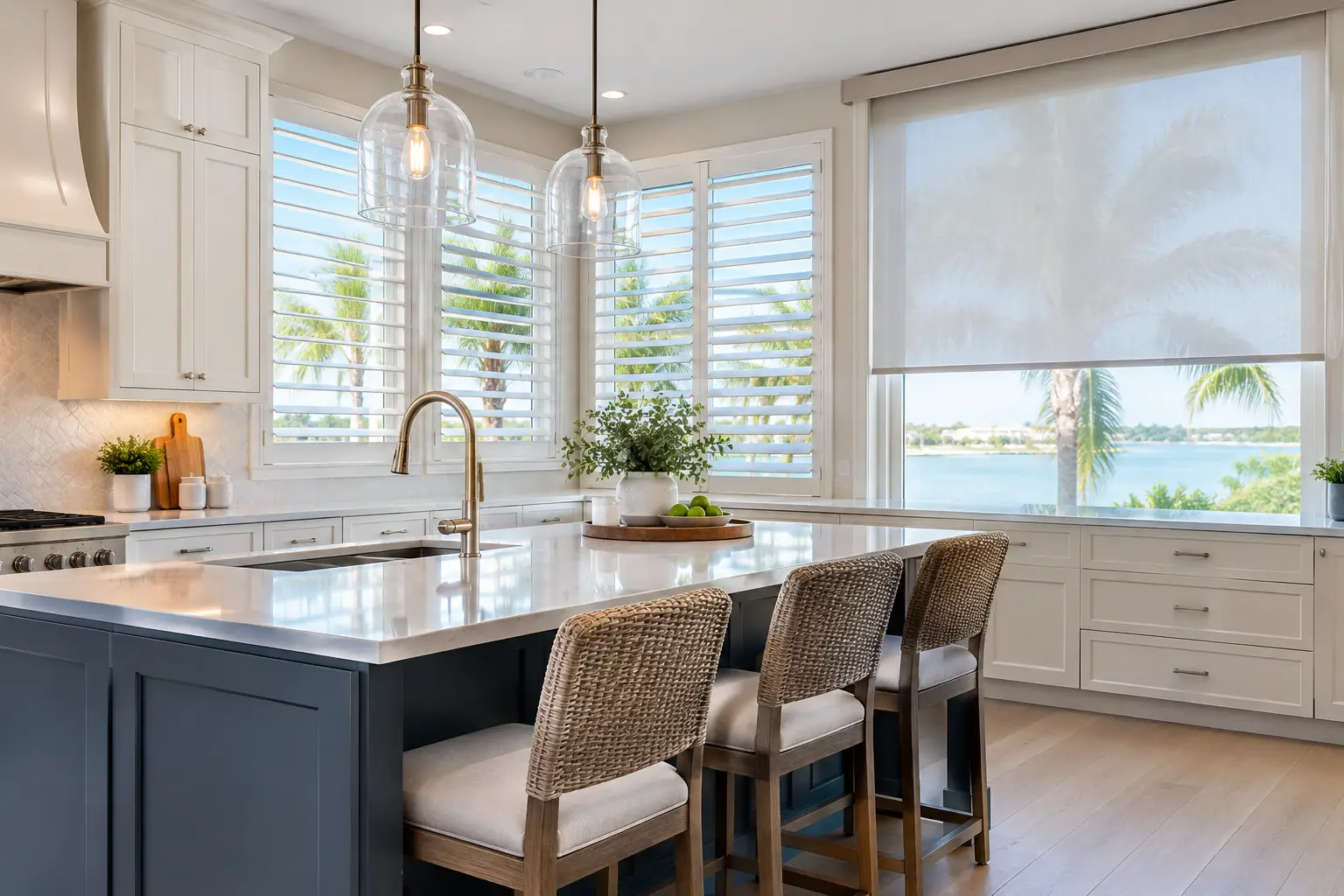
The best kitchen window treatments do more than finish a room. In a South Florida kitchen, they need to soften intense sunlight, reduce glare on countertops, provide privacy without making the space feel closed in, and stand up to moisture, cooking residue, and everyday activity. The right choice should look tailored to the home while making mornings, meal prep, and entertaining more comfortable.
A kitchen window is rarely just decorative. It may sit above the sink, face a neighboring property, frame a breakfast nook, or receive direct afternoon sun. That is why the most successful treatment starts with how the window functions, not simply which color looks best.
What Makes a Kitchen Window Treatment Work
Kitchens ask more from window coverings than many other rooms. Steam, humidity, splatters, and frequent handling can make delicate fabrics or hard-to-clean materials less practical near the sink or range. At the same time, bare glass can create uncomfortable heat and glare, particularly in homes with expansive windows or western exposure.
The best option balances four priorities: light control, privacy, cleanability, and design. A treatment that blocks every ray of sun may make a bright kitchen feel dim. One that preserves an open view may not offer enough privacy at night. Custom guidance matters because the answer depends on the window’s placement, the direction it faces, and how the kitchen is used.
For many Boca Raton-area homeowners, UV management is another consideration. Strong sun can fade cabinetry, flooring, upholstered seating, and artwork in adjacent living areas. Window treatments can help moderate that exposure while maintaining the light-filled feeling people value in South Florida homes.
The Best Kitchen Window Treatments by Need
Plantation shutters for lasting structure and control
Plantation shutters are a natural fit for kitchens that call for a clean, architectural finish. Their adjustable louvers allow homeowners to direct light upward, reduce glare, or increase privacy without fully covering the window. They are especially effective on windows above a breakfast table or along a sunny wall where daylight is welcome but needs to be managed.
Faux wood shutters are often a practical choice in kitchens because they handle humidity well and wipe clean easily. They also pair beautifully with coastal, transitional, traditional, and contemporary interiors, depending on the louver size and finish. Real wood may be appropriate farther from moisture, but material selection should reflect the window’s location.
The trade-off is that shutters have a more permanent visual presence than a soft shade. They work best when you want the window treatment to feel like part of the home’s millwork rather than a subtle background detail.
Roller and solar shades for glare and view preservation
Roller shades offer a streamlined answer for kitchens with large glass areas, modern cabinetry, or a beautiful outdoor view. When raised, they nearly disappear. When lowered, they provide broad, even coverage without the visual weight of drapery.
Solar shades are particularly well suited to sun-facing kitchens. Their specialized fabrics filter harsh light and help cut glare while preserving an outward view during the day. Openness level matters: a more open weave maintains a clearer view, while a tighter weave provides greater privacy and sun control. In the evening, most solar shades need a secondary privacy solution if the window is visible from outside.
Roller shades are also available in more private, opaque fabrics. This makes them a strong choice for a window directly facing a neighbor or for homeowners who prefer a clean, uncluttered appearance. Selecting a fabric with a moisture-resistant, easy-care surface helps keep the treatment looking polished over time.
Woven wood shades for warmth and texture
A kitchen filled with white cabinetry, stone counters, and clean-lined finishes can sometimes benefit from a natural counterpoint. Woven wood shades bring texture, warmth, and an inviting custom look without overwhelming the room. They are a favorite for kitchens with coastal, casual luxury, organic modern, or relaxed transitional design.
These shades filter light beautifully, but their construction creates small natural variations in color and weave. That character is part of their appeal, though it is not ideal for every setting. If nighttime privacy is important, a privacy liner can be added. If the shade will be located directly over a sink or next to a cooking surface, discuss whether a different material may be easier to maintain.
Cellular shades for comfort and insulation
Cellular, also called honeycomb, shades are designed with air pockets that can help insulate the window. This is useful in kitchens that become noticeably warm from direct sun or in rooms where the kitchen opens to a family room and comfort is a concern throughout the day.
Their soft, tailored profile works well in contemporary and traditional spaces alike. They can be specified in light-filtering or room-darkening fabrics, depending on the level of sun and privacy required. For a kitchen, choose a durable fabric and consider a top-down/bottom-up configuration when you want daylight at the top of the window while maintaining privacy below.
Faux wood blinds for flexible everyday use
Faux wood blinds remain a dependable kitchen choice because they offer adjustable light control and an easy-to-clean surface. Tilt the slats to direct sun away from work areas, lift the blind for an open view, or close it for privacy. Their familiar look makes them especially adaptable in family kitchens and rental properties where durability is a priority.
Custom sizing and professional installation make a noticeable difference with blinds. A properly fitted blind hangs evenly, operates smoothly, and clears handles, faucets, and trim. Wider slats can create a more updated, shutter-like appearance while still keeping the practical flexibility of a blind.
Consider the Window Location Before Choosing
The window above the sink is often the kitchen’s focal point, but it also presents special challenges. A treatment there should be easy to raise, lower, and clean. Roller shades, faux wood blinds, and moisture-tolerant shutters are usually strong candidates. Long fabric panels are generally better reserved for a breakfast nook or a nearby patio door, where they are less likely to encounter splashes and food preparation.
For a breakfast area, the decision can be more decorative. Woven wood shades can add softness and texture, while cellular shades provide comfort in a sunny corner. If the window is large or the view is a key feature, solar shades may offer the right balance of glare reduction and visibility.
Windows near a range deserve extra care. Grease and heat can affect any window treatment over time, so a simple, wipeable material is typically the wisest choice. Placement, clearance, and safe operation should be reviewed during the design process.
Motorization Adds Convenience Where It Counts
Motorized shades are especially helpful for hard-to-reach kitchen windows, high transoms, and wide expanses of glass. With a remote, wall control, or compatible smart-home setup, homeowners can adjust light without interrupting cooking or climbing onto a chair to reach a shade.
Automation also supports consistent sun management. A shade can be lowered during the brightest part of the afternoon and raised later to restore the view. This is a thoughtful upgrade for homes where the kitchen receives intense daily sun, though a simple manual treatment may be all that is needed for a small, easily accessible window.
Choosing Color, Pattern, and Scale
Kitchen window treatments should coordinate with the room without competing with its fixed finishes. Cabinet color, countertop movement, backsplash pattern, hardware, and flooring all influence what will feel balanced. In a kitchen with dramatic stone or a patterned tile backsplash, a quiet neutral shade or crisp white shutter often gives the room room to breathe.
If the kitchen is mostly neutral, woven textures or a carefully selected fabric can introduce dimension. Soft whites, warm beiges, natural wood tones, and muted coastal colors tend to age gracefully. A custom consultation can also help determine whether the treatment should blend into the trim or provide a subtle contrast that frames the window.
Scale matters as much as color. Oversized windows may call for treatments that visually simplify the expanse, while small windows benefit from minimal hardware and clean lines. The goal is not to hide the window but to make it feel intentional.
Why Custom Measuring and Installation Matter
Kitchen windows are often surrounded by cabinets, tile, trim, faucets, or architectural details that leave little room for error. A made-to-measure treatment accounts for those conditions and creates a cleaner fit than an off-the-shelf solution. It also helps ensure that the covering opens and closes without interfering with nearby features.
Professional installation is equally valuable for treatments that need exact mounting, multiple shades aligned across a wall, or motorization. Boca Blinds has served South Florida homeowners since 1976 with personalized guidance, custom window coverings, and professional installation designed around the home and the way it is lived in.
The best kitchen window treatment is the one that makes the room easier to enjoy every day. A thoughtful in-home consultation can turn a bright, exposed, or unfinished window into a feature that feels beautiful, practical, and right at home.