

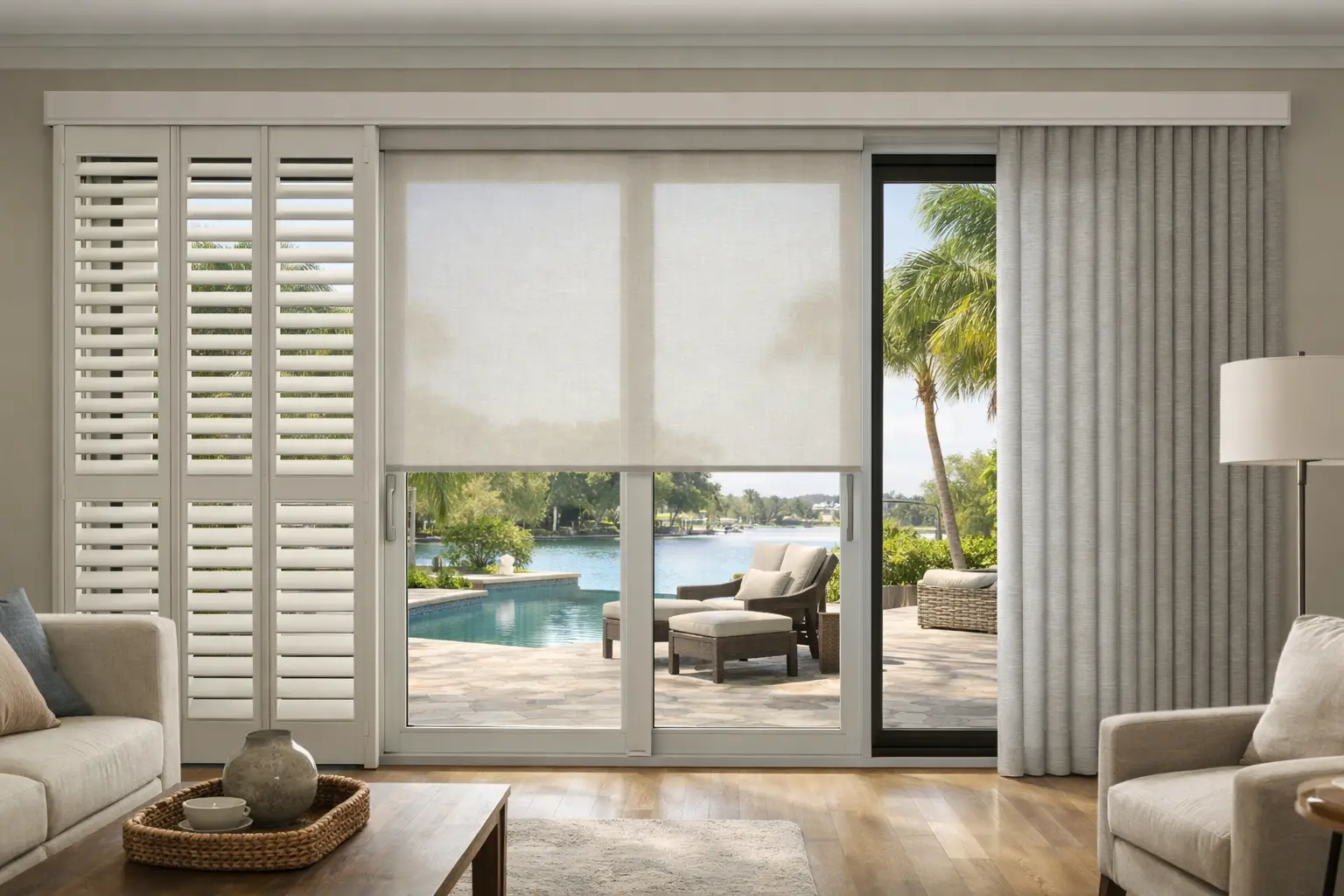
A sliding glass door can be one of the best features in a home – until the afternoon sun hits, the room feels exposed at night, or the covering never quite moves the way it should. Choosing the right blinds for sliding doors is less about picking something that fits the opening and more about finding a solution that works well every single day.
That matters even more in South Florida homes, where large glass doors bring in beautiful light but also heat, glare, and strong UV exposure. The right window treatment needs to look polished, protect interiors, and move easily without becoming a daily annoyance.
What makes blinds for sliding doors different
Sliding doors ask more of a window treatment than a standard window does. The span is wider, the panels are used more often, and the treatment has to allow access without feeling bulky or awkward. A product that looks attractive in a showroom can feel frustrating fast if it catches, stacks poorly, or blocks the walkway.
This is why scale, operation, and layout matter so much. Some homeowners want the treatment to part neatly from the center. Others need it to stack to one side so the main traffic panel stays clear. If the door opens to a patio or pool area, durability and easy operation become just as important as style.
Best options for blinds for sliding doors
There is no single best answer for every home. The right choice depends on how much light you want, how often the door is used, and the look you want in the room.
Vertical blinds
Vertical blinds remain a practical choice for sliding doors because they are designed for wide openings and side-to-side operation. They can provide strong light control, good privacy, and easy access when you need to open the door. Modern vertical blinds also look far more refined than many people expect, with better fabrics, cleaner lines, and more attractive vane styles than older versions.
They are especially useful when function comes first. If you want a covering that handles everyday use well and can be adjusted quickly throughout the day, vertical blinds are often a smart fit. The trade-off is aesthetic preference. Some homeowners still associate them with dated office interiors, so material and color selection matter.
Panel track blinds
For a more contemporary look, panel track systems are often one of the strongest choices. These wide fabric panels glide smoothly across the opening and stack more cleanly than many traditional options. They suit modern interiors, large expanses of glass, and homes where a simpler, more architectural look is preferred.
Panel track blinds work especially well when you want the door treatment to feel intentional rather than purely functional. They can soften a room while still keeping lines clean. The main consideration is stack space. Because the panels are wider, they need room to gather when open.
Vertical cellular shades
If energy efficiency and softness are high priorities, vertical cellular shades deserve a close look. These shades offer a more tailored appearance than standard vertical blinds and help insulate large glass areas more effectively. In rooms with strong sun exposure, that can make a real difference in comfort.
They also tend to provide a quieter, more finished appearance. For bedrooms, sitting rooms, and primary living spaces, that extra softness can be worth it. The trade-off is that some fabrics may require a bit more care than hard-surface blinds, especially in busy households.
Sheer vertical shadings
Some homeowners want privacy and light control without losing the airy quality of the glass door. Sheer vertical shadings can do that beautifully. They filter light in a softer way and create a more elegant finish than standard utilitarian blinds.
This option is often a good match for formal living rooms, well-designed family spaces, or homes where the window treatment is expected to contribute as much to the decor as to function. They are not always the first choice for the highest-traffic doors, but in the right setting they bring a polished result that feels distinctly upscale.
How to choose the right style for your room
The best selection starts with how the room is used. In a family room or kitchen area where the sliding door opens constantly, smooth operation and durability tend to lead the decision. In a dining room or formal space, appearance may carry more weight.
Privacy is another major factor. If neighboring homes are close by, you may want a treatment that closes fully and blocks sight lines clearly at night. If the door faces a private backyard, filtering light may be more important than total privacy. That is where fabrics, vane opacity, and layering options can change the outcome.
It also helps to think about the rest of the windows in the room. Sliding door treatments should coordinate with nearby shades, shutters, or blinds rather than look like an afterthought. Sometimes the best design is a matching product family. Other times, it makes more sense to complement nearby treatments while giving the door its own solution for access and scale.
Light control, glare, and UV protection
Large glass doors bring in natural light, but that benefit can quickly turn into glare on floors, screens, and furniture. In sunny climates, this is often one of the biggest reasons homeowners replace outdated coverings. Good blinds for sliding doors should help you manage brightness without forcing you to keep the room dark all day.
This is where material choice matters. Solar-oriented fabrics can reduce glare while preserving some view. Room-darkening materials offer stronger privacy and light blockage. Neutral and light-filtering fabrics can soften harsh sun while keeping the space bright.
There is always a balance. The more open the fabric, the more view you keep during the day, but the less privacy you may have at night. The more opaque the material, the more privacy and sun protection you gain, but the more you limit visibility. A professional consultation can help narrow that down based on the direction of the light and how the room is actually used.
Motorization and everyday convenience
For wide openings, motorization can be more than a luxury. It can make a large treatment noticeably easier to live with. If a door treatment is heavy, frequently used, or located in a high-ceiling space, motorized operation adds convenience and can help the product function more consistently over time.
It is also helpful for homeowners who want a cleaner look with fewer cords or wand controls. In homes with children or pets, that can be an added benefit. Still, motorization is not automatically necessary. For some rooms, a well-made manual system works perfectly well and keeps the project more budget-conscious.
Why custom fit matters on sliding doors
Sliding doors are rarely as simple as they appear. Mounting depth, handle clearance, wall space, floor conditions, and nearby windows all affect what will work best. A treatment that is slightly off in width, stack, or projection can interfere with the door itself or make the whole installation feel less finished.
That is why custom measuring and professional installation are so valuable here. A properly fitted treatment will glide more smoothly, hang more evenly, and look proportionate to the opening. It should also account for the way the door is used, including which panel opens most often and how much clearance is needed.
For homeowners investing in a long-term upgrade, this is one area where guesswork usually costs more than it saves. Boca Blinds has worked with South Florida homes since 1976, and sliding glass doors are exactly the kind of feature where experienced guidance makes the process easier and the final result better.
A better result starts with the right questions
Before choosing blinds for sliding doors, it helps to ask a few practical questions. Do you want the treatment to disappear neatly when open, or become part of the room’s design? Is glare your main issue, or privacy? Do you need something easy to clean, or something that adds softness and texture?
Those answers shape the best option far more than trends do. A beautiful treatment that slows down traffic to the patio will not feel beautiful for long. On the other hand, a purely functional choice may solve the sun problem but fall short in a room where style matters.
The most successful sliding door treatments do both. They handle light, privacy, and daily movement gracefully while still making the room feel finished. When that balance is right, the door becomes one of the strongest features in the space instead of the hardest one to cover.
If your sliding doors are due for an upgrade, it is worth taking the time to see materials in person, compare operating systems, and choose a custom solution built for the way you live. The right treatment should feel easy from the first glide to the final look.