

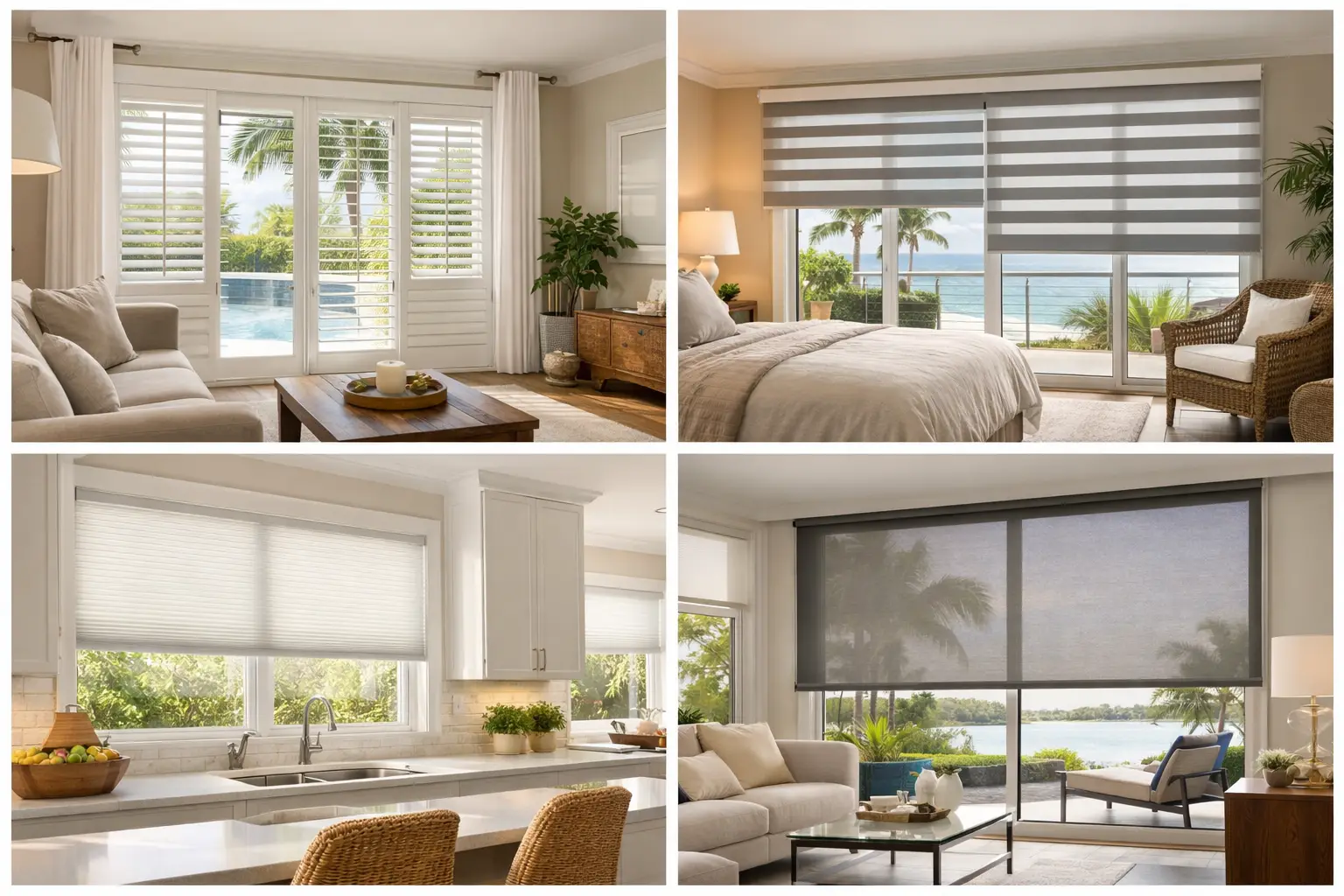
A bright South Florida home is a luxury until the afternoon sun turns a favorite room into a glare-filled, overheated space. The best blinds for Florida sun do more than look polished at the window. They help manage intense light, protect furnishings from UV exposure, preserve privacy, and make daily living more comfortable without closing off the view.
The right choice depends on the room, the direction of the windows, how much privacy is needed, and whether preserving a water, garden, or golf-course view matters most. A treatment that works beautifully in a softly lit bedroom may not provide enough solar control for a west-facing great room. That is why custom guidance and proper installation make such a difference.
What Florida Sun Demands From Window Treatments
Florida sunshine brings a distinct set of challenges. Long days of strong direct light can fade hardwood floors, artwork, upholstery, and area rugs. Large glass doors and expansive windows can also create uncomfortable heat gain, particularly in rooms facing south or west. Then there is glare – the kind that makes it hard to read, work at a computer, or watch television in the middle of the day.
A well-chosen blind or shade should address those concerns while still complementing the architecture and furnishings of the home. For many homeowners in Boca Raton, Delray Beach, and nearby communities, the goal is not to make a room dark. It is to soften the light, maintain a refined appearance, and keep the space usable from morning through evening.
The Best Blinds for Florida Sun by Need
Solar shades for view and glare control
Solar shades are often an excellent answer for rooms with wide windows, sliding glass doors, or views worth keeping. Their specialized fabric filters sunlight and helps reduce glare while allowing a degree of outward visibility during the day. They are particularly well suited to living rooms, home offices, kitchens, and condominium spaces with broad exposures.
The key decision is fabric openness. A more open weave generally preserves a clearer view but filters less light. A tighter weave offers stronger glare and UV control, though the view becomes more subdued. Color matters as well: darker fabrics can provide better outward visibility in daylight, while lighter fabrics create a softer, brighter look from inside.
Solar shades are not the best choice when nighttime privacy is the priority. After dark, interior lights can make a room more visible from outside. In bedrooms or street-facing spaces, they may work best when paired with drapery panels or another privacy layer.
Cellular shades for heat and energy efficiency
Cellular shades, also called honeycomb shades, are one of the most practical choices for Florida homes concerned with heat at the glass. Their structured pockets trap air, adding an insulating layer between the window and the room. That can make a noticeable difference near sunny windows and doors where the heat is most apparent.
They are available in light-filtering and room-darkening fabrics, making them versatile for bedrooms, media rooms, and private living areas. Top-down/bottom-up operation is especially useful where homeowners want daylight from above while maintaining privacy at eye level.
The trade-off is visual. Cellular shades have a clean, tailored look, but they do not offer the adjustable slat control of blinds or the outward view of a solar shade. For a minimalist interior or a room where comfort comes before view preservation, that trade-off is often worthwhile.
Faux wood blinds for adjustable light control
Faux wood blinds remain a smart, durable option for South Florida interiors. Unlike natural wood, faux wood materials are well suited to humid conditions and are easy to maintain. Their adjustable slats give homeowners precise control over incoming light: tilt them upward to soften direct sun, angle them for privacy, or raise them when a full view is desired.
They work especially well in kitchens, bathrooms, casual dining areas, and family rooms where a classic blind profile fits the design. Wider slats can create a more substantial, shutter-inspired appearance, while the range of finishes makes it possible to coordinate with trim, cabinetry, and flooring.
For extremely large windows, faux wood blinds can become visually heavy or more difficult to operate than a shade. Custom sizing and professional installation are important for ensuring that the treatment hangs correctly and functions smoothly over time.
Plantation shutters for lasting structure and style
Plantation shutters are a strong choice when homeowners want permanent architectural presence along with dependable light control. Their louvers can be adjusted throughout the day, allowing light to enter while directing harsh rays away from seating areas and screens. When closed, shutters provide excellent privacy and a finished, built-in look.
They are particularly effective in bedrooms, formal living rooms, bathrooms, and street-facing windows. Quality shutters also suit the clean lines and indoor-outdoor character common in South Florida homes. For windows with arches, specialty shapes, or unique dimensions, custom fabrication helps maintain a cohesive appearance.
Shutters are a more substantial design commitment than a roller or cellular shade. They remain visible at the window even when fully open, so they are best for homeowners who want that tailored, architectural style rather than a treatment that disappears completely.
Roller shades for a clean, contemporary finish
Roller shades offer a streamlined profile that complements modern, coastal, and transitional interiors. Depending on the fabric selected, they can provide light filtering, privacy, room darkening, or enhanced solar control. When raised, they roll neatly into a compact headrail, leaving the window largely unobstructed.
For rooms with direct afternoon exposure, a solar roller shade can be especially effective. For bedrooms, a room-darkening roller shade may be the better fit. Motorization adds convenience for tall windows, hard-to-reach areas, and banks of glass where adjusting several shades by hand is impractical.
Not every roller shade fabric behaves the same way in bright light. The opacity, color, and backing determine how much glare, heat, and visibility the shade will manage. Viewing full-size samples in the actual room is more reliable than choosing from a small swatch alone.
Match the Treatment to Window Direction
Window direction should guide the selection as much as the room’s decor. West-facing windows usually require the strongest glare and heat control because of the low, intense afternoon sun. Solar shades, cellular shades, and shutters are often effective choices here.
South-facing windows receive prolonged daylight, which can be beautiful but can also cause steady UV exposure. Adjustable blinds or shutters allow homeowners to redirect light during the day, while solar shades offer a softer, consistent filter. East-facing windows tend to need morning glare control, especially in bedrooms and breakfast areas. A light-filtering shade may be enough, unless privacy or sleep schedules call for room-darkening material.
For sliding glass doors, vertical orientation and ease of operation matter. Panel-track style treatments, vertical blinds, or carefully selected shades can provide coverage without making the door awkward to use. This is one area where measuring and installation expertise are especially valuable.
Do Not Overlook UV Protection and Privacy
Visible brightness is only part of the equation. UV rays can gradually damage finishes even when a room does not feel overly sunny. Fabrics, wood surfaces, leather, and artwork all benefit from a window treatment that filters ultraviolet light.
Privacy needs can change by room and time of day. A shade that feels ideal in a sunny living room may offer little privacy at night. Bedrooms, bathrooms, and windows facing neighboring homes usually need more complete coverage. Layering a solar shade with drapery, or selecting a dual shade system with light-filtering and room-darkening options, can offer greater flexibility without sacrificing style.
Why Custom Fit Makes a Difference
Off-the-shelf blinds rarely account for the details that define a finished installation: uneven window openings, deep trim, door handles, specialty shapes, and the need for consistent alignment across multiple windows. Gaps around the edges can let in unwanted light, while an incorrectly mounted treatment can interfere with daily operation.
A professional consultation also makes it easier to compare materials under real conditions. The same fabric can look very different in a showroom than it does against the bright coastal light of a South Florida home. Boca Blinds has helped homeowners make these decisions since 1976, combining personalized design guidance with custom measuring and professional installation.
The best starting point is to notice when the sun is most disruptive in each room. Is it the morning glare across the kitchen counter, the afternoon heat near the sofa, or the lack of privacy after sunset? Bring those observations to a free home estimate, and the right balance of light control, comfort, and beauty becomes much easier to see.