

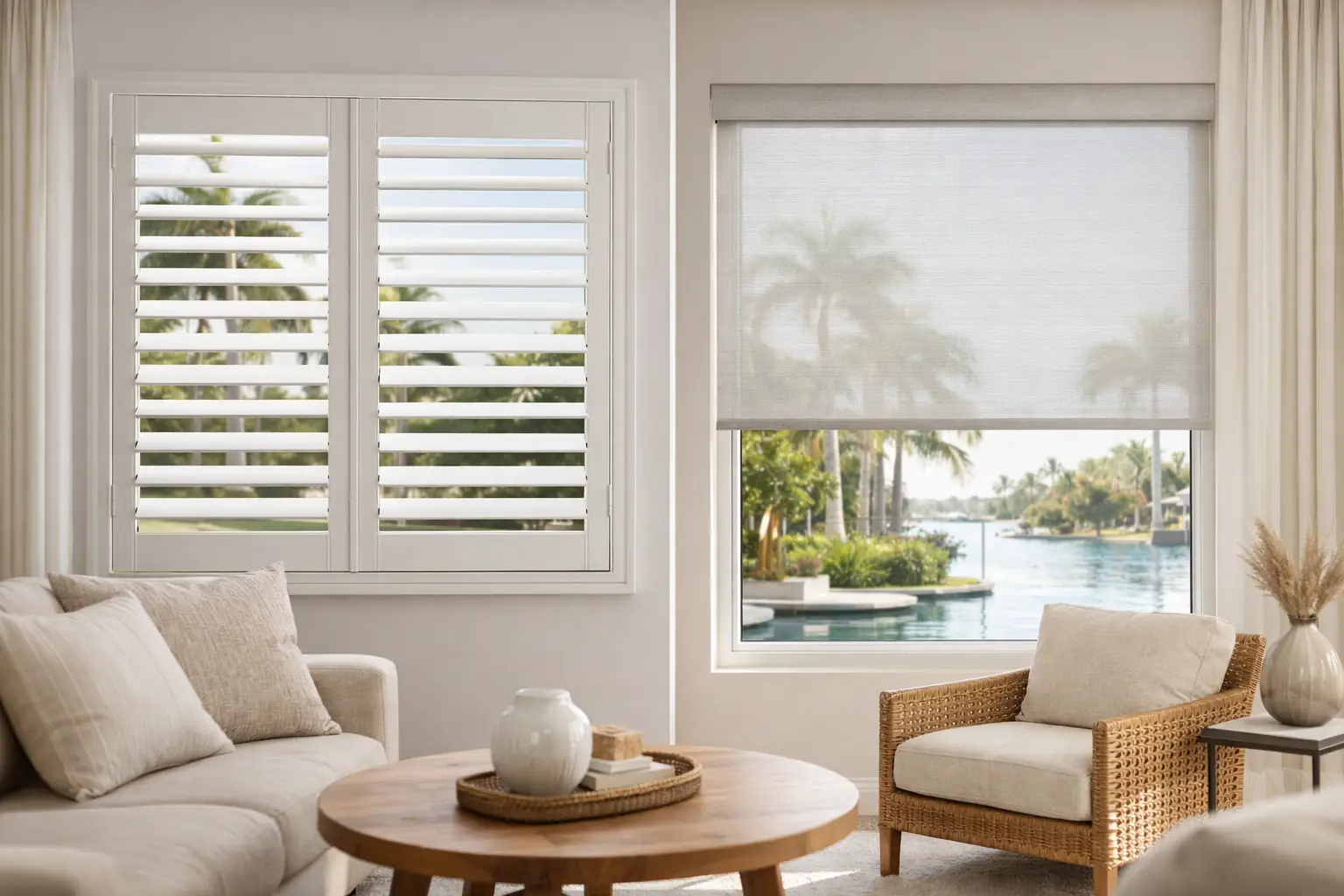
A bright South Florida afternoon can make a beautiful room feel exposed, overly warm, and difficult to use. That is why homeowners still ask, are plantation shutters outdated, especially when they want a window treatment that looks polished while handling intense sun, privacy, and daily living.
The short answer is no. Plantation shutters are not outdated when their proportions, color, material, and installation suit the home. What can feel dated is a one-size-fits-all approach: narrow louvers on oversized windows, yellowed white finishes, poor-quality vinyl, or shutters chosen without considering the room’s architecture and furnishings.
Well-designed shutters remain one of the most enduring window treatment choices available. They have simply evolved from a traditional decorating staple into a highly customizable feature that can feel classic, coastal, transitional, or cleanly contemporary.
Why Plantation Shutters Still Work in Modern Homes
Plantation shutters have an architectural quality that fabric shades and many blinds do not. Because they are fitted inside or around the window opening, they look intentional rather than added on. Their frame can give windows more presence, especially in homes with high ceilings, large openings, arched windows, or sliding glass doors.
They are also practical in a way that matters in Boca Raton and surrounding South Florida communities. Adjustable louvers allow homeowners to soften direct sunlight without closing off the room entirely. Tilt the louvers upward to redirect glare while maintaining daylight, or close them for more privacy during the evening. This level of control is especially useful in street-facing rooms, bedrooms, bathrooms, and homes with close neighboring properties.
Unlike many trend-driven treatments, shutters do not depend on a specific fabric pattern or color moment. A well-chosen white, soft neutral, or natural wood-toned finish can work through multiple furniture updates and repainting projects. That longevity is a large part of their appeal.
When Plantation Shutters Can Look Outdated
Shutters are not automatically right for every room. The difference between timeless and tired usually comes down to design choices, not the product itself.
The louver size is wrong for the window
Small louvers can read more traditional, particularly on large contemporary windows. Wider louvers generally create a cleaner, more open appearance and provide a better view when tilted open. The best size depends on the scale of the window, ceiling height, and the look of the home.
The finish clashes with the interior
Bright white shutters can look fresh against crisp white trim, light walls, and coastal interiors. In a room with creamy paint, warm woods, or taupe finishes, however, a stark blue-white shutter may feel disconnected. Custom color matching or a warmer white can make all the difference.
The shutters are poorly fitted
Uneven panels, gaps around the frame, awkward handles, or louvers that do not operate smoothly can make even a quality home look less refined. Custom measuring and professional installation are essential because shutters are a permanent-looking feature. They should appear built for the window, not forced into it.
They are used where softness is needed
A formal dining room, a bedroom with layered bedding, or a living room with a lot of hard surfaces may benefit from the warmth of draperies, woven woods, or soft Roman shades. Shutters can still work there, but they may need fabric panels or other design elements to keep the room from feeling too rigid.
Are Plantation Shutters Outdated for South Florida Style?
For South Florida homes, plantation shutters can be particularly appropriate. Their clean lines complement coastal, Mediterranean, transitional, and modern-traditional interiors. They also stand up well visually in rooms where sun, water views, and open floor plans are central to the design.
The key is selecting a shutter material suited to the space. Wood shutters offer natural character and a furniture-quality appearance. They can be an excellent choice for living areas, studies, and bedrooms where the warmth of real wood supports the design.
Composite and premium polymer shutters are often practical for kitchens, bathrooms, laundry rooms, and high-humidity environments. They provide a crisp painted look while offering durability where moisture and temperature changes are a concern. Not all composite shutters are created equal, though. Higher-quality options should feel substantial, operate reliably, and resist warping, cracking, and discoloration.
For homeowners near the coast or in sunny rooms, material selection should be part of the conversation from the beginning. A beautiful finish that is not appropriate for the environment is not a long-term design solution.
The Design Details That Keep Shutters Current
Today’s shutters can look remarkably different from the versions many people remember from decades ago. Contemporary installations often use wider louvers, simple frames, concealed or minimal tilt control, and carefully matched finishes. These details create a tailored look without excessive ornamentation.
A few design decisions have an outsized effect:
- Choose louver widths that fit the scale of the window and room.
- Coordinate the shutter finish with existing trim, wall color, and flooring undertones.
- Consider divider rails when different parts of the window need separate light control.
- Use bypass or bi-fold shutter panels for patio doors when access and clearance matter.
- Pair shutters with drapery panels when the room needs softness, height, or a more layered finish.
Shutter panels can also be designed around how a room is actually used. A bedroom may benefit from divider rails that allow the lower section to remain closed for privacy while the upper louvers bring in daylight. In a family room, wide louvers can preserve a view while reducing glare on screens. These are small details, but they turn a standard window covering into a personalized solution.
Shutters Versus Shades and Blinds
Plantation shutters are not necessarily better than every other window treatment. They solve a different set of needs.
Roller and solar shades are often the stronger choice when preserving a broad ocean, golf course, or garden view is the top priority. They can filter heat and glare with a lighter visual footprint. Cellular shades may be a smart option for homeowners focused on insulation and soft light. Woven wood shades add texture, while draperies offer color, movement, and a more decorative finish.
Shutters stand out when a homeowner wants precise adjustable light control, durable privacy, and a permanent architectural appearance. They are also easier to wipe clean than fabric treatments, which can be helpful for busy households and seasonal residences.
The trade-off is that shutters have a more structured appearance and a higher initial investment than many standard blinds or shades. They also require enough clearance and suitable window depth for the best installation. That investment can make sense when the goal is a long-lasting, custom feature rather than a short-term decorating update.
How to Decide if Shutters Belong in Your Home
Start with the window, not the trend. Consider how much direct sun the room receives, whether privacy is a concern, how often the window or door needs to be opened, and whether you want the treatment to disappear or become part of the architecture.
Then look at the room as a whole. In a clean-lined home with painted trim and neutral furnishings, shutters may create the finished, tailored look that the room is missing. In a space that already has strong architectural detail or needs warmth, shades or draperies may be a better foundation, or may work beautifully alongside shutters.
A professional in-home consultation is useful because window treatments are highly visual. Samples viewed against the actual wall color, trim, flooring, and natural light reveal details that are difficult to judge from a small showroom sample or an online photo. At Boca Blinds, that consultation also helps homeowners compare materials, panel configurations, and operating options before making a long-term decision.
Plantation shutters have lasted because they offer more than a familiar look. When they are custom designed for the window and the way a home is lived in, they bring order to bright rooms, protect privacy, and add a finish that does not need to chase every new decorating trend. The right question is not whether shutters are old-fashioned. It is whether the shutters being considered are designed well enough to feel at home in yours.